


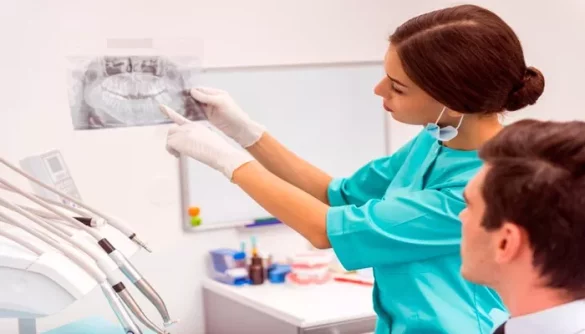
Orthodontists pull teeth forward to correct gaps, misalignment, bite problems, and arch discrepancies. They use controlled forces. They rely on predictable tooth movement. They apply pressure with braces, aligners, elastics, and wires. Forward movement helps create a functional bite. It also improves appearance. The goal is to shift teeth safely. The process uses biological remodeling. Bone resorbs on one side. Bone rebuilds on the other side. Movement occurs slowly. This protects teeth. This protects gums. This protects bone.
The Biological Mechanism Behind Tooth Movement
Orthodontists pull teeth forward using natural biological responses. Tooth roots sit in bone. The periodontal ligament surrounds each root. When continuous pressure is applied, the ligament compresses. Cells activate. Bone breaks down on the pressure side. Bone forms on the tension side. The tooth moves slowly. This cycle repeats. It allows precise forward movement. It prevents damage. The system responds best to gentle forces. Strong forces cause pain. Gentle forces produce stable results. This is why orthodontists carefully plan every adjustment.
The Role of Bone Remodeling
Bone remodeling is essential. It allows movement without harming roots. Osteoclasts remove bone. Osteoblasts rebuild bone. This dual process is slow. It must be steady. Orthodontists monitor bone health. They adjust force levels. They check root position. They ensure movement occurs safely. Without bone remodeling, forward movement would be impossible.
The Role of the Periodontal Ligament
The periodontal ligament stabilizes each tooth. It reacts to pressure. It sends signals. It controls bone activity. It cushions movement. It prevents trauma. This ligament helps guide teeth forward. Orthodontists protect this ligament. They avoid excessive force. They plan movement in small steps.
Tools and Devices Used to Pull Teeth Forward
Orthodontists use several tools. Each device serves a purpose. Devices work together. They create forward traction. They maintain stability. They enhance precision. The following sections explain how each tool contributes.
Braces as the Primary Tool
Braces pull teeth forward effectively. Brackets attach to teeth. Archwires slide through brackets. Wires apply force. Braces control direction. Braces control torque. Braces allow complex movements. Orthodontists adjust wires regularly. These adjustments increase or decrease forward pull. Braces can move one tooth. Braces can move multiple teeth. Braces offer strong control. They remain a preferred method.
Archwires and Their Influence
Archwires guide movement. They vary in thickness. They vary in stiffness. Nickel-titanium wires provide gentle force. Stainless steel wires provide stronger force. Archwires create steady forward motion. Orthodontists bend wires. They shape wires. They design wire paths. These shapes control tooth direction. Precision matters. Even small bends can change movement paths.
Elastics and Rubber Bands
Elastics provide targeted forward pull. Patients wear elastics between hooks. They create tension. They pull teeth or groups of teeth forward. Elastics adjust bite. They enhance anchorage. They offer flexible use. Orthodontists choose specific elastic patterns. These patterns direct the force. Consistent wear matters. Without daily use, movement slows.
Power Chains for Closing Spaces
Power chains consist of linked elastic rings. They provide strong pulling force. They close gaps quickly. They hold teeth close together. Power chains attach to brackets. They exert continuous tension. Orthodontists use them to pull front teeth forward when needed. They also maintain alignment after movement.
Coil Springs for Forward Force
Coil springs apply pushing or pulling force. Open-coil springs push teeth apart. Closed-coil springs pull teeth together. Springs attach to archwires. They maintain constant pressure. Orthodontists use springs when space is needed. They help create room for forward movement. Springs prevent drifting. Springs stabilize spacing.
How Orthodontists Plan Forward Tooth Movement
Planning is vital. Forward movement requires precision. Orthodontists use exams. They take X-rays. They study bite patterns. They evaluate bone structure. They create digital models. They choose tools. They select force levels. They check for gum issues. They predict tooth paths. Planning reduces risk. It reduces discomfort. It improves results.
Assessment of Dental Crowding
Crowding affects forward pull. If there is no space, teeth cannot move forward. Orthodontists measure arch length. They assess available room. They determine extraction needs. They evaluate expansion needs. Space analysis guides treatment. Forward movement requires adequate space. Without it, results fail.
Anchorage Control
Anchorage prevents unwanted movement. When one tooth moves forward, another may drift back. Orthodontists stabilize anchor teeth. They use molars as anchors. They may use TADs (temporary anchorage devices). They use elastics strategically. Anchorage is crucial. It protects alignment. It creates predictable forward pull. Without anchorage, teeth shift unpredictably.
Use of TADs (Temporary Anchorage Devices)
TADs are titanium mini-screws. They provide extra support. They act as firm anchors. They hold position. They prevent regressive movement. Orthodontists place TADs in bone. They attach elastics or wires to them. This enhances forward traction. TADs offer strong control. They are useful when missing teeth reduce natural anchorage.
Common Techniques for Pulling Teeth Forward
Orthodontists use several techniques. The techniques vary. They depend on patient needs. They depend on bite severity. They depend on bone density. The following are common approaches.
Technique 1: Space Creation First
Orthodontists create space before moving teeth. They open gaps. They use springs. They use expansion. They use slenderizing. Space creation prevents crowding. It prevents root collision. It allows forward movement. It enhances stability. This is a standard first step.
Technique 2: Sequential Forward Movement
Teeth move in sequence. Orthodontists pull one tooth forward. They then pull the next. This reduces force on the arch. It improves alignment. It protects periodontal tissues. Sequential movement is common with braces. It is common with aligners. It creates natural progression.
Technique 3: Group Movement
Group movement shifts multiple teeth forward. Orthodontists use strong wires. They use power chains. They use elastics.
Group movement helps close extraction spaces. It improves arch shape. It speeds treatment. Group movement requires strong anchorage.
Technique 4: Controlled Force Application
Controlled force is essential. Orthodontists choose specific force levels. Light force is ideal. Heavy force damages roots.
Controlled force prevents pain. It supports bone remodeling. It enhances long-term stability.
Technique 5: Using Aligners for Forward Movement
Clear aligners move teeth forward using trays. Each tray shifts teeth slightly. Aligners apply gentle pressure. They use attachments. They use elastics. They use digital planning. Aligners provide predictable paths. They offer comfort. They offer aesthetics. Aligners require strict compliance.
Potential Challenges When Pulling Teeth Forward
The process is safe. Still, challenges occur. Orthodontists monitor progress. They prevent issues early. They adjust treatment when needed.
Challenge 1: Limited Space for Movement
Insufficient space slows movement. Orthodontists must create room. They may extract teeth. They may expand the arch.
They may reshape enamel. Without space creation, forward movement fails.
Challenge 2: Gum Recession Risk
Movement affects gum tissue. Some patients have thin gums. Forward shifting may increase recession risk. Orthodontists evaluate gum thickness. They recommend grafting if needed. Protecting gums is vital. Healthy gums promote stability.
Challenge 3: Root Resorption
Roots may shorten over time. Excessive force causes resorption. Orthodontists monitor roots with X-rays. They reduce force if needed. They adjust movement speed. They prioritize safety.
Challenge 4: Anchorage Loss
Anchorage loss causes backward drift. Orthodontists prevent this problem. They use molars. They use TADs. They use elastics. They monitor each adjustment. Anchorage must remain stable for forward movement.
How Long It Takes to Pull Teeth Forward
Time varies. It depends on the amount of movement. It depends on bone density. It depends on gum health. It depends on age. Children move faster. Adults move slower. Typical movement speed is 1 mm per month. Forward movement may take months. Large corrections may take a year or more. Orthodontists adjust timelines. They track progress. They ensure safe movement rates.
Aftercare and Retention Following Forward Movement
Retention matters. Teeth drift back naturally. Orthodontists use retainers. Retainers hold teeth. They prevent relapse.
Patients must wear retainers consistently. Retention protects results. It stabilizes bone. It maintains forward movement.
Retainers may be removable. They may be fixed. Orthodontists evaluate needs. They prescribe long-term use.
Importance of Wearing Retainers
Retainers maintain alignment. They support bone remodeling. They prevent spacing. They prevent shifting. Consistent wear is crucial. Patients must follow instructions. Without retention, results fade.
Monitoring for Relapse
Orthodontists monitor teeth. They check for drifting. They adjust retainers. They treat early relapse. Monitoring protects progress. It supports long-term success.
Conclusion
Orthodontists pull teeth forward through careful planning. They use braces, wires, springs, elastics, and aligners. They rely on biological remodeling. They manage anchorage. They monitor progress. They protect gums and roots. They create space when needed. They ensure movement occurs safely. Their methods are precise. Their techniques are predictable. Their goal is functional alignment. Their goal is stable results. Forward movement requires skill. Orthodontists deliver this skill. They guide each tooth. They maintain patient comfort. They produce lasting, healthy smiles.