


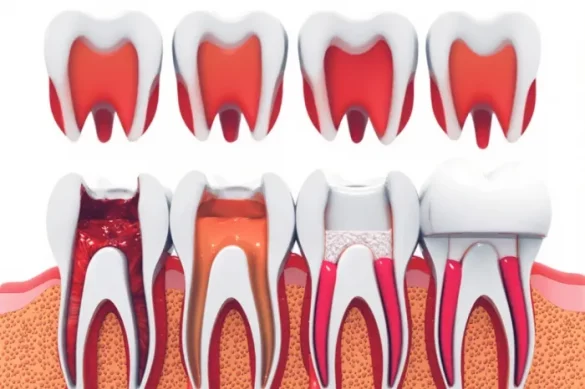
A root canal is a common dental procedure that helps save a tooth that has become infected or damaged. Many people worry about the cost of this treatment, especially when considering dental insurance. The price you pay for a root canal can change according to several factors, including the type of tooth treated and your dental insurance policy. Knowing exactly what to expect in terms of costs helps you plan better and avoid surprises at the dentist’s office.
Understanding Root Canal Costs
Root canal treatments are not all priced the same. The cost depends on the tooth that needs work, your dentist’s expertise, and your location. Generally, molars (the large teeth in the back of your mouth) cost more than front teeth. This is because they are harder to reach and have more complex root structures. On average, a root canal without insurance can cost between $700 and $1,800 per tooth. These prices are only for the root canal procedure, not including other treatments that may follow, such as placing a crown.
How Dental Insurance Impacts Root Canal Pricing
Dental insurance can make a significant difference in the amount you pay for a root canal. Most dental plans cover between 50% and 80% of the procedure after you have met your deductible. This means your portion of the bill is much smaller compared to what uninsured patients face.
Typical Out-of-Pocket Costs With Insurance
After insurance coverage, you can expect:
- $200 to $500 out-of-pocket for a root canal on a front tooth
- $300 to $700 for a premolar tooth
- $400 to $900 for a molar tooth
These numbers represent the amount you pay after your insurance company processes the claim and covers its portion. The final cost depends on your individual plan, including your deductible and whether the dentist is in-network.
Factors Influencing Your Root Canal Cost
Several variables affect the cost of root canal treatment, even for insured patients:
Tooth Location
Front teeth (incisors and canines) are simpler and cheaper to treat. Molars, which have multiple roots, involve more work and higher costs.
Dentist Type
An endodontist is a specialist in root canals and may charge higher fees compared to a general dentist. Sometimes, insurance covers specialists at a different rate.
Geographic Area
Dental fees vary widely based on where you live. Urban areas and large cities tend to have higher prices than rural locations.
Insurance Plan Details
Every dental insurance policy is unique. Some plans have higher deductibles, while others have greater coverage percentages or annual maximums. If you have used much of your yearly dental benefit, you may pay more out-of-pocket.
Complexity of the Case
A straightforward root canal is less expensive than a more complicated one that needs retreatment or special procedures.
Need for a Crown
After a root canal, most teeth need a dental crown to protect and restore strength. The cost of a crown is often $500 to $1,500, even with insurance.
How Insurance Coverage Works
Understanding how insurance processes root canal claims is essential. Here is a simplified example to guide you:
Suppose the root canal cost for a molar is $1,000.
- Your insurance covers 80% of the cost after a $50 deductible.
- You pay the $50 deductible first.
- The insurance company pays $800 (80% of $1,000).
- You pay the remaining $200 (20% of $1,000).
Using an in-network dentist typically gives you the best rates and guarantees your insurance covers a larger share of the cost.
What If You Have Used Your Annual Dental Benefits?
Many dental insurance plans have an annual maximum benefit, often between $1,000 and $2,000. If you have already used much of your benefit on earlier treatments this year, your out-of-pocket cost for a root canal may be higher. It’s important to check with your insurance company about your current benefits before scheduling major procedures.
Cost Breakdown by Tooth Type With Insurance
Based on estimates for 2024 and 2025, here are average costs with insurance for different teeth:
- Front Tooth (Incisor/Canine): $200 to $600 out-of-pocket
- Premolar (Bicuspid): $250 to $700 out-of-pocket
- Molar (Back Tooth): $300 to $800 out-of-pocket
These numbers may differ depending on plan details, dentist, and any extra complexity. Without insurance, you may pay $700 to $1,600 for the same treatment.
Additional Expenses: Crowns and Other Procedures
A root canal is often followed by the placement of a crown. Crowns protect the tooth and extend its lifespan. Even with insurance, crowns typically cost an extra $500 to $1,500. Some insurance plans cover part of the crown cost, while others cover only the root canal procedure itself. Always check your plan’s provisions before committing to treatment.
Also, emergency or after-hour procedures may have higher costs, regardless of insurance.
Tips for Managing and Minimizing Costs
To avoid high bills:
- Check your insurance policy before treatment to confirm what’s covered and at what percentages.
- Choose in-network providers when possible; they offer lower rates.
- Ask for a pre-treatment estimate so you know costs in advance.
- Consider payment plans or financing. Dentists often offer payment options for large bills.
- Discuss all procedures needed. Sometimes, additional work may be necessary after the root canal, and insurance coverage may differ.
Conclusion
Root canal costs can be manageable when you use dental insurance effectively. Most patients pay far less out-of-pocket than uninsured individuals, but costs range depending on tooth location, provider expertise, and plan details. Always consult your dentist and insurance company to clarify your expected costs before beginning treatment. Planning ahead helps you maintain both oral health and financial stability.
FAQs
How much does a root canal cost with insurance?
Most insured patients pay between $200 and $900 out-of-pocket, depending on the tooth treated and their insurance plan.
Does insurance cover the cost of a crown after a root canal?
Some insurance plans cover part or all of the crown cost. Check with your insurer to learn your coverage details.
Will my insurance cover all root canal procedures?
Most dental plans cover 50-80% of standard root canal treatments. Coverage percentages and limits vary by policy.
What happens when I use an out-of-network dentist?
You may face higher costs, as insurers usually cover less of the bill for out-of-network providers.
Can I use a payment plan for my share of the root canal cost?
Many dentists offer payment plans or financing options for patients who cannot pay the entire amount upfront.