


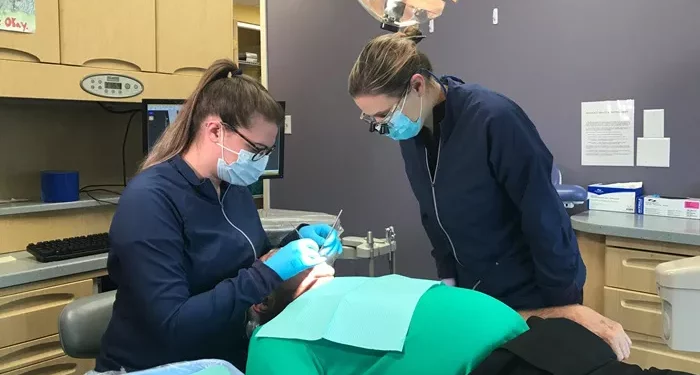
Maine is facing a dentist shortage, prompting the medical community to promote minimally invasive treatments for early-stage cavities outside of dental offices. Most children in the state lack access to annual dental exams and cleanings, and even those with insurance often lack access.
A study last year by the University of Southern Maine’s Muskie School of Public Service and the Katherine E. Cutler Institute showed that only about a third of children with any type of insurance receive both an annual exam and cleaning.
The number of dentists in Maine declined from 590 in 2019 to 530 in 2023. Becca Matusovich, executive director of the Maine Children’s Oral Health Network, said expanding the dental workforce and improving medical reimbursement are important, but these measures alone will not quickly address the current shortage.
She said that early prevention and treatment must be expanded beyond dental offices to primary care, schools, and other settings to halt the progression of cavities and alleviate the backlog of dentists.
One widely promoted tool is silver diamine fluoride (SDF). The World Health Organization added it to its list of essential medicines in 2021, and the American Academy of Pediatrics has also issued guidelines for its use in healthcare settings.
SDF, composed of silver and fluoride, inhibits tooth decay and kills bacteria. However, it may discolor the treated area brown or black, and children with silver allergies should consult a doctor first. It is also not suitable for advanced decay.
Dr. Brian Yoos, a pediatrician at MaineHealth and president of the Maine Chapter of the American Academy of Pediatrics, is one of the pioneers in integrating SDF into primary care.
He already has experience applying fluoride varnish to children during pediatric checkups and has found that when cavities are discovered, SDF can be used directly in the outpatient setting to suppress them.
Yos explains that the procedure is simple: After drying the tooth surface, press the varnish onto the decayed area with a cotton swab-like applicator for 30 to 60 seconds. Follow up with a follow-up appointment four to six weeks to determine whether to reapply or refer the patient for further evaluation.
Since last fall, Yoss and his colleague, Dr. Laura Blaisdell, have used SDF on more than 70 patients at the Maine Medical Center Pediatric Residency Clinic and trained pediatric residents in the procedure.
In recent months, a growing number of pediatricians in Maine have mastered the technique through training programs offered by primary care programs such as First Tooth.
The Maine Children’s Oral Health Network also funded a pilot training program for school nurses and school-based health centers. This summer, the program covered six school nurses and one school health center in the state, helping them identify early cavities and administer SDF.
Matusovich said SDF is just one of several solutions. Other pilots are bringing dental hygienists into schools for cleanings and early intervention, and integrating telemedicine to allow dentists to remotely review X-rays and other materials.
That pilot program ended last year, but the initial participants are continuing the work, and the organization has received additional funding to expand to more communities. At the state level, a bill, LD 1746, was introduced in the previous legislative session.
It would have required the Department of Health and Human Services to develop a model for additional prevention and disease interventions in schools, establish at least one mobile dental worker in each public health district, and train primary care providers in minimally invasive pediatric treatments. The bill has been deferred and will continue its consideration in the upcoming session.
“Prevention is important, but these new tools and strategies allow us to stop the spread of tooth decay more quickly and provide timely treatment for families when dental resources are limited,” Matusovich concluded.