


Millions of people in the United States receive Dental implants each year as a long-lasting and natural-looking solution for missing teeth. Yet traditional implants still fall short of fully recreating the feel and function of real teeth.
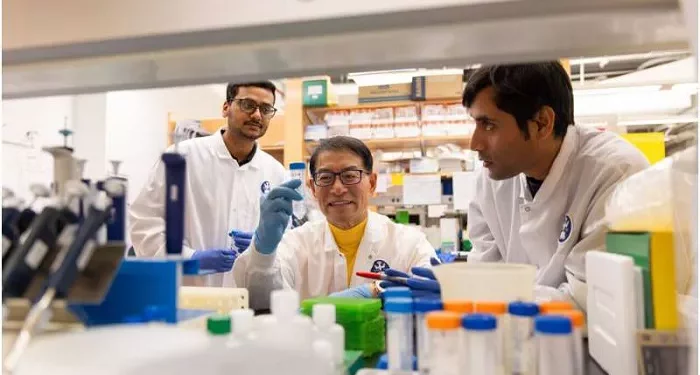
Researchers at Tufts University School of Dental Medicine and Tufts University School of Medicine have introduced a new approach to Dental implants that may bridge this gap. Their study, published in Scientific Reports, details early success with a prototype “smart” implant and a gentler surgical method tested in rodents.
Jake Jinkun Chen, a professor of periodontology and senior author of the study, explains that natural teeth are connected to the jawbone by soft tissue filled with nerves. These nerves sense pressure and texture and guide chewing and speech. Standard implants, however, lack this sensory link.
Traditional Dental implants rely on a titanium post that fuses directly to the jawbone. The procedure can damage nearby nerves, leaving the implant without feedback to the brain. To solve this, the Tufts team created an implant coated in a biodegradable layer infused with stem cells and a protein that helps them multiply and form nerve tissue. As the coating dissolves during healing, it releases these components, encouraging new nerve growth around the implant.
The coating also contains tiny elastic particles that behave like memory foam. When compressed, they make the implant smaller for insertion. Once in place, the fibers expand to fill the socket. This enables a minimally invasive technique that preserves existing nerve endings. Chen says the goal is for the implant to reconnect with the nervous system so it can “talk” to the brain like a real tooth. He adds that this technology could also improve other bone implants, including those used in hip replacements or fracture repair.
Six weeks after surgery, the experimental implants remained stable in rats, with no inflammation or rejection. Imaging showed a distinct space between the implant and the bone. According to Chen, this suggests integration through soft tissue rather than direct bone fusion—an important step toward restoring sensation.
The project was conducted by Chen and faculty members Qisheng Tu and Zoe Zhu, along with postdoctoral researchers Siddhartha Das and Subhashis Ghosh.
While the findings are encouraging, the researchers emphasize that more studies are needed. Larger animal models will be required to assess safety and function before human trials can begin. The team’s next phase is a preclinical study that will determine whether the new nerves surrounding the implant can transmit sensory signals to the brain.
Related topics:
Dental Services In The UK’s National Health Service (NHS) Urgently Need Reform To Remain Operational
New Mobile Dental Services Van Brings Care to 200 Primary Schools
Bite Club Dental Service Launches at Carlisle Practice
Tags: teethtooth