


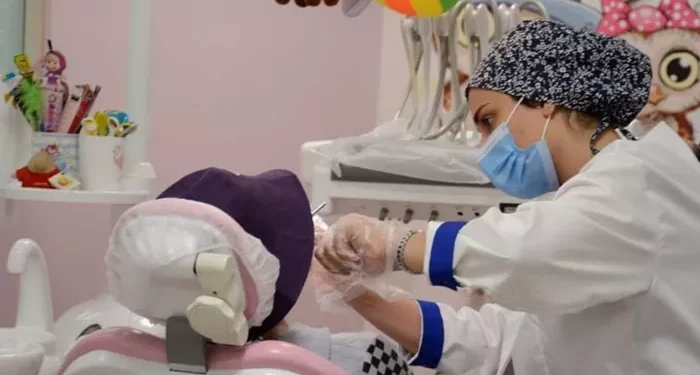
Tehran — Surging dental costs in Iran have turned routine care into an unaffordable luxury for many, driving low-income households to choose tooth extraction as their only relief from pain, health officials and dental specialists say.
Members of Iran’s Medical Council and dental experts warn that roughly 70% of Iranians cannot afford basic dental treatment. More than 90% of dental expenses are paid out-of-pocket, they say, with insurance typically covering only small sums — often between 2 and 5 million tomans depending on the plan — far below real treatment costs.
Private-sector prices have climbed steeply. Recent estimates (2023–2025) place common fees at:
Tooth extraction: 1.5–2 million tomans
Single-canal root canal plus filling: 3.5–5 million tomans
PFM crown: 3.5–4.5 million tomans
Standard dental implant: 16–30+ million tomans
Even public clinics offer limited relief. While a general dentist examination in 2025 is reported at only a few thousand tomans, other procedures remain costly.
For example, a wisdom tooth extraction is about 633,000 tomans and scaling and polishing for each jaw about 1.3 million tomans. Insurance coverage for these services is incomplete, and many specialized treatments are unavailable or heavily restricted in state facilities.
The financial strain is already visible in dental health indicators. Experts report that the average Iranian has six decayed or missing teeth. Among people over 65, more than 55% are completely toothless and 90% suffer from decay.
Adults aged 30–40 average 12–13 damaged or missing teeth. Even children are affected: the average five-year-old has five decayed or extracted baby teeth.
Analysts link the crisis to weak insurance, rapid fee inflation in the private sector, and policy choices that have effectively removed dental care from essential medical services.
Programs such as Daroyar and the removal of subsidized currency are said to have raised dental costs by about 70%, further squeezing access.
As costs for restorative treatments — fillings, root canals, crowns and implants — remain out of reach, public clinics have increasingly become centers for extractions. Patients frequently delay care until pain is unbearable, specialists say, and then seek only the cheapest option: removal.
Critics say the result is a two-tier dental system: one for those who can pay and another in which the poor are left to lose their teeth. Health experts warn the problem is not merely cosmetic.
They call it a preventable national health crisis driven by economic mismanagement, privatization, and insufficient public investment in dental care.