


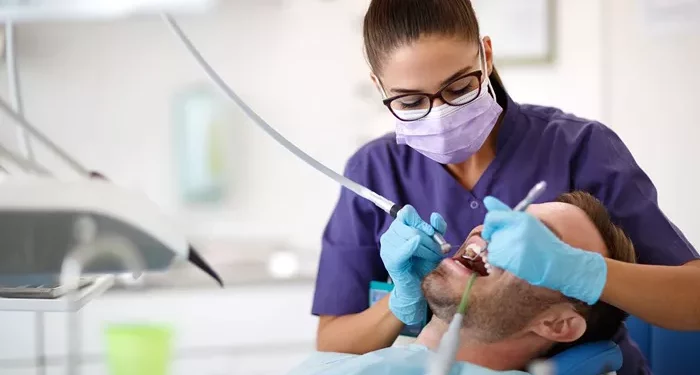
CROMWELL, Conn. — During a routine prophylaxis in April 2024, a registered dental hygienist (RDH) discovered a lump in a 52-year-old patient’s mouth.
A panoramic X-ray revealed a mass that led to a diagnosis of B-cell non-Hodgkin’s lymphoma — the patient’s second occurrence of the disease. She received timely chemotherapy and later credited the hygienist with saving her life.
The episode highlights a wider gap between public perception and the clinical role of dental hygienists. Many patients think of dental visits as “cleanings.” In reality, RDHs perform comprehensive preventive care, screen for oral disease and signs of systemic illness, and can spot conditions that require urgent referral.
Dental hygienists are trained to detect early warning signs beyond the teeth. Breath with a slightly sweet odor can indicate diabetes. Enlarged tonsils or crowded teeth may suggest sleep apnea.
Suspicious skin lesions on the head or face can signal skin cancer. Hygienists also identify dangerously high blood pressure and other red flags during routine visits.
RDHs increasingly use advanced modalities such as desiccation therapy, guided biofilm therapy, silver diamine fluoride, and salivary testing.
Many hygienists want to practice at the top of their license and play a larger role in improving patients’ overall health — far beyond the stereotype of “tooth aestheticians.”
Public-health experts warn that lowering educational standards could weaken this safety net. CODA-accredited dental hygiene programs deliver nearly 3,000 hours of didactic and clinical training.
By contrast, recent state measures — including one law cited in Arizona — permit oral preventive assistants with as few as 175 hours of classroom instruction and a minimum of 150 prophylactic treatments to perform scaling and polishing above the gumline.
Advocates for strict accreditation argue that reducing training increases the risk of missed diagnoses for oral, oropharyngeal and head-and-neck cancers, and could worsen outcomes for chronic conditions linked to poor oral health.
More than 40 percent of U.S. adults over 30 have periodontitis. Emergency dental problems also force students to miss school — roughly 34 million hours annually, according to cited estimates.
Supporters of CODA accreditation say the credential is more than paperwork: it is a safeguard that ensures hygienists deliver competent, evidence-based care and contribute to early detection of systemic disease.
Experts and hygienists call for expanding the scope and visibility of RDHs rather than diluting training. They argue stronger education and broader preventive roles for hygienists could help address America’s oral-health crisis and reduce the burden of related chronic diseases.
When patients sit in the dental chair, hygienists say, they are doing more than a cleaning. They are screening, educating and sometimes saving lives.