


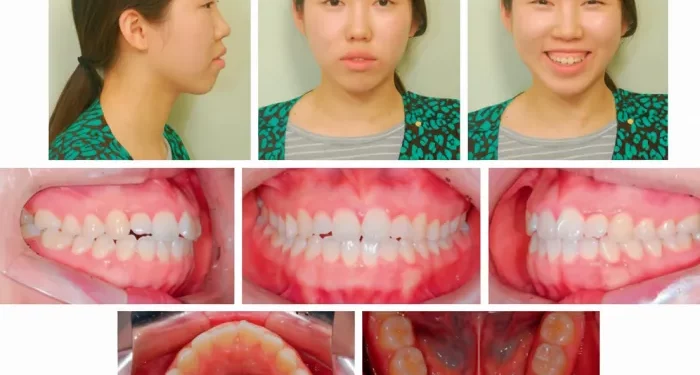
A 19-year-old female patient seeking to improve her smile aesthetics was successfully treated for vertical maxillary excess (VME) using dental braces, offering a non-surgical alternative to traditional methods. The patient, concerned about excessive gum display and irregular teeth, underwent comprehensive orthodontic treatment to address issues such as a deep bite, occlusal plane discrepancies, increased overjet, and a decayed lower molar.
Clinical evaluation revealed a convex facial profile with noticeable gingival display during smiling and a prominent occlusal cant on the right side, which contributed to facial asymmetry. Intraoral examination pinpointed a Class II molar and canine relationship on one side, a deep bite and overjet, non-coinciding dental midlines, and a severely decayed mandibular first molar requiring extraction.
Radiographic records supported the diagnosis of skeletal Class II relationship, vertical maxillary excess, and a non-restorable lower molar. The orthodontic plan prioritized maximizing esthetic improvement without surgery. This included the extraction of the compromised molar, molar protraction to close the space, bilateral upper premolar extractions for arch intrusion, and correction of occlusal cant using advanced anchorage systems such as temporary anchorage devices (TADs) and infrazygomatic crest implants. These techniques allowed precise tooth movement and vertical control.
Treatment began with fixed dental braces for alignment, planning for molar protraction with sliding mechanics, and utilizing light continuous forces for tooth intrusion. Molar protraction preserved bone and eliminated the need for prosthetic replacements. Controlled application of vertical and asymmetric forces, aided by TADs and implants, corrected the occlusal cant and achieved smile symmetry.
Post-treatment assessments showed significant reduction in gingival display, symmetry in the smile arc, ideal bite relationships, and healthy periodontal support. The patient’s smile became more balanced and attractive without surgical intervention. Retention was managed with fixed and removable retainers to ensure long-term stability. This case underscores the effectiveness of careful orthodontic planning and modern anchorage techniques in resolving complex esthetic issues using minimally invasive methods, presenting dental braces as a viable option for adults with vertical maxillary excess.
Tags: orthodonticorthodontic treatmentteethtooth