


Whitening teeth often comes with financial costs and potential damage to enamel. Many popular products use peroxide-based bleaching agents that produce reactive oxygen species (ROS) to remove stains, but these chemicals can gradually weaken enamel and increase the risk of future staining and dental problems.
Researchers from the Chinese Academy of Sciences may have found a safer alternative. According to a study published in ACS Nano, the team has developed a new tooth-whitening method that relies on vibration rather than harsh chemicals—and may even help repair teeth.
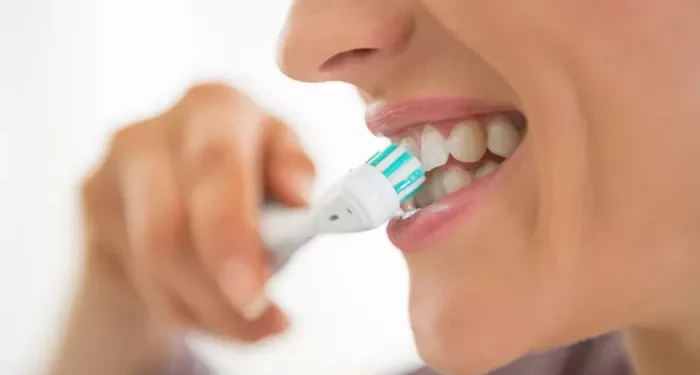
The approach replaces peroxide with a ceramic powder known as BSCT. The material is created by heating a solution containing strontium and calcium ions along with barium titanate. When exposed to rapid vibration, such as from an electric toothbrush, the powder generates a small electric field through the piezoelectric effect.
This electric field triggers ROS reactions similar to those produced by peroxide bleaching, but without the same chemical aggressiveness. In laboratory tests, human teeth stained with coffee and tea showed visible whitening after four hours of brushing with BSCT. After 12 hours, the teeth were nearly 50 percent whiter than control samples brushed with saline.
The researchers also found that BSCT offered restorative benefits. Minerals released from the powder formed deposits of barium, calcium, and strontium on the tooth surface, helping regenerate damaged dentin and enamel.
In a second experiment, rats fed a high-sugar diet had their teeth brushed daily with BSCT for four weeks. The treatment reduced harmful oral bacteria, including Porphyromonas gingivalis and Staphylococcus aureus, and lowered signs of oral inflammation.
While the powder has not yet been incorporated into a commercial toothpaste, the researchers plan to test future formulations. They believe the technology could eventually be used in dental clinics and consumer products as a gentler alternative to conventional whitening methods.