


Across the WHO Western Pacific Region, countries are taking concrete steps to make essential dental services more accessible and affordable through primary health care, supporting progress toward universal health coverage (UHC).
Oral diseases affect an estimated 960 million people in the region—about 43% of the population. These common noncommunicable diseases, including dental caries, periodontal disease, tooth loss, and oral cancer, can reduce confidence, limit social participation, and lower quality of life. Untreated conditions often lead to missed school or work and place significant financial burdens on families.
At the 76th WHO Regional Committee for the Western Pacific in 2025, Member States endorsed the Western Pacific Regional Implementation Plan for the Global Strategy and Action Plan on Oral Health. The plan sets regional targets and acceleration projects, supported by a new WHO dashboard to track progress.
“There is no health without oral health,” said Dr. Saia Ma’u Piukala, WHO Regional Director for the Western Pacific. “Integrating essential oral health services into national UHC benefit packages through primary health care is critical. WHO stands ready to help countries achieve oral health for all by 2030.”
Malaysia has raised the profile of oral health within NCD and UHC agendas, hosting key events at the UN high-level meeting on NCDs in 2025, the World Health Assembly in Geneva, and the WHO Global Oral Health Meeting in Bangkok in 2024. Its National Oral Health Policy and Strategic Plan 2022–2030 emphasize prevention, integration into primary care, partnerships, standards, monitoring, research, and digital innovation. Malaysia will host the 15th Asian Chief Dental Officers’ Meeting in Sabah in 2026 to advance regional collaboration.
“Let us turn data into action and commitments into measurable outcomes,” said H.E. Dato’ Dr Ahmad Faisal bin Muhamad, Malaysia’s Ambassador to the UN. “The price of inaction is far greater than the cost of prevention. Malaysia stands ready to collaborate to ensure every smile reflects health and dignity.”
With only 50 dentists for a population of roughly 850,000, Solomon Islands is training primary health-care workers to provide essential oral health services. Training covers oral exams, hygiene counseling, fluoride applications, fissure sealants, restorative care, and referral pathways, following WHO guidance.
Allen Aluta, a nurse at Kukum Area Health Centre, said, “With these new skills, we can prevent pain, identify problems early, and support communities that dentists cannot reach, making oral health more accessible for everyone.”
Tonga’s Malimali Project teaches preschoolers to use fluoride toothpaste and mouth rinses while applying silver diamine fluoride, a cost-effective treatment that halts tooth decay. Caries rates among children dropped from 90% in 2001 to 68% ten years later. Today, nearly all primary schools participate, embedding oral health education in the curriculum.
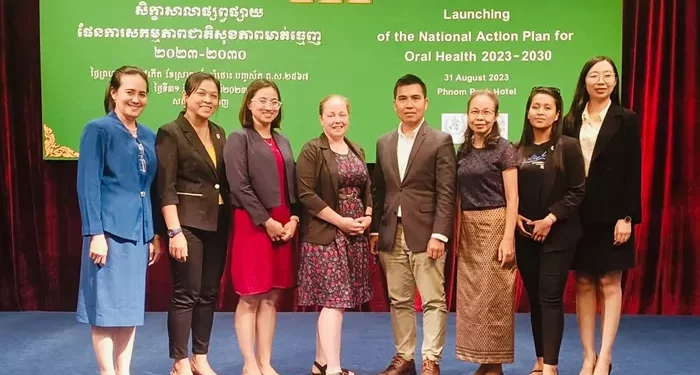
Cambodia developed a national action plan aligned with the Global Strategy and Action Plan on Oral Health 2023–2030. In collaboration with WHO, the plan was adapted at provincial and local levels. The Oral Health Bureau within the Ministry of Health oversees implementation, focusing on practical steps and measurable outcomes while maintaining alignment with global priorities.
Across the region, countries are expanding primary health-care roles, using essential dental medicines, and strengthening leadership in oral health. These efforts aim to achieve universal dental coverage by 2030, supporting WHO’s vision of Health for All.