


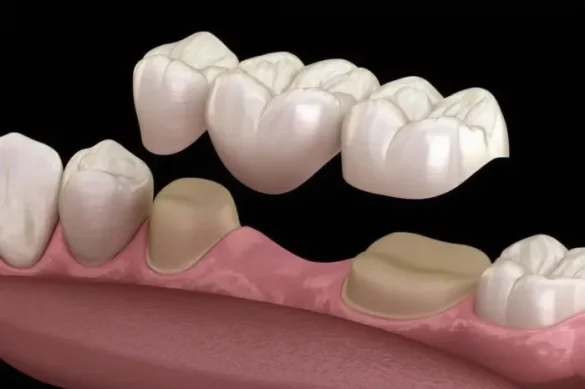
A dental bridge is a not unusualplace answer for changing lacking enamel and restoring each look and characteristic. It actually bridges the distance wherein enamel are absent, giving sufferers the cappotential to chew, speak, and smile with confidence. For many, a dental bridge feels similar to a herbal teeth. However, there are conditions whilst a bridge isn’t always the fine, or maybe a possible, option. Understanding whilst a dental bridge works, and whilst it does not, is crucial for anybody thinking about their teeth alternative options.
What Is a Dental Bridge?
A dental bridge is a hard and fast dental recovery used to fill the distance left via way of means of one or greater lacking enamel. It typically includes one or greater fake enamel, referred to as pontics, anchored via way of means of crowns or implants on neighboring enamel. Dental bridges are designed to be long lasting and to combination in with a affected person’s herbal enamel. There are numerous types:
Types of Dental Bridges
Traditional bridges contain attaching crowns to herbal enamel on both aspect of the distance. Cantilever bridges use handiest one adjoining teeth as an anchor. Maryland bridges use steel or porcelain wings bonded to the backs of neighboring enamel. Implant-supported bridges use dental implants in preference to herbal enamel for assist.
All varieties of bridges serve the equal number one characteristic: to repair shape and characteristic via way of means of changing lacking enamel. But every kind has unique necessities and limitations.
Ideal Cases for Dental Bridges
Dental bridges are fine for sufferers who’re lacking one to 3 enamel in a row and who’ve healthful, strong enamel or implants on both aspect of the distance. These neighboring enamel are referred to as abutment enamel. For a conventional bridge, those enamel have to be sturdy sufficient to assist the greater load.
Other best situations include:
- Patients with top ordinary oral health
- Patients with out superior gum disorder
- People who need a quick, non-surgical answer for teeth loss
Patients frequently select a bridge once they need to repair complete dental characteristic quickly—typically in only dental visits.
When Is a Bridge Not an Option?
1. Too Many Missing Teeth
A dental bridge isn’t always appropriate if numerous enamel in exclusive areas of the mouth are lacking. Traditional bridges can handiest update up to 3 enamel in a row. If a affected person is lacking greater than 3 consecutive enamel, or if gaps aren’t subsequent to every other, then a bridge might not provide sufficient assist. In those cases, partial dentures or implant-supported bridges is probably necessary.
2. Weak or Unhealthy Abutment Teeth
A bridge is predicated on healthful adjoining enamel. If those abutment enamel have decay, are loose, or were weakened via way of means of disorder or trauma, they can not assist the bridge structure. Tooth decay or gum disorder have to be dealt with first. If abutment enamel are inadequate, opportunity remedies including implants need to be considered.
3. Severe Gum Disease
Gum sickness, or periodontal sickness, weakens the tissues and bone that maintain enamel in region. If gum sickness is gift and untreated, setting a bridge can boost up oral fitness issues and can result in bridge failure. Healthy gums are crucial for a success bridge placement.
4. Poor Oral Hygiene Practices
A dental bridge desires constant oral hygiene. Bridges can entice meals and bacteria, main to in addition decay or gum problems below or round them. Patients who warfare with oral cleanliness might not be perfect candidates, because the hazard of headaches increases.
5. Inadequate Jawbone for Implants
Implant-supported bridges are an choice whilst many enamel are lacking, however they require a sturdy and wholesome jawbone. If the jawbone isn’t always thick or dense sufficient, implants may fail, and further bone grafting is probably needed. Some sufferers might also additionally opt for detachable dentures over full-size surgical operation.
6. When a Non-Surgical Solution Is Required But Not Possible
Some sufferers can not go through surgical operation because of clinical conditions. While conventional bridges do now no longer require surgical operation, alternatives for changing many enamel with out surgical operation can be restrained to partial or complete dentures.
7. Strong Patient Preference for Alternative Solutions
Some humans do now no longer opt for bridges due to the fact they require changing wholesome enamel to region crowns. Others may locate detachable partial dentures a higher match for his or her way of life and comfort.
Comparing Dental Bridges With Other Tooth Replacement Options
- Dental Implants: Inserted at once into the jawbone. Suitable for humans with sufficient wholesome bone. More invasive and luxurious however preserves bone fitness and does now no longer have an effect on neighboring enamel.
- Partial Dentures: Removable appliances. Fill in gaps whilst a couple of enamel are lacking or whilst surrounding enamel aren’t sturdy sufficient for a bridge. Easier to hold for a few sufferers.
- Resin-Bonded Bridges: Used for changing the front enamel in which biting stress is lower. Require much less teeth alteration however are much less durable.
Each affected person has precise desires, and the selection have to be made along a dental professional.
Key Considerations Before Choosing a Dental Bridge
- Number and Location of Missing Teeth: Bridges are great whilst one to a few enamel are lacking withinside the identical area, with wholesome neighbors.
- Condition of Adjacent Teeth: Bridges require change of those enamel. If they may be now no longer wholesome or already closely restored, different answers can be preferable.
- Gum Health: Active gum sickness should be dealt with first.
- Oral Hygiene Commitment: Patients should be capable of hold first rate oral hygiene.
- Surgical Candidacy: For folks that can not have implants, bridges provide a non-surgical solution. But if a affected person can not adjust adjoining enamel, detachable replacements is probably higher.
Conclusion
While a dental bridge is a relied on and powerful manner to update lacking enamel, there are clean conditions wherein it isn’t the first-class choice. Too many lacking enamel, dangerous adjoining enamel or gums, terrible oral hygiene, or sure non-public possibilities can all make a dental bridge unsuitable. In those cases, options which include dental implants, partial dentures, or maybe bone grafting need to be considered. Always seek advice from a certified dental expert to discover the recovery that first-class suits your oral fitness, way of life needs, and usual goals.
Frequently Asked Questions (FAQs)
When is a dental bridge only?
A bridge is only whilst one to 3 enamel are lacking in a row, and the adjoining enamel and gums are healthful.
What occurs if I even have gum ailment?
Gum ailment ought to be handled earlier than a bridge is placed. Untreated, it could motive bridge failure and in addition oral fitness problems.
Can a dental bridge update greater than 3 enamel?
Typically, no. When greater than 3 consecutive enamel are lacking, or the gaps are positioned in distinct elements of the mouth, options like implants or partial dentures are better.
Are there non-surgical teeth alternative options?
Yes. Traditional bridges and detachable partial dentures are each non-surgical. However, their use relies upon in your oral fitness and unique needs.
Do bridges have an effect on the adjoining enamel?
For conventional bridges, adjoining healthful enamel are organized to keep crowns, which could have an effect on their shape and fitness over time.