


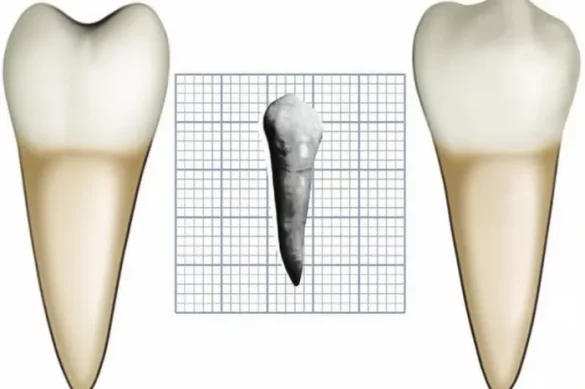
Premolars are a set of tooth placed among the canine and molars withinside the human mouth. They play a vital position in mastication, assisting overwhelm and tear meals throughout chewing. Understanding premolar anatomy, specifically the cusp configurations, is critical for dental experts and people interested by oral health. This article explores which premolars have cusps, explains their key features, and highlights their position in dental characteristic and identification.
What Is a Cusp and Why Does It Matter?
A cusp is a pointed elevation at the chewing (occlusal) floor of a teeth. Most premolars have distinguished cusps. These cusps are substantial due to the fact they assist with holding, tearing, and grinding meals. Dental specialists regularly use the variety and association of cusps to differentiate extraordinary styles of tooth, resource in diagnostics, and plan powerful restorative procedures.
Classification of Premolars
Premolars are divided into vast classes primarily based totally on their location:
- Maxillary Premolars (top jaw)
- Mandibular Premolars (decrease jaw)
Each 1/2 of of the jaw consists of premolars. They are regularly categorised because the first and 2nd premolars from the midline of the dental arch outward. In the everlasting dentition, there are 8 premolars in total—4 withinside the top and 4 withinside the decrease jaw.
Main Premolars with Two Cusps
Maxillary First Premolar
The maxillary first premolar (additionally called the top first premolar) is observed simply at the back of the dog teeth withinside the top jaw. It normally has well-described cusps:
- Buccal Cusp: Located at the cheek (buccal) side, that is the bigger and sharper cusp.
- Lingual Cusp: Located at the tongue (lingual or palatal) side, this cusp is smaller and rather shorter.
The cusps of the maxillary first premolar are awesome and really distinguished. The buccal cusp is generally longer than the lingual cusp. The separation and peak distinction of those cusps assist dentists pick out this teeth easily. The occlusal table—the chewing floor—is bounded through those cusps and bureaucracy a substantive transverse ridge.
Another particular function of the maxillary first premolar is that it is able to have roots (buccal and lingual), however a unmarried root kind additionally exists. The crown seems asymmetrical and has a hexagonal or oval define while considered from above.
Maxillary Second Premolar
Located at the back of the primary premolar withinside the top jaw, the maxillary 2nd premolar usually additionally has cusps, however those are greater identical in peak in comparison to the primary premolar:
- Buccal Cusp: Positioned at the cheek side, regularly much less pointed than the primary premolar’s buccal cusp.
- Lingual Cusp: Located at the tongue side, this cusp has a tendency to be comparable in length to the buccal cusp.
The occlusal define of the maxillary 2d premolar is extra symmetrical and oval. Most 2d premolars have a unmarried root. The cusps are located at once contrary every other, growing a balanced and powerful floor for crushing and tearing food. The groove sample at the chewing floor has a tendency to be shorter and extra intricate, with extra supplemental grooves, making it an smooth difference from the primary premolar.
Mandibular Premolars: Cusp Variability
For mandibular (decrease jaw) premolars, the cusp sample varies.
- The mandibular first premolar nearly usually has cusps (one buccal, one lingual), however the lingual cusp may be very small and frequently taken into consideration non-practical. The buccal cusp is sharp and nicely-fashioned, comparable to a canine, which makes the teeth much less standard of proper bicuspids.
- The mandibular 2d premolar is particular as it seems in forms:
- Two-cusp kind: Has one buccal and one lingual cusp. Both are pretty nicely developed, making this a real bicuspid configuration. The occlusal groove form in this situation frequently resembles a U or H sample.
- Three-cusp kind: Presents with one buccal and lingual cusps (mesiolingual and distolingual). This offers the teeth a Y-fashioned occlusal groove and a rectangular or spherical occlusal define. In this variant, the teeth isn’t taken into consideration strictly bicuspid.
Summary Table: Premolars with Two Cusps
Both maxillary premolars (first and 2d) constantly reveal nicely-fashioned cusps. The mandibular first premolar additionally technically has cusps however with a non-practical lingual cusp. The mandibular 2d premolar could have both or 3 cusps — handiest the -cusp kind suits the traditional bicuspid description.
Why Is Knowing Cusp Number Important?
Knowing the range of cusps is vital for numerous reasons. Dental specialists use cusp styles to:
- Diagnose and discover enamel accurately
- Plan restorative and prosthodontic treatments
- Anticipate put on styles
- Recognize anatomical versions in patients
For patients, expertise this enables give an explanation for dental procedures, root canal therapy, extractions, or crowning desires for positive enamel.
Morphological Differences Between Maxillary and Mandibular Premolars
Maxillary Premolars
- More distinguished buccal ridge, in particular withinside the first premolar
- Both cusps are practical and extra comparable in length withinside the 2d premolar
- Wider buccolingually than mesiodistally
- Occlusal define: extra oval or hexagonal for first premolar, oval for 2d
Mandibular Premolars
- First premolar: large, sharp buccal cusp (practical); very small, non-functioning lingual cusp
- Second premolar (-cusp kind): each cusps are practical and pretty comparable in length
- Second premolar (3-cusp kind): outstanding via way of means of Y-fashioned groove sample and 3 practical cusps
- Occlusal define: extra rectangular or spherical, in particular withinside the 3-cusp version
Clinical and Functional Implications
Maxillary premolars with cusps are green for tearing and grinding because of the stability and separation of the cusps. The buccal and lingual cusps replicate every other, making them powerful in occlusion. Mandibular premolars, mainly the second one premolar -cusp type, adapt nicely to the decrease jaw’s mechanics, however the first premolar frequently acts greater like a dog because of its distinguished buccal cusp.
When restoring premolars or getting ready crowns, the dental expert should apprehend the cusp morphology so the brand new enamel capabilities and feels natural. Failing to duplicate the perfect cusp wide variety and form can result in choppy chewing forces or affected person discomfort.
Conclusion
The premolars maximum usually diagnosed through cusps are the maxillary first and 2nd premolars and the -cusp type of the mandibular 2nd premolar. The mandibular first premolar, at the same time as technically having cusps, is functionally ruled through its buccal cusp. Identifying and knowledge cusp wide variety in premolars is essential for correct dental identity, remedy planning, and affected person education. Whether you’re a dental student, practitioner, or affected person, a primary draw close of which premolars have cusps can decorate oral fitness focus and remedy outcomes.
FAQs
Which premolar constantly has same-sized cusps?
The maxillary 2nd premolar commonly capabilities cusps which can be nearly same in size.
Is the mandibular 2nd premolar constantly a bicuspid?
No, the mandibular 2nd premolar may also have both or 3 cusps. Only the -cusp version is a real bicuspid.
Do premolars have roots similar to every cusp?
Maxillary first premolars could have roots, however maximum premolars have simplest one root irrespective of the wide variety of cusps.
Why is it vital to differentiate the wide variety of cusps in premolars?
Cusp wide variety influences each characteristic and dental treatments, consisting of restorations, extractions, and prosthetics, so right identity guarantees most excellent care.