


Root canal treatment can be a significant investment in your dental health, and many patients have questions about how much it costs, especially when dental insurance is involved. The price for a root canal procedure can vary substantially depending on several factors, including the location of the dental practice, the type of tooth treated, and the details of your insurance policy. For most people, understanding these costs in advance can make managing their dental expenses much easier.
Understanding Root Canal Treatment
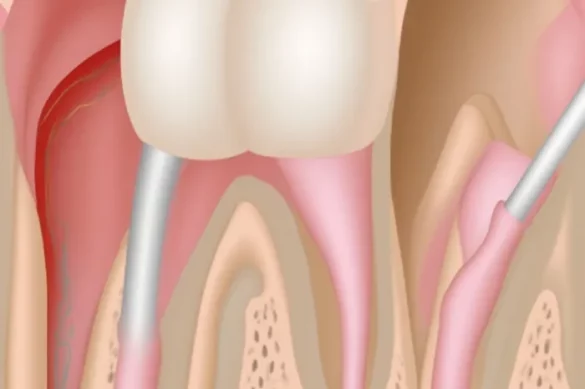
A root canal is a dental procedure designed to save a tooth that has become infected or deeply decayed. The dentist removes the damaged pulp inside the tooth and cleans the root canals. Afterwards, the tooth is sealed to prevent future infection. Typically, a crown or other restorative work is needed to restore the tooth’s function and appearance.
Factors Affecting Root Canal Costs
Several variables will determine how much you will pay for a root canal treatment:
Tooth Location and Type
Molars, or back teeth, usually have more roots and are harder to access. This makes them more expensive to treat compared to front teeth like incisors and canines. For instance, molar root canals are often more costly than procedures for premolars or front teeth.
Provider Differences
Treatment by an endodontist, a specialist in root canal therapy, may have a higher price tag than treatment by a general dentist. Specialists have advanced training, which can sometimes add to the cost.
Geographic Location
Urban areas and regions with higher living costs tend to have higher dental fees. It is a good idea to check costs in your specific area for the best estimate.
Case Complexity
If your tooth has multiple roots, curved canals, or additional infection, treatment may be more complicated and cost more. Retreatments or emergencies also add to the price.
Insurance Coverage
Dental insurance can greatly reduce your out-of-pocket expense. However, exact coverage varies, so reviewing your plan’s benefits is essential.
Root Canal Cost: With and Without Dental Insurance
Without Dental Insurance
The average cost of a root canal treatment in the United States, as of 2025 estimates, is about $800 to $1,500 per tooth. Prices will differ based on the tooth’s location:
- Front Tooth (Incisor, Canine): $700 – $1,100
- Premolar Tooth (Bicuspid): $800 – $1,300
- Molar Tooth: $1,000 – $1,600
These prices are estimates and can fluctuate depending on your dentist, region, and the complexity.
With Dental Insurance
Dental insurance can cover a significant part of root canal expenses. Most plans will pay between 50% and 80% of the procedure cost, after your deductible is met. Your annual maximum benefit and network provider status can also affect your total expense.
Here’s what patients usually pay with dental insurance:
- Front Tooth Root Canal: $200 to $600 out-of-pocket
- Premolar Root Canal: $250 to $700 out-of-pocket
- Molar Root Canal: $300 to $800 out-of-pocket
The difference in price is due to insurance covering a large percentage of the actual cost. For example, with an insurance plan that covers 80% of a $1,000 molar root canal, you would pay only $200 plus any deductible (often $50).
How Dental Insurance Works for Root Canals
Dental insurance policies have important details that will directly impact your cost:
Deductibles
Most plans require you to pay a deductible before coverage begins. Deductibles are usually between $25 and $100 per year.
Coverage Percentage
Insurance frequently covers 50% to 80% of root canal costs, but this varies by plan. More generous plans cover more.
Annual Maximums
Every dental insurance policy has an annual maximum benefit, often between $1,000 and $2,000. Once you reach this amount, insurance will not pay additional expenses within that year.
Network Providers
Costs are lower when you use an in-network dentist. Out-of-network providers may cost more and could require additional paperwork.
Additional Root Canal Expenses: Crowns and More
After a root canal, a crown is often recommended to protect the tooth. Crowns have their own costs and are usually partially covered by insurance.
- Without insurance, crowns typically cost $1,000 to $1,500.
- With insurance, patients may pay $500 to $1,500, based on coverage and crown material.
It is important to check your plan for coverage details on crowns, as sometimes they are not covered at the same rate as root canal therapy.
Common Scenarios: How Your Costs Add Up
Let’s look at a typical insurance scenario to show how costs are calculated:
Suppose you need a root canal on a molar. The cost from your dentist is $1,200. You have met your $50 deductible for the year, and your insurance covers 80% of endodontic procedures.
- Dentist’s fee: $1,200
- Insurance covers 80%: $960
- Patient pays: $240, plus the $50 deductible
Final out-of-pocket cost: $290
If you need a crown afterward costing $1,200, insurance may cover 50%, leaving you to pay $600. Altogether, you would pay $890 for the complete treatment.
Tips for Getting the Best Estimate
- Call your insurance provider to review your coverage
- Ask your dentist for a pre-treatment estimate
- Use cost estimator tools offered by your insurance or dental practice
- Inquire about payment plans or third-party financing
Knowing your coverage details and getting estimates beforehand helps avoid surprise expenses and ensures you receive the care you need.
Practical Considerations
Dental insurance reduces your root canal costs, but your personal share depends on your plan’s coverage, deductible, maximum benefit, and the dentist you choose. If you have not reached your annual maximum, coverage is typically more generous. If you’ve reached it, you may pay more. Crowns and additional treatments also affect final costs.
Conclusion
A root canal can be costly, but dental insurance helps lower the expense significantly. Factors affecting cost include the type of tooth, complexity of your case, provider expertise, and geographic location. Always check your insurance policy for the specific benefits covered, deductibles, and annual maximums. Get a treatment plan and estimate from your provider to plan your finances accurately. Being informed helps you make the best decisions for your oral health.
FAQs
How much does a root canal cost with dental insurance?
With insurance, patients usually pay $200 to $800 out-of-pocket depending on the tooth type and their specific plan.
Does dental insurance cover crowns after root canals?
Most dental plans cover part of the cost of crowns after root canal therapy, often 50% to 80%, but check your policy for details.
Why do root canal prices vary so much?
Costs differ because of tooth location, complexity, provider expertise, and geography. Insurance details also affect prices.
Are there payment plans for root canals if I have no insurance?
Many dentists offer payment plans or third-party financing to help patients manage costs without insurance.
What should I do to get the most accurate root canal cost?
Check with your insurance company, get a pre-treatment estimate from your dentist, and ask about coverage for crowns and other necessary procedures.