



You probably don’t think about how you breathe or whether you’re doing it correctly. You typically breathe without conscious awareness.
**But what if you knew that about one-third of people aren’t breathing well enough to stay healthy?**10 You might want to pay more attention to how you breathe, which involves knowing the difference between mouth and nose breathing.
How is Nose Breathing Different From Mouth Breathing?
**Nasal breathing is better for your overall health than mouth breathing, particularly when inhaling dry or cold air.**3 Mouth breathing causes air to bypass the nose’s protective functions. Your nose was designed for breathing and smelling, while your mouth was designed for speaking, eating, and drinking.
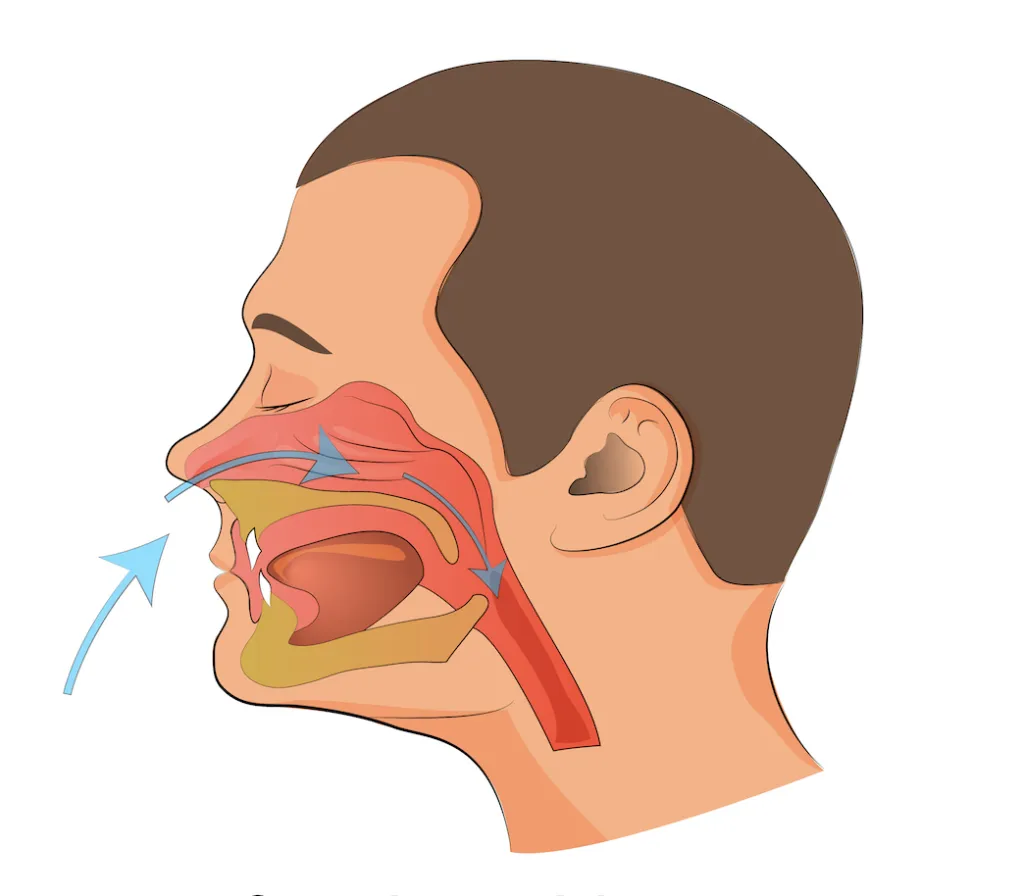
Mouth breathing can lead to problems like dry mouth, bad breath, and poor sleep. Yet, an estimated 30 to 50% of adults are mouth breathers, especially during the morning.
What Causes Mouth Breathing?
Sometimes, mouth breathing is necessary. You might find yourself mouth breathing when you can’t get enough air through your nose. Common causes of mouth breathing include:
- Enlarged tonsils or adenoids
- Deviated septum
- Tongue tie
- Chronic nasal congestion from allergies, colds, or sinus infections
6 Reasons Why Nose Breathing is Superior
Breathing through the nose is healthier and helps:
1. Filter and Humidify Inhaled Air
Breathing through your nose warms, cleanses, and moistens the air in a way your mouth can’t. These actions prepare the air you breathe in for delivery to your lungs.
The mucus membranes in your nose filter out particles and allergens, protecting your respiratory system and reducing your risk for asthma.
2. Increase Oxygen Uptake
Compared to mouth breathing, nasal breathing results in 10 to 20% more oxygen uptake. The structures inside your nose regulate and direct inhaled air flow, maximizing its exposure to nerves and blood vessels.
3. Introduce Nitric Oxide
Your nose and sinus cavities contain enzymes that produce nitric oxide (NO). NO is a:
- Bronchodilator — this boosts lung function by increasing oxygen absorption.
- Vasodilator —this helps widen blood vessels, which improves circulation and lowers blood pressure.
NO also helps your immune system. When air passes through your nasal passages, it mixes with NO.
4. Stimulate the Parasympathetic Nervous System
Breathing through your nose activates your parasympathetic nervous system. This leads to the following:
- Increased relaxation
- Better digestion
- Slower breathing and heart rate
5. Promote Healthy Jaw and Facial Structure
Nose breathing allows you to keep your tongue and mouth in the proper position. This involves resting your tongue against the front of your upper palate while your lips are together.
Correct tongue and lip placement support the formation of healthy dental arches and straight teeth.
6. Reduce the Risk of Health Problems
Nasal breathing helps prevent many health issues, including:
- Colds and the flu
- Allergic reactions
- Hay fever
- Coughs
- Dry mouth
- Asthma
- Snoring
- Sleep apnea
- Tooth decay
- Gum disease
The Effects of Mouth Breathing
**Many studies have shown that chronic mouth breathing can harm your overall health.**10 Mouth breathing can contribute to the following health problems:
Sleep Disorders
Studies show that mouth breathers are more likely to suffer from sleep disorders, including obstructive sleep apnea (OSA).
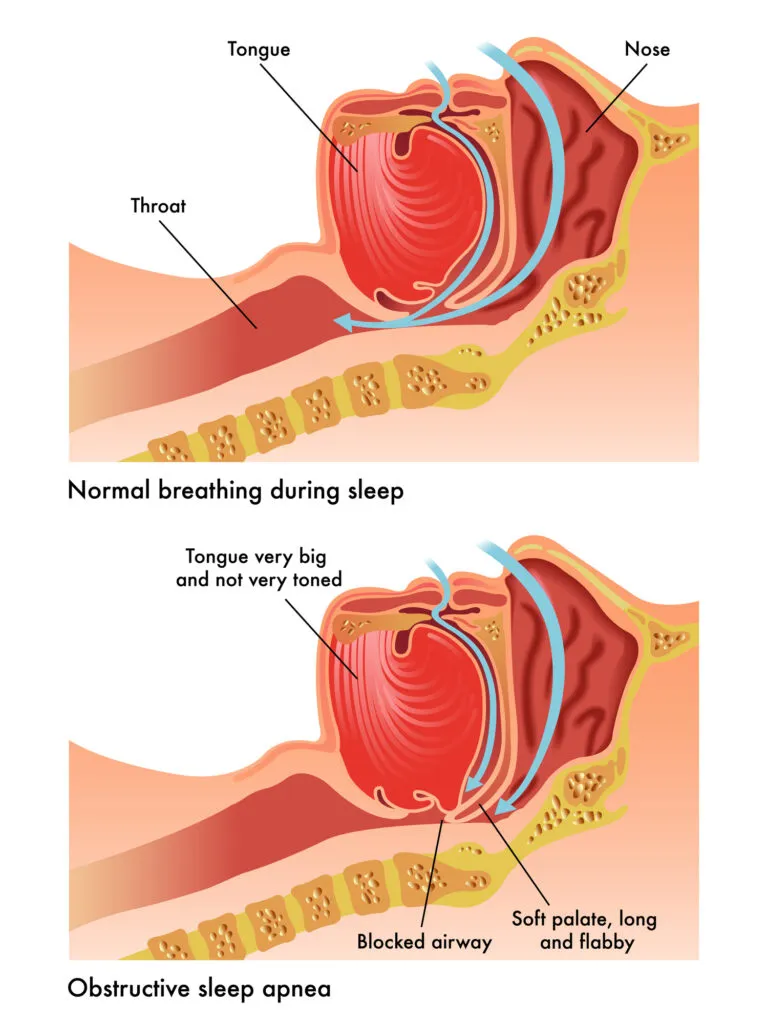
Sleep apnea occurs when breathing stops and starts again during sleep. It causes loud snoring and daytime sleepiness.
Malocclusion
Mouth breathing can lead to the narrowing of the jaw, dental arch, and palate. This may lead to misaligned teeth (malocclusion). People who mouth breathe are more likely to have the following types of malocclusion:
- Open bite
- Excessive Overbite
- Crossbite
Mouth breathing may also increase the risk of relapse after orthodontic treatment.
Mouth Breather Face
Mouth breathing is common in children. If a child doesn’t stop mouth breathing with age, they can develop a ‘mouth breather face.’
Signs and symptoms of mouth breather face include:
- Jaw abnormalities
- Crowded, crooked teeth
- Malocclusion
- Inability to keep the mouth closed
- Face elongation
- Poor posture
- Problems eating, speaking, and swallowing
Other Oral Health Problems
Breathing with the mouth open may also contribute to the following:
- Bad breath
- Tooth decay
- Gum inflammation (gingivitis)
- Temporomandibular disorders (TMD)
- Dry mouth
How to Improve Nasal Breathing
Switching from mouth breathing to nasal breathing can take time, but the health improvements are worth the effort. Here are some tips to help you stop mouth breathing:
1. Try Nose-Breathing Exercises
Breathing exercises can help you learn to breathe properly through your nose. Yoga practices (pranayama) commonly use these techniques.
In addition to proper breathing, benefits of mindful breathing exercises include the following:
- Enhanced lung function
- Better respiratory muscle strength
- Decreased stress and anxiety
Belly Breathing
Also known as abdominal or diaphragmatic breathing, belly breathing involves taking deep breaths through your nose. Here’s how to do this breathing exercise:
- Sit up straight with relaxed shoulders, or lie down flat.
- Close your mouth. Place one hand on your abdomen and the other on your chest.
- Using your nose, inhale slowly. Feel your belly rise while your chest remains still.
- Exhale slowly through pursed lips.
- Repeat for 5 to 10 minutes.
Breath of Fire
The Breath of Fire technique involves normal inhalations and short, strong exhalations. Here’s how to try it:
- Sit upright with relaxed shoulders.
- Place both hands on your belly.
- Using your nose, inhale deeply. Feel your lower abdomen expand.
- Release steady, rhythmic, and short exhalations through your nose while your stomach moves in. Allow your nose to inhale passively while you exhale forcefully.
- Continue this rhythmic cycle, keeping your inhales the same length as your exhales.
- Repeat for 30 seconds.
Alternate Nostril Breathing
Alternate nostril breathing involves taking slow inhalations through one nostril and exhaling through the other. You use your fingers to seal the opposite nostril. Here’s how to do it:
- Sit up straight and relax your shoulders.
- Cover your right nostril with your right thumb. Inhale slowly through your left nostril.
- Hold your breath while releasing your right nostril.
- Cover your left nostril with your right ring finger. Exhale slowly through your right nostril.
- Inhale through the right nostril.
- Reposition your thumb over the right nostril. Exhale through the left one. This is one set.
- Repeat the cycle for 5 minutes.
2. Pay Attention to Posture and Mouth Position
Changing the way you position your body can improve breathing patterns. To start, sit and stand with your back straight and shoulders relaxed.
When you’re not eating or speaking, hold your mouth in the proper resting position with your:
- Lips closed
- Teeth gently together
- Tip of the tongue touching the front of the roof of your mouth
3. Use Tape
Mouth-taping can help you breathe through your nose during sleep. One study found that mouth-taping reduced snoring and sleep apnea symptoms in mouth breathers by 50%.8
Before mouth-taping, ensure you can breathe safely through your nose. If you have nasal congestion, clear that up first.
4. Maintain a Clear Nasal Airway
Clear nasal cavities are essential for proper nose breathing. Nasal congestion can result from various health issues, such as a sinus infection or allergies.
You may be able to treat a stuffy nose with home remedies, such as:
- Nasal inhalers
- Decongestant medications
- Neti pots
- Essential oils
If the congestion doesn’t go away, seek treatment from your healthcare provider.
5. Visit Your Dentist or Healthcare Provider
If you can’t stop mouth breathing, your dentist or doctor can help. Mouth breathing may be due to a condition that requires surgical or orthodontic treatment. These conditions include:
- Enlarged tonsils or adenoids
- Narrow palate
- Deviated septum
Your healthcare provider can diagnose mouth breathing and treat its underlying cause.
Summary
- Nose breathing is better than mouth breathing for your overall health.
- Breathing through your nose increases oxygen circulation and filters air before it reaches your lungs.
- Mouth breathing can lead to health issues like dry mouth, bad breath, and gum disease.
- Mouth breathing increases the likelihood of having allergies, asthma, and sleep disorders.
- To breathe through your nose more often, try breathing exercises, mouth-taping, and maintaining good posture.