


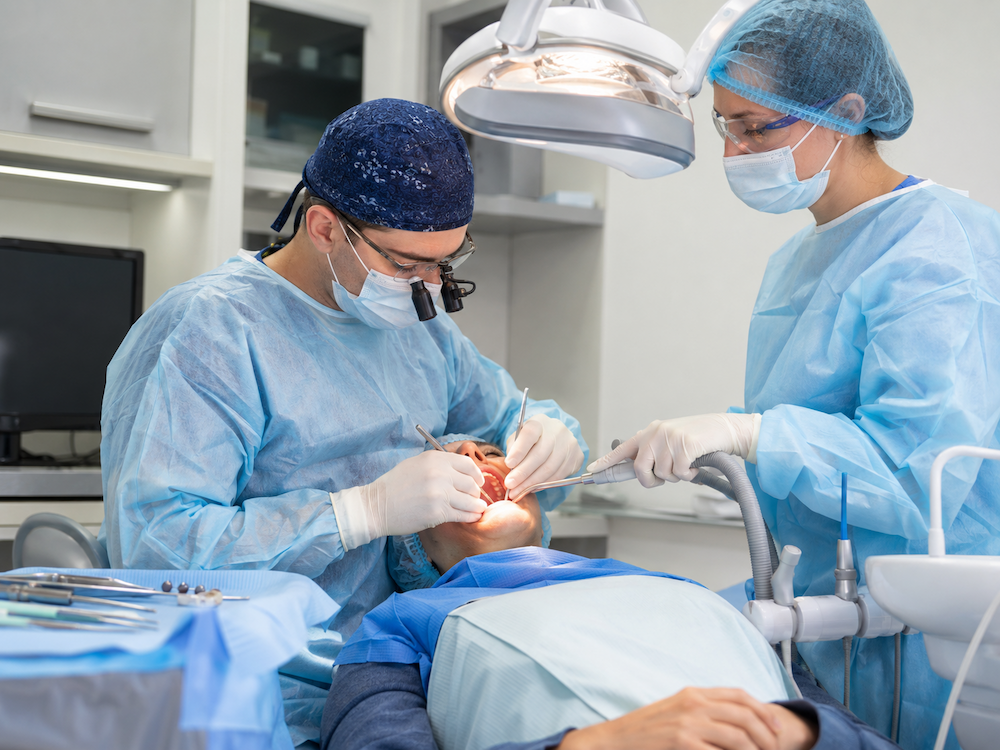
What Is an Impacted Tooth?
An impacted tooth extraction is often more complex than a routine tooth removal. Therefore, patients may experience stronger reactions after surgery.
An impacted tooth cannot erupt normally because another tooth, bone, or soft tissue blocks its path. The tooth may emerge only partly through the gum. In other cases, it remains completely covered.
Common impacted teeth include:
- Lower third molars
- Upper third molars
- Upper canine teeth
- Less commonly, other permanent teeth
Lower third molars are commonly known as lower wisdom teeth. They account for many surgical extraction cases.
Impacted teeth often grow in difficult positions. Moreover, they may sit close to nearby teeth, nerves, blood vessels, or the maxillary sinus.
During removal, the dentist may need to:
- Make an incision in the gum
- Lift a small gum flap
- Remove some surrounding bone
- Divide the tooth crown into sections
- Separate the roots when necessary
- Clean and close the extraction site
Therefore, the procedure may affect both soft tissue and bone. This trauma can cause several postoperative reactions.
Most reactions remain temporary and improve during recovery. However, knowing what to expect can reduce anxiety. It can also help patients identify warning signs early.
Reactive Pain After Tooth Extraction
Pain is one of the most common reactions after removing an impacted tooth.
In particular, lower wisdom tooth removal may require a gum incision, flap elevation, bone removal, crown sectioning, or root separation. As a result, the procedure can cause different levels of soft-tissue and bone injury.
During healing, damaged tissues release inflammatory substances. These substances can stimulate local nerve endings and cause pain.
In addition, a large extraction wound may contain a larger blood clot. If the clot breaks down or becomes displaced too early, the socket wall may lose some protection. Therefore, exposed tissues may become more sensitive to outside irritation.
Patients may notice:
- Aching around the extraction site
- Tenderness when swallowing
- Pain while opening the mouth
- Discomfort during chewing
- Mild pain spreading toward the jaw or ear
- Increased sensitivity after the anaesthetic wears off
Pain often feels strongest during the first two or three days. Afterward, it should gradually improve.
Most patients notice a clear reduction within one week. However, the recovery period varies according to the surgical difficulty and individual healing response.
Dentists often recommend suitable pain medicine after surgery. Patients should take it according to professional instructions.
How to Reduce Postoperative Pain
Pain after impacted tooth removal cannot always be avoided. However, proper care can make it easier to manage.
Patients should:
- Take recommended pain medicine as directed
- Rest after the procedure
- Avoid heavy physical activity
- Choose soft foods
- Chew on the opposite side
- Keep the head slightly raised while resting
- Avoid touching the wound with fingers or the tongue
In addition, patients should avoid placing aspirin or crushed medicine directly on the socket. These products may irritate the gum and delay healing.
Mild or moderate pain usually improves each day. Therefore, the pattern of pain matters more than the presence of pain alone.
Contact the dentist when:
- Pain becomes more severe after several days
- Pain improves and then suddenly returns
- Ordinary pain medicine provides little relief
- Pain spreads strongly toward the ear or temple
- A foul smell or bad taste appears
- Fever or increasing swelling develops
Severe pain that begins two or three days after surgery may indicate dry socket. Meanwhile, pain with pus, fever, or increasing swelling may suggest infection.
Therefore, patients should not keep increasing pain medicine without professional advice. A dentist needs to examine the socket and identify the actual cause.
Postoperative Swelling
Swelling often develops after a difficult extraction. It is especially common when the dentist needs to raise a gum flap or remove bone.
The degree of swelling varies greatly between patients. Some people develop only mild cheek fullness. Others may notice visible facial asymmetry.
Swelling usually:
- Begins within the first 12 to 24 hours
- Becomes more noticeable during the first few days
- Feels soft or slightly firm
- Gradually improves within three to five days
- May occur together with mild bruising
This reaction develops because surgery causes local inflammation. Moreover, fluid can collect in the injured tissues.
Normal postoperative swelling should slowly decrease. However, increasing swelling after several days may not be part of normal healing.
Patients should contact the dental clinic when swelling:
- Continues to grow after the expected peak
- Becomes hard, hot, or very painful
- Returns after it had started to improve
- Comes with fever or pus
- Spreads toward the eye or neck
- Causes difficulty swallowing
- Affects breathing
Breathing or swallowing difficulty requires urgent attention.
Swelling alone does not always indicate infection. Therefore, patients should also consider pain, fever, discharge, and the direction of recovery.
How to Prevent and Control Swelling
Cold therapy may help limit swelling during the early recovery period.
During the first 24 hours, patients can place a cold pack against the outside of the face. However, the cold pack should not touch bare skin directly.
Use it intermittently:
- Apply it for a short period
- Remove it for a short rest
- Repeat according to the dentist’s instructions
In addition, patients should:
- Rest during the first day
- Keep the head elevated
- Avoid strenuous exercise
- Avoid very hot food and drinks
- Drink enough water
- Follow all medication instructions
- Avoid smoking and alcohol
The face may still swell even with correct cold application. Therefore, a certain amount of swelling does not mean that the patient did something wrong.
After the early stage, cold therapy becomes less useful. If jaw stiffness remains, the dentist may later recommend gentle warmth.
However, patients should not apply strong heat during the early bleeding period. Heat may increase circulation and worsen bleeding.
They should also avoid aggressive facial massage. Excessive pressure can irritate the surgical area.
The most important point is gradual improvement. If swelling continues to worsen, the dental team should assess it.
Difficulty Opening the Mouth
Temporary difficulty opening the mouth can occur after lower impacted tooth removal.
This condition often develops because the surgical area lies close to muscles that control jaw movement. During lower wisdom tooth removal, nearby muscle fibres and tendons may experience trauma or inflammation.
As a result, the muscles can develop a protective spasm. This response can limit mouth opening.
Patients may find it difficult to:
- Eat large pieces of food
- Brush the back teeth
- Speak for long periods
- Yawn
- Open the mouth during oral cleaning
Mild restriction often improves as swelling and inflammation decrease. Therefore, patients should avoid forcing the jaw open during the early stage.
Helpful measures may include:
- Eating soft foods
- Taking small bites
- Moving the jaw gently
- Following prescribed pain control
- Maintaining careful oral hygiene
- Using warm mouth rinses after the early healing period
- Applying gentle warmth when advised
Simple reactive jaw stiffness should gradually improve.
However, severe or worsening restriction may indicate infection. Therefore, patients should seek care if limited opening occurs with fever, pus, increasing swelling, or worsening pain.
Persistent jaw stiffness also requires professional evaluation. The dentist may need to check the wound and surrounding muscles.
Preventing Severe Jaw Stiffness
A certain amount of stiffness may remain unavoidable after complex surgery. However, careful postoperative habits can support recovery.
Patients should avoid:
- Forcing the mouth open suddenly
- Chewing hard foods too early
- Repeatedly testing maximum mouth opening
- Ignoring increasing pain or swelling
- Stopping oral hygiene completely
Once the dentist confirms that healing has started normally, gentle jaw movement may help.
For example, patients can slowly open and close the mouth within a comfortable range. However, they should stop if the movement causes sharp pain.
In addition, warm rinses may relax the muscles after the first stage of healing. Warm compresses may also help in some cases.
Patients should still follow their dentist’s individual instructions. The correct timing depends on the wound and the surgical method.
Good pain control also matters. When pain remains uncontrolled, patients may avoid moving the jaw. As a result, stiffness can become more noticeable.
Meanwhile, infection-related restriction needs treatment rather than exercise alone. Therefore, worsening mouth opening should not be treated only with home care.
Contact the clinic if the mouth opening becomes smaller each day instead of improving.
Bleeding After Tooth Extraction
Patients often feel anxious when they notice bleeding after returning home.
Some blood-stained saliva is normal after surgery. However, continuous active bleeding requires attention.
Post-extraction bleeding can be divided into:
- Primary bleeding
- Secondary bleeding
Primary bleeding begins during the procedure or soon afterward. Secondary bleeding develops later and may relate to wound irritation, clot loss, or infection.
Most bleeding results from local factors or incorrect postoperative care. However, a small number of cases involve general medical conditions.
Local causes may include:
- Inflamed tissue remaining in the socket
- Soft-tissue tearing
- Damage to the socket wall
- Small blood-vessel injury
- Disturbance of the blood clot
- A larger vessel injury in rare cases
- Repeated rinsing or spitting
- Touching the wound
Certain health conditions and medicines may also increase bleeding risk. Therefore, patients should tell the dentist about blood thinners, bleeding disorders, liver disease, and other relevant conditions before surgery.
The dentist should address known bleeding risks before the procedure whenever possible.
How to Control Bleeding at Home
Patients should remain at the clinic for observation after surgery. Usually, the dental team confirms that bleeding has stopped before the patient leaves.
If bleeding begins again at home, the patient should:
- Sit upright
- Place clean folded gauze over the socket
- Bite down with firm and steady pressure
- Keep the gauze in place without checking repeatedly
- Avoid talking while applying pressure
- Keep the head raised
Repeatedly removing the gauze can disturb the clot. Therefore, patients should leave it in position for the time advised by the dentist.
They should also avoid:
- Forceful rinsing
- Repeated spitting
- Hot drinks
- Smoking or vaping
- Alcohol
- Heavy exercise
- Touching the wound
- Drinking through a straw
Contact the dental clinic if firm pressure does not stop the bleeding.
Urgent care may be necessary when:
- Blood flows continuously
- The mouth repeatedly fills with blood
- Large clots keep forming
- The patient feels weak or dizzy
- The patient takes anticoagulant medicine
- The patient has a known bleeding disorder
Patients must not stop prescribed blood-thinning medicine without medical guidance.
Postoperative Infection
Acute infection does not occur after every tooth extraction. In fact, many patients recover normally without antibiotics.
However, infection may develop after impacted tooth surgery.
Chronic infection may occur when the wound contains:
- Small tooth fragments
- Bone fragments
- Dental calculus
- Inflamed granulation tissue
- Trapped food or debris
Patients with chronic infection may notice ongoing discomfort around the wound. They may also see pus or other discharge.
Acute infection occurs more often after lower impacted wisdom tooth removal. The risk may increase when the tooth already has active inflammation.
Possible signs include:
- Increasing pain
- Increasing swelling
- Fever
- Pus from the socket
- A persistent bad taste
- A strong unpleasant smell
- Red or hot facial skin
- Worsening difficulty opening the mouth
- General weakness or illness
Normal surgical pain should gradually improve. Therefore, symptoms that become stronger after several days need assessment.
If infection develops, patients should seek dental care. The dentist may clean the wound, remove trapped material, or drain infected fluid.
Antibiotics may also be needed when clinical signs support their use.
How to Reduce the Risk of Infection
Proper care of the extraction site can lower the risk of infection.
Patients should:
- Avoid touching the wound
- Protect the blood clot
- Follow cleaning instructions
- Start gentle rinsing only when advised
- Brush the other teeth normally
- Clean near the socket carefully
- Avoid smoking and vaping
- Attend follow-up appointments
- Take prescribed medicine correctly
Patients should not rinse vigorously on the day of surgery. Strong rinsing can dislodge the blood clot.
After the early healing period, the dentist may recommend gentle warm salt-water rinses. However, the patient should let the water leave the mouth without forceful spitting.
Antibiotics should not be used casually. Patients should not take leftover medicine or another person’s prescription.
Moreover, antibiotics cannot remove trapped debris or dead tissue. Therefore, local dental treatment may still be necessary.
If pus, increasing pain, or worsening swelling appears, patients should contact the clinic promptly.
Early examination can prevent the infection from spreading into nearby facial spaces.
Dry Socket
Dry socket is one of the most painful complications after tooth removal. Dentists also call it alveolar osteitis.
Its exact cause remains uncertain. Several factors may contribute, including:
- Surgical trauma
- Early loss of the blood clot
- Breakdown of the blood clot
- Local bacterial activity
- Anatomical factors
- Smoking
- Poor protection of the socket
Dry socket often begins two or three days after extraction.
The main symptom is severe pain. The pain may spread toward:
- The ear
- The temple
- The lower jaw
- The side of the head
Ordinary pain medicine may provide little relief.
The socket may look empty. In other cases, it contains a broken-down blood clot or food debris.
Patients may also notice:
- A strong unpleasant smell
- A foul taste
- Visible bone inside the socket
- Pain that worsens after initial improvement
Dry socket does not always cause high fever or major facial swelling. Therefore, its symptoms can differ from those of an acute infection.
A dentist must examine the area to confirm the problem.
Treatment and Prevention of Dry Socket
Patients with suspected dry socket should return to the dental clinic.
The dentist may:
- Gently clean the socket
- Remove trapped debris
- Irrigate the wound
- Place a soothing medicated dressing
- Recommend appropriate pain control
- Arrange follow-up treatment
Patients should not place aspirin, alcohol, powder, oils, or other home remedies inside the wound.
These substances may irritate the exposed tissues and make the problem worse.
To protect the blood clot, patients should:
- Avoid forceful rinsing
- Avoid repeated spitting
- Avoid smoking and vaping
- Avoid straws
- Avoid touching the socket
- Follow the dentist’s food instructions
- Maintain gentle oral hygiene
- Attend reviews when advised
Dry socket can still occur even when patients follow every instruction. Therefore, its development does not always mean that postoperative care was poor.
However, protecting the clot can reduce avoidable risk.
Severe pain that begins several days after extraction should not be ignored. Prompt treatment can provide significant relief.
Subcutaneous Emphysema
Subcutaneous emphysema is a rare complication after dental surgery.
It develops when air enters the soft tissues under the skin or oral lining.
Patients may notice:
- Sudden local swelling
- Little or no tenderness
- A crackling sensation under the skin
- Swelling of the cheek
- Swelling beneath the jaw
- Swelling that spreads toward the neck
The crackling feeling may resemble the sensation of pressing on dry snow. However, patients should not keep pressing the swollen area to test it.
Air may enter the tissues during surgery. In addition, actions that increase pressure inside the mouth may force air into the healing wound.
To reduce the risk, patients should avoid:
- Forceful blowing
- Puffing out the cheeks
- Inflating balloons
- Playing wind instruments too soon
- Forceful nose blowing
- Creating strong pressure inside the mouth
Sudden swelling should be assessed by a dentist or oral surgeon. A clinician needs to distinguish trapped air from bleeding, infection, allergy, and normal swelling.
Most importantly, breathing difficulty, swallowing difficulty, chest discomfort, or neck swelling requires urgent medical care.
Although this complication is uncommon, early evaluation remains important because air can sometimes spread into deeper tissue spaces.
General Care After Impacted Tooth Removal
Good postoperative care can reduce several complications at the same time.
During the first day, patients should:
- Rest as much as possible
- Keep the extraction site undisturbed
- Bite on gauze as instructed
- Avoid forceful rinsing
- Avoid spitting
- Avoid smoking and alcohol
- Avoid hard exercise
- Choose cool or lukewarm soft foods
Suitable foods may include:
- Yoghurt
- Mashed potatoes
- Scrambled eggs
- Soft noodles
- Smooth soup after it cools
- Oatmeal
- Soft fish
- Blended vegetables
Patients should avoid nuts, seeds, chips, popcorn, and other small hard foods. These foods may enter the socket.
Moreover, patients should chew on the opposite side when possible.
Oral hygiene must continue. However, brushing near the wound should remain gentle.
After the time specified by the dentist, patients may begin gentle rinsing. They should not swish or spit with force.
Finally, every patient should follow the instructions provided by the treating dentist. The ideal care plan may differ according to the tooth position, surgical difficulty, stitches, and general health.
When Should You Contact the Dentist?
Many symptoms form part of normal recovery. However, some signs require professional assessment.
Contact the dental clinic when:
- Pain becomes worse instead of better
- Severe pain begins two or three days later
- Bleeding continues despite firm pressure
- Swelling keeps increasing
- Fever develops
- Pus appears
- A strong foul smell develops
- Mouth opening becomes more difficult
- The wound causes persistent discomfort
- Sudden crackling swelling appears
- Medication causes a rash or other reaction
Seek urgent help if the patient develops:
- Difficulty breathing
- Difficulty swallowing
- Rapidly spreading facial swelling
- Neck swelling
- Uncontrolled heavy bleeding
- Fainting or severe weakness
Patients should not wait until the next scheduled appointment when symptoms become serious.
Early treatment often makes complications easier to control. It can also reduce pain and prevent infection from spreading.
A patient may feel uncertain about whether a symptom is normal. In that case, contacting the dental clinic remains the safest choice.
Summarize
An impacted tooth extraction can cause more postoperative reactions than a simple tooth removal. This is because the dentist may need to cut the gum, remove bone, or divide the tooth.
Common postoperative problems include:
- Reactive pain
- Facial swelling
- Difficulty opening the mouth
- Bleeding
- Infection
- Dry socket
- Subcutaneous emphysema
Pain and swelling often become most noticeable during the first few days. After that, they should gradually improve.
Meanwhile, firm pressure with gauze can control mild bleeding. Gentle oral hygiene and correct wound care can also reduce the risk of infection.
Severe pain beginning two or three days after surgery may suggest dry socket. In addition, increasing swelling, fever, pus, or worsening mouth opening may indicate infection.
Patients can support healing by protecting the blood clot, eating soft foods, avoiding smoking, and following the dentist’s instructions.
Most patients recover successfully after impacted tooth extraction. However, worsening symptoms should never be ignored. Timely dental care can relieve discomfort, control complications, and support safer healing.