


Introduction
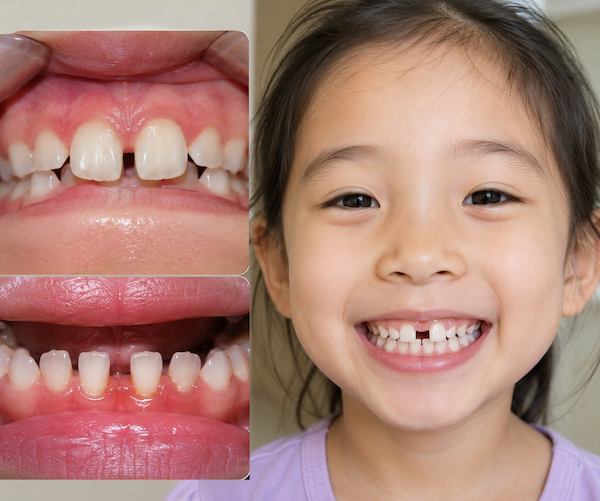
Many parents feel worried when their child suddenly develops kid’s big front teeth and noticeable gaps. At first glance, it may look unusual. However, in most cases, this is a normal stage of dental development.
Around age six, children enter what dentists call the “mixed dentition stage.” During this time, baby teeth fall out, and permanent teeth begin to emerge. As a result, the new teeth may look oversized. At the same time, spaces between teeth may appear.
However, these changes are often temporary. In fact, they play an important role in proper dental alignment later in life. Therefore, understanding this stage helps reduce unnecessary anxiety.
Why Do New Permanent Front Teeth Look Bigger?
One of the most common concerns is that newly erupted front teeth look too large. This happens for several natural reasons.
Permanent Teeth Are Naturally Larger
First, permanent teeth are designed for adult jaws. In contrast, baby teeth are smaller and suited to a child’s face.
As a result, when permanent teeth emerge:
- They appear wider and longer
- They may look disproportionate to the face
- They seem more prominent than baby teeth
However, as the jaw continues to grow, this imbalance gradually improves. Eventually, the teeth will look more proportionate.
Jaw Growth Is Still in Progress
At this stage, the child’s jaw is still developing. Therefore, there is not enough space yet for all permanent teeth.
Over time:
- The jaw expands
- More teeth erupt
- Alignment improves naturally
Thus, the “big teeth” appearance is usually temporary.
Why Do Children Develop Gaps Between Front Teeth?
Another common concern is the appearance of a child’s tooth gap between the upper front teeth.
Gaps Help Create Space for Future Teeth
Interestingly, these gaps are often beneficial. They act as “space holders” for upcoming teeth.
Specifically:
- Lateral incisors and canines need room to emerge
- Early spacing prevents crowding later
- The gap often closes on its own
The “Ugly Duckling Stage” Explained
Dentists often refer to this phase as the “Ugly Duckling Stage.” During this period:
- Front teeth may spread apart
- Teeth may tilt outward slightly
- The smile looks uneven
However, once adjacent teeth erupt, the pressure changes. As a result, the gap typically closes naturally.
Therefore, most cases do not require treatment at this stage.
When a Front Tooth Gap May Be a Problem
Although most gaps are normal, some situations require attention. Parents should watch for the following conditions.
Low or Thick Labial Frenum
The labial frenum is the tissue connecting the upper lip to the gum.
If it attaches too low:
- It may pull the teeth apart
- The gap may not close naturally
- Surgical correction may be needed
Supernumerary Teeth (Extra Teeth)
Extra teeth can develop between the front teeth. These are called supernumerary teeth.
They may:
- Block normal tooth eruption
- Push teeth apart
- Cause alignment issues
This condition affects about 1%–3% of children. Early detection is important.
Bad Oral Habits
Certain habits can create or worsen gaps. For example:
- Thumb sucking
- Tongue thrusting
- Lip biting
These habits apply constant pressure on teeth. Over time, this can lead to spacing or protrusion.
Developmental Abnormalities
Some children may have congenital dental issues. These include:
- Missing teeth
- Small or peg-shaped teeth
- Underdeveloped lateral incisors
In such cases, natural closure of gaps may not occur. Professional treatment may be required.
When Should Parents Take Action?
In most cases, observation is enough. However, regular dental visits are essential.
Recommended Dental Checkups
Parents should:
- Schedule dental exams every 6 months
- Monitor eruption patterns
- Track jaw development
Key Age: 7–9 Years Old
This age range is ideal for orthodontic evaluation.
At this stage:
- Dentists can identify early issues
- Treatment plans can be created
- Future complications can be prevented
At Huangshan International Dental Hospital, early orthodontic assessments are performed using advanced AI diagnostic systems. This improves accuracy and helps detect problems early.
How to Support Healthy Tooth Development
Parents play a key role during this stage. Good habits can make a big difference.
Maintain Proper Oral Hygiene
During tooth replacement:
- Teeth are harder to clean
- Gums may be sensitive
Therefore:
- Use a soft-bristle toothbrush
- Encourage brushing twice daily
- Introduce flossing if needed
Encourage a Balanced Diet
Nutrition supports strong teeth.
Include:
- Calcium-rich foods (milk, cheese)
- Vitamin D sources
- Fiber-rich foods (apples, carrots)
At the same time, limit sugary snacks and drinks.
Monitor Tooth Changes
Pay attention to:
- Persistent swelling
- Bleeding gums
- Bad breath
If symptoms continue, consult a dentist promptly.
Frequently Asked Questions (FAQ)
Is it normal for kids to have big front teeth?
Yes. Permanent teeth are naturally larger than baby teeth. This is a normal part of development.
Will my child’s tooth gap close on its own?
In most cases, yes. As more teeth erupt, the gap usually closes naturally.
At what age should I worry about gaps?
If gaps remain after age 9 or worsen, consult a dentist.
Can thumb sucking cause tooth gaps?
Yes. Prolonged habits can push teeth forward and create spacing issues.
Do all children need braces for gaps?
No. Many gaps close naturally. Treatment is only needed in specific cases.
Conclusion
In summary, kids’ big front teeth and temporary gaps are usually part of normal growth. Although they may look unusual, they often resolve naturally.
However, parents should stay observant. Regular dental checkups are essential. Early detection of potential problems can prevent long-term issues.
Most importantly, understanding this stage helps parents stay calm and make informed decisions. With proper care and guidance, children can develop healthy, well-aligned smiles.