


Patient Background
Many patients live with missing teeth for years before seeking treatment. Unfortunately, delaying treatment often leads to bone loss, chewing difficulties, and reduced confidence.
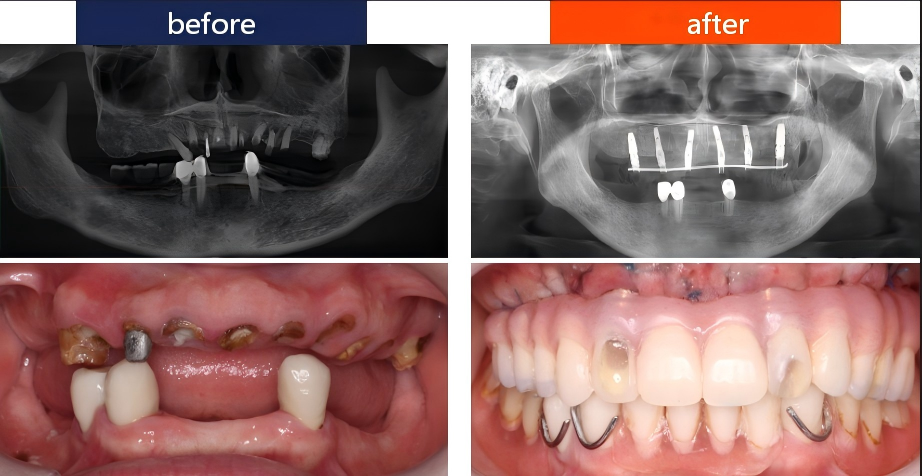
In this real-life all-on-6 dental implants case in China, the patient was a healthy woman who had suffered from multiple missing upper teeth for approximately five years. Over time, the remaining teeth became increasingly unstable. As a result, eating became more difficult, and her smile gradually changed.
Fortunately, she had no history of major systemic diseases.
According to her medical records:
- No hypertension
- No heart disease
- No diabetes
- Generally good physical health
- Suitable candidate for implant surgery
However, despite her good health, the condition of her upper teeth had deteriorated significantly. Therefore, a comprehensive treatment solution became necessary.
Like many patients, she wanted a long-lasting option. She also hoped to avoid removable dentures. Consequently, she visited Huangshan International Dental Hospital for a professional consultation.
Dental Problems Analysis
After a detailed examination, the dental team identified several serious oral health issues.
The primary diagnosis included:
- Extensive tooth loss in the upper jaw
- Multiple retained roots
- Severely damaged remaining teeth
- Poor long-term prognosis for natural tooth preservation
The affected teeth included:
- Teeth 11, 12, 13, 14
- Teeth 21, 22, 23, 24, 25
- Tooth 27
These teeth showed extensive damage and could no longer provide stable support.
Furthermore, the patient faced several functional concerns:
Difficulty Chewing
Missing teeth reduced biting efficiency. As a result, the patient often avoided harder foods.
Facial Appearance Changes
Tooth loss can reduce support for facial muscles. Therefore, the face may appear older over time.
Risk of Further Bone Loss
When teeth are missing, the jawbone no longer receives normal stimulation. Consequently, bone volume gradually decreases.
Psychological Impact
Many patients become reluctant to smile. In addition, social confidence often declines.
Because of these factors, a full-arch implant solution offered the most predictable long-term outcome.
Why All-on-6 Dental Implants Were Recommended
Several treatment options were discussed during the consultation.
The possible solutions included:
Option 1: Immediate All-on-6 Restoration
- Extraction of the remaining upper teeth
- Placement of six implants
- Immediate temporary bridge
- Final restoration after healing
Option 2: Delayed All-on-6 Restoration
- Extraction first
- Healing period
- Implant placement later
- Final bridge after osseointegration
Option 3: Removable Denture
- Extraction of remaining teeth
- Fabrication of a removable prosthesis
After careful discussion, the patient selected all-on-6 dental implants with immediate loading.
There were several reasons for this decision:
- Fixed teeth feel more natural
- Better chewing ability
- Improved aesthetics
- Greater comfort
- Long-term stability
- Reduced bone loss
Moreover, the patient preferred a fixed solution rather than a removable denture.
Therefore, the treatment team proceeded with the All-on-6 approach.
Treatment Process
The treatment process followed a carefully planned sequence.
Step 1: Comprehensive Examination
First, the doctors performed:
- Clinical examination
- Digital X-rays
- CBCT scanning
- Bite analysis
- Bone quality assessment
These evaluations helped determine the ideal implant positions.
Step 2: Removal of Non-Restorable Teeth
Next, the severely damaged teeth and retained roots were removed.
This step eliminated infection risks and prepared the jaw for implant placement.
Step 3: Implant Placement
Six implants were strategically inserted into the upper jaw.
The implant positions were selected to:
- Maximize bone support
- Improve force distribution
- Enhance long-term stability
Because implant placement was carefully planned, excellent primary stability was achieved.
Step 4: Immediate Temporary Restoration
After surgery, a temporary fixed bridge was attached.
As a result, the patient left the clinic with functional teeth on the same day.
This immediate restoration provided:
- Better appearance
- Improved speech
- Enhanced confidence
- Easier social interaction
Step 5: Healing and Osseointegration
During the next several months, the implants fused with the jawbone.
This process is called osseointegration.
Once healing was complete, the final prosthetic bridge was fabricated.
Before and After Result
The transformation achieved through all-on-6 dental implants was significant.
Before Treatment
The patient experienced:
- Multiple missing upper teeth
- Retained roots
- Poor chewing efficiency
- Reduced smile confidence
- Functional limitations
After Treatment
Following implant rehabilitation, the patient achieved:
- Full upper arch restoration
- Stable bite function
- Natural-looking smile
- Improved facial support
- Greater confidence in daily life
In addition, the patient reported increased comfort while eating.
Many foods that had previously been difficult to chew became manageable again.
Most importantly, she regained confidence when smiling and speaking.
This outcome highlights why All-on-6 treatment remains one of the most popular full-arch restoration options worldwide.
Why Choose Huangshan International Dental Hospital
Choosing the right clinic is just as important as selecting the right treatment.
At Huangshan International Dental Hospital, patients benefit from both advanced technology and experienced specialists.
International-Level Dental Expertise
Our implant team includes specialists trained at leading institutions such as Nanjing Stomatological Hospital.
Furthermore:
- Each implant dentist has completed over 10,000 successful cases
- International treatment standards are followed
- Comprehensive implant planning is provided
- Complex cases receive multidisciplinary support
As a result, patients receive care that meets global standards.
Fast and Efficient Treatment
Many international patients have limited travel time.
Therefore, efficiency is extremely important.
At Huangshan International Dental Hospital:
- Implant procedures are carefully streamlined
- Same-day temporary restorations are often possible
- On-site laboratory support reduces waiting time
- Fewer appointments are required
Consequently, patients can complete treatment more conveniently while minimizing travel disruptions.
Recovery and Aftercare Tips
Proper aftercare is essential for long-term implant success.
Fortunately, maintaining implants is straightforward when patients follow professional instructions.
First Week After Surgery
Patients should:
- Eat soft foods
- Avoid smoking
- Limit alcohol consumption
- Maintain good oral hygiene
- Follow prescribed medications
During Healing
Patients should:
- Attend follow-up appointments
- Use recommended oral care products
- Avoid excessive pressure on temporary restorations
Long-Term Maintenance
For the best outcomes:
- Brush twice daily
- Floss regularly
- Use water flossers if recommended
- Schedule professional cleanings
- Visit the dentist every six months
Consistent maintenance can significantly improve implant longevity.
Frequently Asked Questions
Is All-on-6 better than traditional dentures?
For many patients, yes.
All-on-6 implants provide greater stability, improved chewing ability, and a more natural feel than removable dentures.
How long do All-on-6 dental implants last?
With proper care, implants can last decades. Many patients enjoy successful results for 20 years or more.
Is the procedure painful?
Most patients report only mild discomfort after surgery. Modern anesthesia and surgical techniques help make treatment comfortable.
Can I eat normally after All-on-6 treatment?
Yes. After the healing phase is complete, most patients can return to a normal diet.
Am I too old for dental implants?
Age alone is not a limiting factor. Instead, overall health and bone condition are more important considerations.
How much do All-on-6 dental implants cost?
Costs vary depending on materials, complexity, and location. However, many international patients choose China because treatment is often significantly more affordable than in the United States or Europe.
Conclusion
This real-life case demonstrates how all-on-6 dental implants in China can restore both function and confidence for patients suffering from extensive tooth loss.
Through careful diagnosis, strategic implant placement, and immediate restoration, the patient successfully regained a full upper arch and a natural-looking smile. Moreover, the treatment improved chewing ability, facial support, and overall quality of life.
For patients facing severe tooth loss, all-on-6 dental implants offer a reliable and long-lasting solution. With experienced clinicians, advanced treatment planning, and patient-focused care, Huangshan International Dental Hospital continues to help patients rebuild healthy smiles and enjoy life with renewed confidence.