


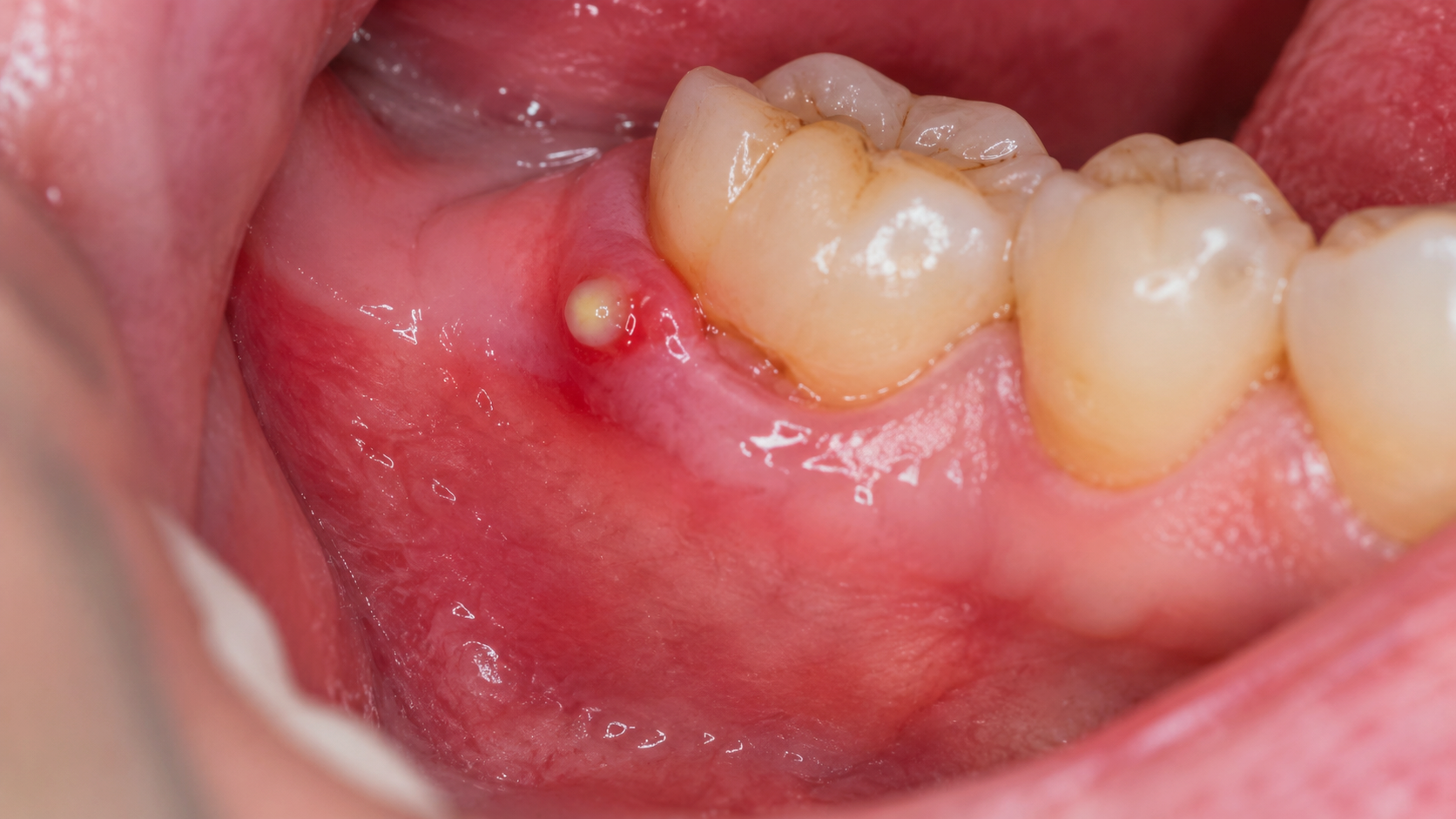
Recurrent Swollen Gums With Pus May Hide a Chronic Dental Problem
Recurrent swollen gums with pus often look like a small oral issue. However, they may hide a chronic dental infection. Many older adults face this problem. The mouth suddenly feels swollen. The gum becomes painful. Then pus appears again and again.
At first, anti-inflammatory medicine may seem helpful. The swelling may go down. The pain may become lighter. However, the same symptoms often return after a short time. Therefore, the real problem has not disappeared.
This repeated cycle is common in chronic oral infection. It means bacteria may remain around the tooth root, gum tissue, or jawbone. If treatment is delayed, the infection can continue to progress. As a result, it may damage the tooth, gum, and jawbone.
In more serious cases, the infection can spread into the oral and facial tissues. It may also affect general health, especially in older adults with weak immunity or chronic disease.
The Main Reason Older Adults Are at High Risk
Older adults are more likely to develop tooth-root infection and jawbone infection. This risk is closely related to oral hygiene, aging teeth, and underlying health conditions.
As people age, their teeth go through long-term wear. Cavities also become more common. In addition, many older adults have remaining tooth roots, broken crowns, loose old fillings, damaged dental materials, or shrinking gums.
These problems create chances for bacteria to enter the tooth. Once bacteria pass through the hard outer layer, they can reach the dental pulp. The pulp is the soft tissue inside the tooth. It contains nerves, blood vessels, and connective tissue.
When bacteria infect the pulp, the tissue can become inflamed. Later, it may die. After pulp death, the infection does not clear by itself. Instead, bacteria may continue to move toward the root tip.
Because of this, many older adults develop hidden infections around the tooth root. The tooth may not hurt all the time. Yet the infection can stay active deep inside.
How Tooth Pulp Death Leads to Repeated Infection
After the dental pulp dies, bacteria continue to survive inside the root canal. They do not leave the body on their own. Instead, they move along the tooth root and spread toward the root tip.
Then, inflammation can form around the root and nearby bone. This inflammation may last for a long time. It may also stay quiet for weeks or months. Because of this, many patients do not notice the problem early.
In the early stage, symptoms may be mild. Some people feel no obvious pain. Others only feel slight discomfort when chewing. However, when immunity drops, the infection can flare up.
Common triggers include:
- Fatigue
- Cold or flu
- Poor sleep
- Stress
- Irritating food
- Reduced immunity
- Uncontrolled chronic illness
When the infection becomes active, the gum may swell. A pus pocket may form. The pus may break through the gum and drain. After drainage, the pain may improve. However, this does not mean the infection has healed.
Instead, the condition often enters a cycle of attack, relief, and relapse. Without dental treatment, it usually cannot heal by itself.
Why Delayed Treatment Can Cause Jawbone Infection
Root-tip inflammation is one of the main causes of jawbone infection. If the infection stays untreated, it can keep damaging the surrounding alveolar bone. This bone supports the teeth.
Over time, the infected area may become larger. The bone may break down. Then the disease may progress into chronic jawbone inflammation. In some cases, it may even develop into chronic osteomyelitis of the jaw.
Patients may experience several symptoms, such as:
- Repeated gum swelling
- Long-term pus drainage
- Gum pain in the same area
- Facial swelling
- Difficulty opening the mouth
- Loose teeth
- Tooth loss
- Pain while biting
These symptoms may not all appear at once. However, repeated pus drainage is already an important warning sign.
More dangerously, tissues in the oral and facial area connect through many spaces. Once infection spreads, it may involve several facial spaces. In severe cases, it can affect swallowing and breathing.
Older adults often have high blood pressure, diabetes, heart disease, or cerebrovascular disease. Therefore, their resistance may be weaker. Once infection spreads, the disease may progress faster. Treatment may also become more difficult.
Why This Is More Dangerous for Seniors With Chronic Disease
For younger and healthier people, the body may control a small infection for some time. However, older adults may not respond as strongly. Their immune system may work more slowly. Healing may also take longer.
Diabetes is especially important. High blood sugar can reduce the body’s ability to fight infection. It can also slow wound healing. Therefore, dental infections may become more serious in diabetic patients.
Heart and blood vessel disease also matters. Infection can place extra stress on the body. In addition, some older adults take blood thinners or other long-term medicines. These factors can affect dental treatment plans.
Poor nutrition may also increase risk. If chewing hurts, older adults may avoid certain foods. Then nutrition becomes weaker. As a result, the body has even less strength to fight infection.
For these reasons, recurrent gum swelling should not be ignored in seniors. It is not only a dental problem. It may affect eating, sleep, general comfort, and overall health.
How to Tell Temporary Oral Discomfort From Infection
Some oral discomfort is temporary. For example, spicy food, hard food, poor sleep, or short-term immune changes may irritate the mouth. This type of discomfort usually improves quickly.
Temporary oral discomfort often has these features:
- It improves after rest.
- It gets better with a light diet.
- It does not come back often.
- It does not drain pus.
- It does not stay in one fixed spot.
- It does not cause tooth-root pressure pain.
However, chronic infection behaves differently. It often returns in the same area. It may also create a gum boil or pus pocket. The tooth may feel painful when biting. Pressing the gum near the root may cause a dull, swollen pain.
Typical signs of a pathological infection include:
- Symptoms return again and again.
- The same gum area drains pus.
- One tooth feels uncomfortable when biting.
- The gum near the root feels painful when pressed.
- The problem does not disappear after rest.
- Medicine only gives short-term relief.
This kind of condition cannot be removed by rest alone. Oral medicine may reduce symptoms for a while. Yet the infection source may remain. Then it can keep hiding and flare up again.
Scientific Treatment for Simple Tooth-Root Infection
If the problem is a simple tooth-root infection, root canal treatment may save the tooth. This treatment aims to remove infected and dead tissue from inside the tooth.
During root canal treatment, the dentist cleans the root canal system. Then the dentist disinfects and seals the canal. This helps block bacteria from staying inside the tooth. If treatment succeeds, the natural tooth can often remain in the mouth.
Root canal treatment is often suitable when:
- The tooth still has enough structure.
- The root can be cleaned and sealed.
- The surrounding bone damage is limited.
- The tooth can later receive a proper restoration.
- The tooth still has functional value.
After root canal treatment, many teeth need a crown or other restoration. This protects the tooth and helps restore chewing. Without proper restoration, the tooth may crack or become infected again.
Therefore, root canal treatment is not only about stopping pain. It also removes the infection source and helps keep the natural tooth.
When Extraction Becomes Necessary
Not every infected tooth can be saved. If the tooth has severe decay, a broken root, a hopeless remaining root, a damaged crown, or severe looseness, extraction may be necessary.
In these cases, the tooth may have lost its value for long-term use. Keeping it may allow bacteria to stay in the mouth. Therefore, removing it can help eliminate the infection source.
Extraction may be considered when:
- The tooth cannot be restored.
- The remaining root is badly infected.
- The crown is severely damaged.
- The tooth is very loose.
- The root has a deep crack.
- The infection keeps returning after treatment.
- The surrounding bone has severe damage.
After extraction, the dentist may discuss replacement options. These may include dentures, bridges, or implants, depending on the patient’s health and bone condition.
The goal is not simply to remove a tooth. The goal is to stop infection, protect the jawbone, and restore oral function.
Treatment for Jawbone Infection
If the disease has already progressed into a jawbone infection, treatment becomes more complex. At this stage, simple medication is usually not enough.
The patient may need oral and maxillofacial surgical treatment. The dentist or oral surgeon may need to drain pus, remove infected tissue, and clean diseased bone. In some cases, antibiotics may also be needed to control infection.
Treatment may include:
- Clinical examination
- Dental X-rays or imaging
- Drainage of pus
- Cleaning of infected tissue
- Removal of diseased bone
- Extraction of hopeless teeth
- Anti-infection treatment
- Follow-up care
The exact plan depends on the patient’s age, general health, infection range, and tooth condition. Older adults with chronic disease need careful assessment before treatment.
Early care is much easier than late care. Once infection spreads widely, treatment difficulty rises. Surgical risk may also increase. Therefore, repeated gum swelling and pus should be checked as early as possible.
Why Medicine Alone Cannot Solve the Problem
Many patients take medicine when gum swelling appears. This may reduce pain and swelling for a short time. However, medicine often cannot remove the real infection source.
If bacteria remain inside a dead tooth, medicine has limited effect. If pus has formed around the root, the area may need dental treatment or drainage. If the tooth is broken beyond repair, extraction may be needed.
Therefore, repeated use of medicine can create a false sense of safety. The symptoms calm down. Yet the disease keeps progressing.
Patients should avoid these mistakes:
- Taking leftover antibiotics without dental advice
- Using painkillers for repeated symptoms
- Waiting until swelling becomes severe
- Ignoring pus because pain improves
- Assuming the problem is only “gum heat”
- Stopping care once the gum drains
Medication may be part of treatment. However, it is not a replacement for dental treatment. The key is to remove the infection source.
Doctor’s Reminder: Early Screening Is the Key
Early screening and early treatment are very important. Older adults should have regular oral examinations. In general, a dental check every six months is helpful. Some people may need more frequent visits.
During a dental check, the dentist can look for cavities, remaining roots, gum disease, loose teeth, broken fillings, and hidden infection. X-rays can also help find problems that are not visible from the surface.
Older adults should pay special attention to:
- Repeated gum swelling
- Gum pus or gum boils
- Pain when biting
- Loose teeth
- Bad breath or bad taste
- Broken fillings
- Remaining roots
- Facial swelling
- Difficulty opening the mouth
Once these symptoms appear, patients should seek dental care in time. The dentist can check the infection source and provide proper treatment.
Small oral problems can become serious if ignored. Therefore, prevention and early treatment protect both oral health and general health.
FAQ
What causes recurrent swollen gums with pus?
Recurrent swollen gums with pus often come from an infection around a tooth root. Deep cavities, cracked teeth, old fillings, dead dental pulp, or gum disease can allow bacteria to grow. The body may create a pus drainage path through the gum. After pus drains, pain may improve. However, the infection source may remain. Therefore, the swelling can return. A dental exam and X-ray can help find the exact cause.
Can gum pus heal by itself?
Gum pus may drain by itself, and the pain may become lighter. However, this does not mean the infection has healed. In many cases, bacteria remain inside the tooth, around the root, or in the gum pocket. Because of this, the pus may return later. Dental treatment is usually needed to remove the source. Treatment may include root canal therapy, drainage, gum treatment, or extraction.
Is recurrent gum swelling dangerous for older adults?
Yes, it can be dangerous if treatment is delayed. Older adults often have weaker immunity, worn teeth, gum recession, old dental work, or chronic disease. These factors make infection easier to develop and harder to control. If infection spreads, it can damage the jawbone or facial tissues. Therefore, repeated swelling, pus, biting pain, or facial swelling should be checked by a dentist as soon as possible.
When should I see a dentist?
You should see a dentist if the same gum area swells repeatedly, drains pus, hurts when biting, or feels painful when pressed. You should also seek care if a tooth becomes loose or a bad taste appears in the mouth. If swelling spreads to the face, or if you have a fever, trouble swallowing, or trouble breathing, seek urgent medical care. These may be signs of spreading infection.
Can root canal treatment save the tooth?
Root canal treatment can often save a tooth if the tooth still has enough healthy structure. The dentist removes infected pulp, cleans the root canal, disinfects the space, and seals it. After that, the tooth may need a crown or restoration. However, if the tooth is badly broken, severely loose, or impossible to restore, extraction may be better. The dentist will choose based on the tooth condition.
Final Takeaway
Recurrent swollen gums with pus should not be treated as a small temporary problem. It may signal chronic dental infection, tooth-root inflammation, or even early jawbone infection. This is especially important for older adults.
The safest approach is early screening, accurate diagnosis, and proper treatment. Root canal treatment may save the tooth. Extraction may remove a hopeless infection source. Surgery may be needed if a jawbone infection has developed.
Most importantly, do not wait for repeated flare-ups. Timely dental care can stop infection, protect the jawbone, and support both oral health and overall health.