


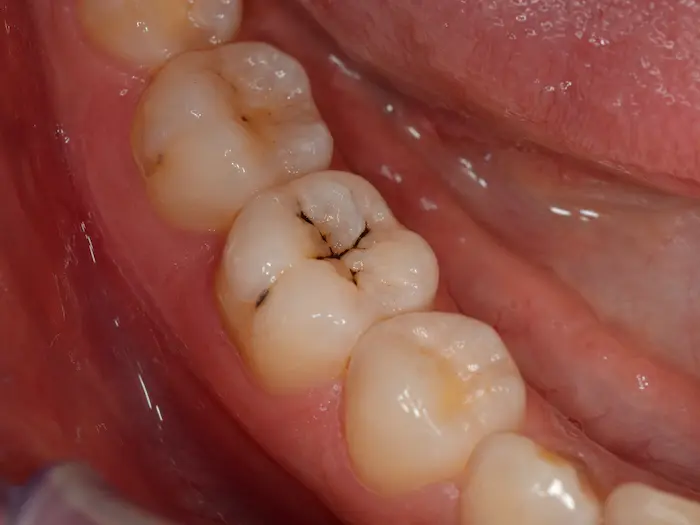
Why Black Lines on Back Teeth Matter
Black lines on teeth are easy to ignore. At first, they may look like simple stains. Also, they may not hurt. Therefore, many people wait and watch.
However, back teeth have deep grooves. Dentists call these areas pits and fissures. Food, plaque, and bacteria can collect there. As a result, decay can start quietly.
These black lines may suggest:
- Stained grooves
- Early enamel decay
- Pit and fissure cavities
- Food trapped in deep grooves
- Weakened tooth structure
Moreover, brushing cannot always clean deep fissures. A toothbrush may clean the surface well. However, its bristles may not reach the bottom of narrow grooves.
Therefore, black lines on molars deserve attention. A dental exam can tell whether the line is harmless staining or early decay. Early diagnosis helps protect the tooth before pain starts.
What Are Pit and Fissure Cavities?
Pit and fissure cavities form in the grooves of back teeth. These grooves sit on the chewing surface. They help grind food. However, they can also trap bacteria.
Molars usually have several raised parts. Between these raised parts, grooves and pits form naturally. Some grooves are shallow. Others are narrow and deep. Therefore, cavity risk varies from person to person.
Pit and fissure cavities often develop because:
- The groove is too deep to clean well
- Food remains in the fissure
- Bacteria produce acid
- Enamel begins to break down
- Decay spreads into dentin
At first, the tooth may only show a thin dark line. Later, the line may become wider. Then, a visible hole may appear.
This type of decay can progress faster once it reaches dentin. Dentin is softer than enamel. So, bacteria can spread more quickly inside the tooth.
Why Brushing May Not Remove the Black Line
Many patients try to brush harder when they see a black line. However, hard brushing may not solve the problem. In fact, it may damage the gums or enamel.
If the black line is only surface stain, cleaning may improve it. However, if decay has started inside the fissure, brushing will not remove it.
There are several reasons:
- Deep grooves hide plaque
- Toothbrush bristles cannot reach narrow fissures
- Acid damage may happen under the surface
- Stain can enter early weakened enamel
- Decay may spread below a small surface mark
Also, dental scaling does not remove cavities. Scaling removes tartar and surface deposits. It does not rebuild damaged tooth structure.
Therefore, patients should avoid guessing. A dentist can check the tooth with visual inspection, probing, X-rays, or other diagnostic tools. Then, the dentist can choose prevention, sealing, filling, or deeper treatment.
Early Signs of Molar Tooth Decay
Molar tooth decay can stay silent for a long time. Therefore, patients should watch for small changes.
Common early signs include:
- A thin black line in a molar groove
- Food stuck in the same area
- Rough feeling on the chewing surface
- Mild sensitivity to sweet foods
- Sensitivity to cold drinks
- A small dark spot
- Bad taste from trapped food
- A groove that looks wider over time
However, pain is not always present. This is why many cavities become serious before patients seek care.
In addition, early decay may hide under a small surface opening. The top may look minor. Yet, the inside may already have a larger cavity.
Therefore, a small black line should not create panic. But it should lead to a dental checkup. Early care is simple, quick, and more tooth-friendly.
Three Stages of Pit and Fissure Cavities
Pit and fissure cavities usually develop in stages. Understanding these stages helps patients act earlier.
The first stage involves enamel damage. Bacteria collect in the groove. Then, acid attacks the surface. A black or brown line may appear. At this stage, pain is usually absent.
The second stage reaches dentin. The cavity becomes deeper and wider. The tooth may feel sensitive to cold, heat, sweet foods, or sour foods. Also, food may get trapped more often.
The third stage reaches the pulp. The pulp contains nerves and blood vessels. When bacteria invade this area, pain can become strong. The tooth may hurt at night. It may also hurt without eating.
These stages show why timing matters. Early treatment can prevent deeper damage. However, delay can turn a small filling into root canal treatment.
Why Molars Get Cavities Easily
Molars do heavy work every day. They grind food and handle strong chewing pressure. However, their shape also makes them vulnerable.
Molars get cavities easily because:
- They have many grooves
- Their chewing surfaces are uneven
- They sit far back in the mouth
- They are harder to brush well
- Food sticks to their pits
- Plaque forms quickly after meals
Moreover, some people naturally have deeper fissures. These grooves can look like narrow cracks. Even careful brushing may miss bacteria inside them.
Children and teenagers often get molar cavities. However, adults can get them too. In fact, many adults develop decay around old fillings or in deep untreated grooves.
Therefore, molar care should be consistent. Good brushing helps. However, prevention may also need sealants, fluoride, and regular dental exams.
Is a Black Line Always a Cavity?
A black line is not always a cavity. Sometimes, it is only stain from tea, coffee, tobacco, or food pigments. However, patients should not assume it is harmless.
A black line may be more concerning if:
- It becomes wider
- It feels sticky or rough
- Food gets stuck there
- The tooth becomes sensitive
- The area looks like a hole
- The line stays after cleaning
- The tooth hurts when biting
A dentist can tell the difference. For example, stained enamel may feel hard and smooth. Active decay may feel soft or sticky. X-rays may also help when decay hides between teeth or under the surface.
Therefore, the best response is simple. Do not panic. Also, do not ignore it. Schedule an exam and let a dentist check the tooth.
Prevention: Brush the Right Way
Good brushing helps reduce cavity risk. However, technique matters more than force. Brushing harder does not mean brushing better.
Useful brushing tips include:
- Brush twice a day
- Brush for at least two minutes
- Use fluoride toothpaste
- Clean the chewing surfaces carefully
- Angle the brush toward the gumline
- Replace the brush every three months
- Avoid brushing too hard
- Brush before sleeping every night
Moreover, take extra time on back teeth. These teeth sit farther back. So, they often receive less attention.
Electric toothbrushes can help some patients. However, a manual toothbrush can also work well with proper technique.
In addition, floss daily. Cavities can also form between molars. Brushing alone cannot clean these spaces well.
Prevention: Diet and Daily Habits
Diet affects cavity risk every day. Sugar feeds oral bacteria. Then, bacteria produce acid. This acid weakens enamel.
To lower risk, patients can:
- Reduce sugary snacks
- Avoid sipping sweet drinks all day
- Drink more water
- Rinse after meals
- Choose sugar-free gum when suitable
- Limit sticky candies
- Eat balanced meals
- Visit the dentist regularly
Moreover, frequency matters. Eating sugar once with a meal is less harmful than snacking all day. Each snack creates another acid attack.
Dry mouth also increases risk. Saliva helps wash away acid and food debris. Therefore, patients with dry mouth should ask a dentist for advice.
Good habits do not remove existing cavities. However, they help prevent new ones. They also support longer-lasting fillings and sealants.
Pit and Fissure Sealants
Pit and fissure sealants can help prevent molar cavities. A sealant is a thin protective layer. Dentists place it over deep grooves. As a result, food and bacteria have fewer places to hide.
Sealants are common for children. However, adults may also benefit from them. This is especially true when molars have deep grooves but no active decay.
Sealants may help:
- Protect deep fissures
- Reduce plaque buildup
- Lower cavity risk
- Make chewing surfaces easier to clean
- Delay or prevent future fillings
The process is usually simple. The dentist cleans the tooth. Then, the surface is prepared. After that, the sealant is placed and hardened.
However, sealants are not a cure for deep decay. If the cavity has already reached dentin, a filling may be needed instead. Therefore, diagnosis comes first.
Treatment for Early Black Lines
Early black lines may need different treatments. The right choice depends on whether decay has started.
If the line is only stain, the dentist may recommend cleaning, polishing, fluoride, or monitoring. If the groove is deep but healthy, a sealant may help.
If early decay exists, treatment may include:
- Cleaning the fissure
- Removing damaged enamel if needed
- Placing a sealant
- Using preventive resin restoration
- Applying fluoride in selected cases
- Scheduling follow-up checks
The goal is to stop decay early. At this stage, treatment can preserve more natural tooth structure.
Moreover, early treatment usually feels easier. It may not require complex procedures. It may also cost less than late-stage treatment.
Therefore, patients should act when they first notice suspicious black lines. Waiting for pain can make treatment harder.
Treatment for Moderate Molar Cavities
When decay spreads into dentin, a filling is usually needed. At this stage, the cavity may look like a larger dark hole. The tooth may also react to cold or sweet foods.
The dentist will remove the decayed part. Then, the cavity will be restored with filling material. Common choices include composite resin or other dental materials.
A filling can help restore:
- Tooth shape
- Chewing comfort
- Surface smoothness
- Protection from further decay
- Food resistance in the groove
However, the filling must seal the tooth well. A poor seal can allow bacteria to return. Therefore, technique matters.
After treatment, mild sensitivity may occur. However, it should improve. If pain gets worse, patients should return for a check.
A moderate cavity is still treatable. However, earlier treatment would preserve more tooth structure.
Treatment for Deep Cavities
Deep cavities need careful evaluation. If decay is close to the pulp, the dentist may take an X-ray. Then, the dentist checks whether the nerve can stay healthy.
Sometimes, a conservative restoration may still work. The dentist may remove decay, protect the deep area, and place a filling. However, this depends on pulp condition.
Root canal treatment may be needed if:
- The pulp is exposed
- Pain happens without stimulation
- Heat pain lingers
- Night pain occurs
- Swelling appears
- Infection reaches the root area
After root canal treatment, the tooth often needs stronger restoration. A molar may need a crown because it handles heavy chewing force.
Therefore, deep decay often requires more time, more cost, and more visits. This is why early action matters.
Why Pain Means the Problem May Be Advanced
Pain often appears late in pit and fissure cavities. This surprises many patients. They may think no pain means no problem.
However, enamel has no nerves. So, early enamel decay may not hurt. Dentin has tiny tubules. When decay reaches dentin, sensitivity can begin. When decay reaches the pulp, pain can become severe.
Pain may appear as:
- Cold sensitivity
- Sweet sensitivity
- Pain when biting
- Throbbing pain
- Night pain
- Pain that spreads to the face
- Gum swelling near the tooth
Therefore, pain should not become the first reason to visit a dentist. It is better to check suspicious signs earlier.
Moreover, pain that suddenly stops is not always good news. Sometimes, the nerve may lose vitality. Infection can still continue. So, professional diagnosis is essential.
Orthodontics and Cavity Prevention
Crowded teeth can make cleaning harder. When teeth overlap, plaque collects in hidden areas. As a result, cavities and gum problems may increase.
Orthodontic treatment may help some patients improve oral hygiene. Straighter teeth can be easier to clean. However, braces also require excellent daily care.
Crowding may cause:
- Food trapping
- Plaque buildup
- Bad breath
- Tartar formation
- Higher cavity risk
- Gum irritation
Therefore, patients with crowded teeth should ask a dentist or orthodontist for advice. They may need cleaning guidance, orthodontic evaluation, or preventive treatment.
Still, orthodontics does not replace brushing, flossing, or dental checkups. It can support oral health, but daily care remains essential.
When to See a Dentist
See a dentist if you notice black lines on molars that do not go away. Also, seek care if the line becomes wider or deeper.
Book a dental visit if you have:
- Tooth sensitivity
- A visible black groove
- A small hole
- Pain when chewing
- Food stuck in one tooth
- Bad smell from one area
- A rough chewing surface
- A cracked filling
- Night toothache
- Gum swelling
Moreover, do not try to scrape the tooth at home. This can damage enamel or irritate the gums.
A dentist can decide whether you need monitoring, sealants, fillings, or deeper treatment. Early visits give you more options. They also help protect your natural tooth.
Common Patient Questions
Can black lines on molars be removed by brushing?
Sometimes, brushing may reduce surface stains. However, brushing cannot remove tooth decay. If the line sits inside a deep groove, see a dentist for diagnosis.
Do pit and fissure cavities hurt?
Early pit and fissure cavities often do not hurt. However, pain may appear when decay reaches dentin or pulp. Therefore, do not wait for pain.
Are sealants only for children?
No. Adults can also get pit and fissure sealants if their molars have deep grooves and no active decay. A dentist should check first.
Can a dentist fill a black line cavity?
Yes, if the black line represents decay, a dentist can remove the damaged area and place a filling. Early fillings usually preserve more tooth structure.
What happens if molar decay reaches the nerve?
If decay reaches the nerve, root canal treatment may be needed. After that, a crown may protect the molar from fracture.
Summarize
Black lines on teeth can look harmless. However, they may signal pit and fissure cavities. Because molars have deep grooves, bacteria can collect there easily. Therefore, these dark lines deserve a dental check.