


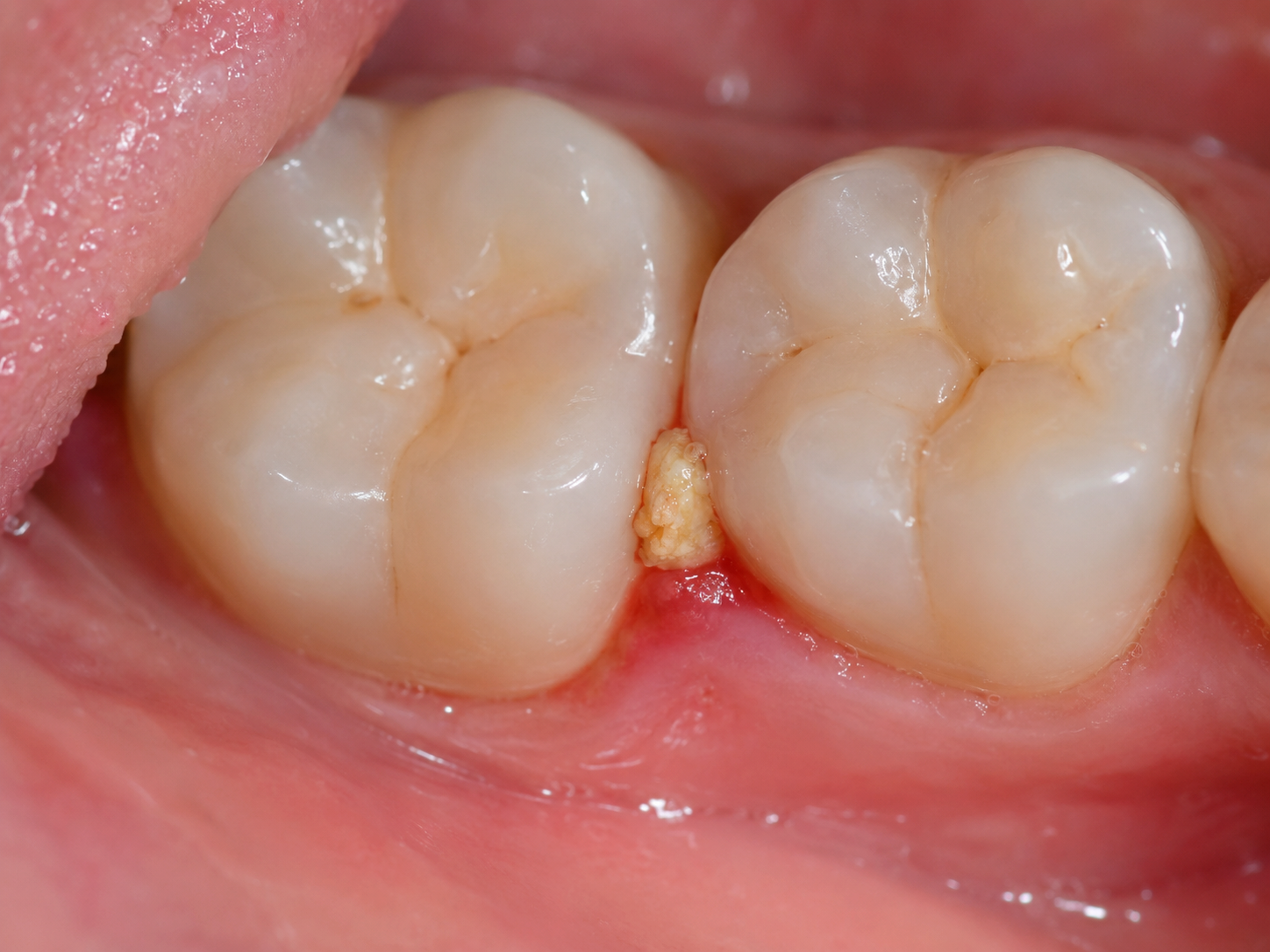
Is Food Impaction Between Teeth Really a Dental Problem?
Food impaction between teeth may sound like a small problem. However, it can be a real dental warning sign.
Many people think getting food stuck between teeth is normal. They may use a toothpick, rinse their mouth, and forget about it. However, repeated food trapping often means that something has changed in the teeth, gums, bite, or dental restoration.
Dentists call this problem “food impaction.” It means food becomes trapped between teeth or around the gumline during chewing. Sometimes, it happens because of a small gap. Sometimes, it happens because of tooth decay, gum recession, a loose filling, or a poorly shaped crown.
Therefore, frequent food impaction should not be ignored. It may cause discomfort, bad breath, cavities, gum inflammation, and even periodontal damage over time. A dental exam can help find the real cause and treat it correctly. Food impaction can irritate nearby tissue and may contribute to cavities, gingivitis, periodontitis, and oral odor.
Food Impaction Is Common, but It Is Not Always Normal
Food getting stuck once in a while can happen to anyone. For example, fibrous meat, vegetables, seeds, and popcorn skins can easily lodge between teeth.
However, frequent food trapping in the same place is different. It often suggests a local dental problem.
It may happen more often in adults and older patients. This is because gums may recede with age, teeth may wear down, and old dental restorations may lose their shape. Also, people who have had fillings, crowns, bridges, or implants may notice food trapping if the contact between teeth is not ideal.
Still, food impaction is not something you should simply tolerate. If one area always traps food, the mouth is giving you a clue.
Common signs include:
- Food often gets stuck in the same gap
- The gum feels sore after eating
- The area smells bad when cleaned
- The tooth feels sensitive
- Floss catches, tears, or feels loose
- The gum bleeds around that area
As a result, early dental care can prevent a small problem from becoming a larger one.
The Harm of Food Impaction
Food impaction may start as a minor annoyance. However, when it happens often, it can affect both teeth and gums.
Trapped food does not stay harmless. It can press on the gum, feed bacteria, and create a bad smell. Also, it may make the gap feel larger over time.
The main risks include:
- Larger spaces between teeth
- Bad breath
- Tooth sensitivity
- Cavities
- Gum inflammation
- Gum bleeding
- Periodontal pocket formation
- Bone loss in severe cases
- Loose teeth if gum disease progresses
Of course, not every food trap leads to tooth loss. However, long-term irritation and poor cleaning can increase the risk of dental disease.
Therefore, the key point is simple. If food gets stuck repeatedly, find the cause. Do not only remove the food each time.
Harm 1: The Gap May Feel Larger
When food often wedges between two teeth, the area may feel more open over time. In some cases, the contact between the teeth has already become weak. So, food enters the space more easily.
Also, gum recession can make the black triangle between teeth more visible. Then food can collect in that space more often.
Some patients feel strong discomfort when food pushes into the gum. They may describe pressure, soreness, or a sharp pain. This usually means the gum tissue is getting irritated.
However, food itself does not always “push teeth apart” in a simple way. Often, the real problem already exists. It may be an open contact, gum recession, tooth movement, or bone loss.
So, the correct approach is not to keep picking the area. Instead, ask a dentist to check why the space traps food.
Harm 2: Bad Breath
Food trapped between teeth can cause bad breath.
When food stays in a warm and moist mouth, bacteria break it down. Then the odor may appear. This smell may become more obvious when you floss the area or use an interdental brush.
Bad breath from food impaction often has a local source. For example, one tooth gap may smell worse than other areas. This can happen when food, plaque, and bacteria collect there again and again.
However, bad breath can also come from other causes. These include tongue coating, dry mouth, gum disease, cavities, tonsil stones, digestive issues, or smoking.
Therefore, if bad breath continues even after careful cleaning, you should get a dental check. The dentist can check for cavities, deep pockets, old fillings, and gum infection.
Harm 3: Tooth Sensitivity
Frequent food impaction may make teeth feel sensitive.
When food repeatedly presses into one area, the gum can become inflamed. Also, if gum recession exposes the tooth root, cold and hot foods may cause sharp sensitivity.
Some people feel sensitive when they drink cold water. Others feel it when they eat hot soup, sweet foods, or sour fruit.
This sensitivity may come from:
- Gum recession
- Exposed tooth roots
- Cavities between teeth
- Cracked tooth edges
- Worn enamel
- Leaking fillings
- Periodontal pockets
Therefore, sensitivity should not be treated only with desensitizing toothpaste. Toothpaste may help symptoms, but it cannot repair a cavity or close an open contact.
If the same tooth stays sensitive, see a dentist.
Harm 4: Cavities Between Teeth
Food stuck between teeth can increase the risk of cavities.
When food debris stays in a tight space, bacteria can grow around it. These bacteria produce acids. Over time, acid can damage the enamel on both neighboring teeth.
This is why cavities between teeth can be tricky. They may not be visible when you look in the mirror. Also, they may cause no pain in the early stage.
Later, the cavity may become deeper. It may reach dentin, then the pulp. At that point, patients may feel strong pain, night pain, or swelling. Root canal treatment may become necessary.
So, if food gets stuck in the same spot every day, do not wait until pain appears.
A dental X-ray and exam can check whether a hidden cavity has formed.
Harm 5: Gingivitis and Gum Bleeding
Food impaction can injure the gum directly.
Sometimes, food wedges into the gum with force. If you feel pain the moment food enters the gap, the gum may have suffered mechanical irritation.
Then the trapped food can continue to irritate the tissue. Bacteria may also collect around it. As a result, the gum may become red, swollen, and easy to bleed.
Common symptoms include:
- Pain after eating
- Gum swelling between two teeth
- Bleeding when flossing
- A bad smell from one gap
- A feeling of pressure
- Tenderness when chewing
If this continues, gingivitis may develop. If the problem extends deeper, it may worsen periodontal pockets.
Therefore, bleeding gums around a food trap deserve attention. The NIDCR lists red, swollen, tender, or bleeding gums, receding gums, loose teeth, and persistent bad breath as possible gum disease symptoms.
Harm 6: Gum Recession, Bone Loss, and Loose Teeth
Long-term food impaction can play a role in periodontal damage. However, the process is usually gradual.
When food, plaque, and bacteria repeatedly irritate the gums, inflammation may continue. Then the gum may pull away from the tooth. Deeper pockets may form. These pockets can trap even more food and bacteria.
Over time, periodontitis may damage the bone that supports the teeth. Mayo Clinic explains that periodontitis can destroy supporting bone and may cause loose teeth or tooth loss if untreated.
This does not mean one piece of food will make a tooth fall out. However, repeated food impaction plus poor cleaning can create a cycle:
- Food gets trapped
- Gum becomes inflamed
- The pocket gets deeper
- More food gets trapped
- Bone support may decrease
- The tooth may loosen
Therefore, treating the cause early matters.
What Causes Food to Get Stuck Between Teeth?
Food impaction usually has a reason. It may come from tooth shape, tooth position, gum condition, bite force, cavities, or dental treatment.
Common causes include:
- Misaligned teeth
- Crowded teeth
- Open contacts between teeth
- Tooth wear
- Cavities
- Broken tooth edges
- Gum recession
- Periodontal disease
- Wisdom teeth
- Poorly shaped fillings or crowns
- Missing teeth
- Loose restorations
Sometimes, several causes happen together. For example, a patient may have gum recession, an old filling, and bite wear in the same area.
Therefore, treatment should target the cause. Simply using a toothpick every day does not solve the problem.
A dentist can check the contact point, gum pocket, bite relationship, restoration shape, and X-ray changes.
Cause 1: Misaligned Bite or Crooked Teeth
Healthy teeth usually contact each other in a balanced way. The upper and lower teeth also guide food during chewing.
However, when teeth are crowded, tilted, rotated, or spaced unevenly, food can get pushed into gaps more easily. The bite may also direct food toward the spaces between teeth.
For example, one tooth may lean slightly. Another tooth may not contact it tightly. Then meat fibers or vegetable strands may wedge into that weak contact area.
Misalignment may cause:
- Food trapping
- Uneven chewing pressure
- Gum irritation
- Plaque buildup
- Tooth wear
- Difficulty flossing
If tooth position causes repeated food impaction, orthodontic treatment may help. However, not every case needs braces.
The dentist should first check whether the problem comes from tooth alignment, gum recession, cavities, or old dental work.
Cause 2: Tooth Wear
Tooth wear can also cause food impaction.
The chewing surface of a tooth has natural grooves, ridges, and slopes. These shapes help crush food and guide it away from the spaces between teeth.
However, teeth may wear down over time. This can happen because of aging, grinding, clenching, acid erosion, or long-term heavy chewing.
When the natural shape changes, food may not move smoothly during chewing. Instead, it may get pushed toward the gaps.
Older adults often have more tooth wear. So, they may notice food trapping more often than younger people.
Signs of tooth wear include:
- Flat chewing surfaces
- Shorter-looking teeth
- Tooth sensitivity
- Cracks or chips
- Jaw soreness
- Morning tooth discomfort
If grinding causes wear, a night guard may help protect teeth. If tooth shape has already changed, restorative treatment may be needed.
Cause 3: Tooth Defects, Cavities, and Gum Disease
Some people have naturally wider spaces between teeth. Others develop gaps later.
Cavities can break down the side of a tooth. A chipped edge can create a small food trap. A lost filling can also leave a space where food collects.
In addition, periodontal disease can cause gum recession and bone loss. When the gum shrinks away from the tooth, the space near the root becomes larger. Then food can enter more easily.
Common related problems include:
- Cavities between teeth
- Chipped tooth edges
- Broken fillings
- Gum recession
- Loose teeth
- Deep periodontal pockets
- Long-term one-sided chewing
- Rough toothpick use
- Incorrect brushing technique
Therefore, food impaction may point to a hidden dental problem. Do not only look at the surface.
A dental exam can find whether the cause is decay, gum disease, or tooth structure loss.
Cause 4: Wisdom Teeth
Wisdom teeth often cause food impaction.
Many wisdom teeth do not grow in a straight and useful position. Some tilt forward. Some only partly erupt. Some remain covered by gum tissue.
When a wisdom tooth leans toward the second molar, it can form a deep gap or corner. Food can easily collect there. This area is also hard to clean.
Also, a wisdom tooth without an opposing tooth may over-erupt. Then it may create an uneven bite or a food trap near the molar in front of it.
Problematic wisdom teeth may cause:
- Food trapping behind the last molar
- Gum swelling
- Bad breath
- Pain when chewing
- Repeated inflammation
- Cavities on the second molar
- Difficulty cleaning
If a wisdom tooth has no good function and causes repeated problems, removal may be the better choice.
Cause 5: Poor Dental Restorations
Some food impaction happens after dental treatment.
This does not mean dental treatment is bad. Instead, it means the shape, contact, or edge of the restoration may need adjustment.
For example, food may get stuck if:
- A filling does not contact the neighboring tooth well
- A crown has an open contact
- A bridge does not fit the gum area well
- A veneer changes tooth shape poorly
- A restoration edge feels rough
- An old crown becomes loose
- A filling breaks or wears down
Good dental restorations should rebuild tooth shape and contact. They should also allow cleaning.
If food trapping starts after a filling, crown, bridge, or denture, return to the dentist. In many cases, adjustment or replacement can solve the problem.
Treat the Cause: Most Food Impaction Can Improve
Food impaction treatment should match the cause.
The original idea “all food impaction can be cured” sounds too absolute. A better way to say it is this: most cases can improve greatly when the cause is found and treated correctly.
The dentist may use different treatments, such as:
- Periodontal treatment
- Filling repair
- Inlay or onlay restoration
- Crown replacement
- Dental veneer in selected cases
- Wisdom tooth extraction
- Orthodontic treatment
- Dental implant or bridge for missing teeth
- Interdental cleaning instruction
However, some gum recession or bone loss may not fully reverse. In those cases, treatment aims to control disease and reduce food trapping.
So, the goal is clear. Find the cause, treat the problem, and keep the area clean.
Treatment 1: Periodontal Treatment
If food impaction comes from loose teeth, wider gaps, gum recession, or periodontal pockets, you should see a periodontal dentist.
Periodontal treatment can help control gum inflammation and reduce disease progression.
Common steps may include:
- Gum examination
- Periodontal pocket measurement
- Dental X-rays
- Professional cleaning
- Scaling and root planing
- Bite adjustment if needed
- Periodontal maintenance
- Home care instruction
However, patients should understand one point. After basic periodontal treatment, gum disease may become controlled. Still, the food impaction may not disappear completely.
This is because lost gum tissue and bone do not always grow back fully. Therefore, patients may need long-term cleaning tools.
Dental floss, interdental brushes, and water flossers can help remove trapped food. ADA notes that toothbrush bristles alone cannot clean effectively between tight spaces, while floss and interdental cleaners can remove trapped food and plaque.
Treatment 2: Crowns, Inlays, or Veneers
If food impaction comes from tooth defects or missing tooth structure, restorative treatment may help.
For example, a dentist may use an inlay, onlay, crown, or veneer to rebuild the missing part of a tooth. The goal is to restore proper shape and contact between teeth.
This can help food move smoothly during chewing. It can also reduce the chance of food getting wedged between teeth.
Possible options include:
- Tooth-colored fillings
- Ceramic inlays
- Ceramic onlays
- Porcelain crowns
- Dental veneers in selected front-tooth cases
- Bridges for missing teeth
However, veneers do not suit every food impaction case. They mainly improve the front tooth surface and smile appearance. For back teeth, inlays, onlays, or crowns may work better.
Therefore, the dentist should choose the restoration based on tooth location, bite force, damage level, and gum condition.
Treatment 3: Repair Cavities Early
If cavities cause holes between teeth, early repair matters.
A small cavity may only need a filling. However, if the cavity becomes deep, it may reach the nerve. Then root canal treatment may become necessary.
So, it is better to repair the cavity before pain appears.
Signs that a cavity may cause food impaction include:
- Food sticks in one spot
- Floss tears or smells bad
- The tooth feels rough
- Cold sensitivity appears
- Sweet foods cause pain
- A dark shadow appears between teeth
The dentist may take an X-ray to check hidden decay between teeth. Then they can clean the decayed area and restore the tooth.
Once the hole disappears, food has fewer places to hide. As a result, food impaction often improves.
Treatment 4: Remove Problematic Wisdom Teeth
If an impacted or tilted wisdom tooth causes food impaction, extraction may help.
This is especially true when the wisdom tooth has no chewing function and repeatedly causes pain, swelling, bad breath, or cavities.
A problematic wisdom tooth can also harm the second molar in front of it. Food and bacteria may collect between the two teeth. Then decay or gum inflammation may develop around the second molar.
You should consider a wisdom tooth exam if you have:
- Food stuck behind the last molar
- Repeated gum swelling near the wisdom tooth
- Pain when opening the mouth
- Bad smell from the back of the mouth
- Cavities near the second molar
- A partly erupted wisdom tooth
A dental surgeon can check the tooth position with an X-ray. Then they can decide whether removal is necessary.
Treatment 5: Orthodontic Treatment
If crooked teeth or poor bite alignment cause food impaction, orthodontic treatment may be a good option.
Orthodontics can move teeth into better positions. This may improve tooth contact, bite balance, and cleaning access.
Common options include:
- Clear aligners
- Ceramic braces
- Self-ligating braces
- Traditional metal braces
However, orthodontic treatment needs a proper diagnosis. It is not only about closing gaps. The dentist or orthodontist must also check gum health, bone support, bite force, and tooth shape.
For adults with periodontal disease, gum control should come first. Otherwise, moving teeth in an inflamed mouth may create more risk.
Therefore, orthodontic treatment works best when the gums are stable and the treatment plan is well designed.
How to Remove Trapped Food Safely at Home
Home cleaning cannot replace dental treatment. However, it can reduce daily discomfort and protect the gums.
Safe methods include:
- Rinse with water after meals
- Use dental floss gently
- Try an interdental brush if the gap is large
- Use a water flosser if recommended
- Brush carefully around the area
- Avoid sharp toothpicks
- Do not push hard into the gum
The American Dental Association recommends flossing once a day to remove food particles and plaque that can lead to cavities and gum disease.
If floss always shreds in the same place, there may be a rough filling or cavity. If an interdental brush hurts, the size may be wrong.
Therefore, ask your dentist to show you the right tool and technique.
Summary
Food impaction between teeth is more than a small inconvenience. It may signal tooth gaps, cavities, gum recession, periodontal disease, wisdom teeth, tooth wear, or poor dental restorations.
If food gets stuck only once in a while, you can usually clean it with floss or rinsing. However, if the same area traps food again and again, you should not ignore it.
Long-term food impaction may cause bad breath, tooth sensitivity, cavities, gum bleeding, gum inflammation, and periodontal damage. In severe cases, untreated gum disease may lead to loose teeth.
Fortunately, most cases can improve after proper diagnosis. The treatment may include periodontal care, cavity repair, crown adjustment, inlay restoration, wisdom tooth removal, orthodontics, or better interdental cleaning.
Therefore, do not keep solving the problem with a toothpick every day. Find the cause instead.
Food impaction between teeth has a reason. Once you treat that reason, your mouth can become cleaner, more comfortable, and easier to maintain.