


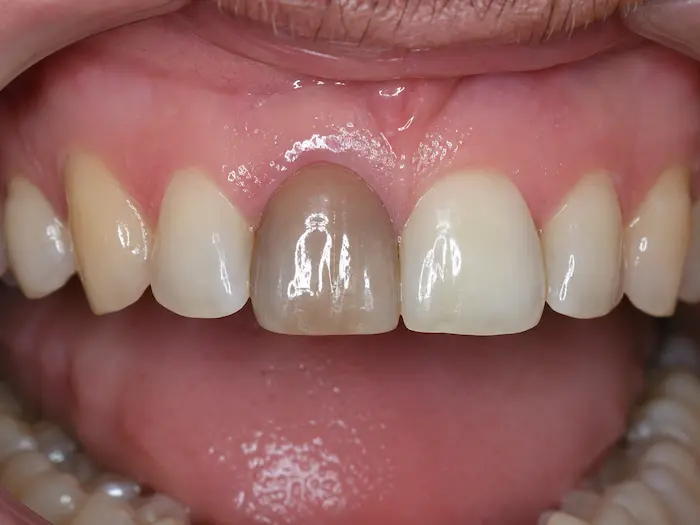
Why Tooth Pulp Necrosis Matters
Tooth pulp necrosis means the soft tissue inside the tooth has died. This tissue contains nerves, blood vessels, and connective tissue. Therefore, it plays an important role in tooth health.
At first, the tooth may hurt. However, the pain may later disappear. Many patients feel relieved when this happens. Yet, this can be misleading.
When the pulp dies, the tooth may lose sensation. As a result, pain can stop even while infection continues. Therefore, tooth pulp necrosis should never be ignored.
This condition matters because:
- Infection can spread beyond the tooth root
- A gum abscess may form
- Bone around the root may suffer damage
- The tooth may become weaker over time
- Treatment may become harder if delayed
Therefore, “no pain” does not always mean “no problem.” A painless tooth can still need urgent dental care.
What Is Tooth Pulp?
The pulp sits inside the tooth. It fills the pulp chamber and root canals. Although teeth look hard from the outside, they have living tissue inside.
The pulp helps the tooth in several ways:
- It supplies nutrients during tooth development
- It detects pain, heat, cold, and pressure
- It supports immune response inside the tooth
- It helps dentists assess tooth vitality
However, the pulp has limited space. When infection or inflammation occurs, pressure can build inside the tooth. As a result, pain may become severe.
Unlike skin, swollen pulp cannot expand freely. Therefore, pulp inflammation can damage blood flow. If the damage continues, the pulp may die.
In simple terms, the pulp acts like the tooth’s inner life system. Once it loses vitality, the tooth needs professional treatment.
What Causes Pulp Necrosis?
Several factors can lead to pulp necrosis. Most cases happen after infection, trauma, or repeated irritation.
Common causes include:
- Deep tooth decay
- Untreated cavities
- Cracked teeth
- Dental trauma
- Repeated dental procedures
- Severe tooth wear
- Large old fillings
- Gum infection near the root
Tooth decay is a common cause. Bacteria enter through a cavity. Then, they move deeper toward the pulp. If the infection reaches the nerve, pulp damage can begin.
Trauma is another major cause. A fall, sports injury, or bite accident can damage blood flow. However, pain may not appear right away.
Moreover, a tooth can slowly lose vitality over months or years. That is why past dental injury matters, even if it happened long ago.
Does a Dead Tooth Always Hurt?
No, a dead tooth does not always hurt. In fact, some teeth become painless after the pulp dies. This creates a dangerous false sense of safety.
Before necrosis, patients may notice:
- Severe toothache
- Night pain
- Cold sensitivity
- Heat sensitivity
- Pain while chewing
- Swelling around the gum
However, once the pulp dies, the nerve may stop sending pain signals. Therefore, the tooth may feel normal for a while.
Still, bacteria can remain inside the root canal system. Then, infection can spread to the root tip. As a result, the gum or jawbone may become inflamed.
So, pain is not the only sign. Color changes, swelling, and dental history also matter. Therefore, a painless tooth still deserves attention when warning signs appear.
Dark Tooth After Trauma
A dark tooth after trauma can signal pulp damage. This often happens after a fall, collision, sports injury, or accidental hit to the mouth.
At first, the tooth may look normal. However, weeks or months later, it may become darker. The color may turn gray, yellow-gray, brown-gray, or dark yellow.
This color change can happen because blood products break down inside the tooth. Also, the pulp may lose its blood supply after trauma.
Patients should pay attention if:
- One tooth looks darker than nearby teeth
- The tooth had a past injury
- The tooth does not react to cold
- The gum above the tooth swells
- A small gum bump appears
- The tooth feels loose or tender
However, color alone cannot confirm pulp necrosis. Therefore, a dental exam is necessary.
Long-Term Cavities and Pulp Death
Untreated cavities can slowly destroy a tooth. At first, decay affects the enamel. Then, it reaches dentin. Later, bacteria can reach the pulp.
This process may take time. However, it rarely stops by itself. Once bacteria enter deeper layers, the risk of pulp infection rises.
Warning signs may include:
- A visible cavity
- Food trapped in the tooth
- Bad taste
- Sensitivity to sweets
- Sensitivity to cold
- Pain when biting
- A dark area on the tooth
Moreover, some deep cavities cause little pain. This does not mean they are safe. Sometimes, the pulp slowly becomes infected and then dies.
Therefore, patients should treat cavities early. A simple filling may work in the early stage. However, deeper infection may require root canal treatment.
Repeated Gum Bumps
A small gum bump can be a warning sign. Patients often call it a “pimple” on the gum. It may swell, burst, shrink, and return again.
This bump may represent a sinus tract. In many cases, it drains infection from the root area. Therefore, it can suggest chronic infection around a tooth.
Common signs include:
- A small bump on the gum
- Pus or bad taste
- Mild swelling
- Tenderness near one tooth
- Repeated gum irritation
- No obvious tooth pain
Because the bump can drain pressure, pain may stay mild. However, the infection can still remain active.
Therefore, repeated gum bumps need dental evaluation. The dentist may trace the source and take an X-ray. Then, treatment can target the infected tooth.
Do not squeeze the bump at home. This may irritate tissue and delay proper care.
How Dentists Diagnose Pulp Necrosis
Dentists use several methods to diagnose pulp necrosis. They do not rely on one sign alone.
A diagnosis may include:
- Dental history
- Trauma history
- Cavity examination
- Color evaluation
- Cold test
- Electric pulp test
- Percussion test
- Bite test
- X-ray
- CBCT in complex cases
A cold test checks nerve response. A healthy tooth often reacts briefly. A necrotic tooth may not respond. However, results need careful interpretation.
X-rays can show changes near the root tip. For example, infection may create a dark area in the surrounding bone.
CBCT may help when standard X-rays do not show enough detail. It can show root shape, bone changes, and hidden infection more clearly.
Therefore, proper diagnosis needs clinical skill and imaging support.
What Happens If You Delay Treatment?
A necrotic pulp will not heal by itself. Once the pulp dies, the body cannot restore it inside the tooth. Therefore, delay can allow bacteria to spread.
Possible complications include:
- Root tip infection
- Dental abscess
- Gum swelling
- Facial swelling
- Bone loss around the root
- Tooth mobility
- Bad breath or bad taste
- Tooth loss
Moreover, infection can flare up suddenly. A tooth that felt quiet for months may become painful overnight.
In severe cases, swelling can spread to the face or neck. This requires urgent care. Therefore, dental infections should never be ignored.
Early treatment protects more tooth structure. It also reduces the chance of extraction. As a result, patients have a better chance of keeping their natural tooth.
Can the Tooth Still Be Saved?
In many cases, yes. A tooth with pulp necrosis can often be saved if the structure remains strong enough. Root canal treatment is the usual option.
The goal is simple. The dentist removes infected tissue from inside the tooth. Then, the canals are cleaned, disinfected, shaped, and sealed.
A tooth may have a good chance if:
- The root is not severely fractured
- Enough tooth structure remains
- Gum support is acceptable
- Infection has not caused severe damage
- The tooth can receive a good final restoration
However, not every tooth can be saved. A vertical root fracture, severe bone loss, or extreme decay may make extraction necessary.
Therefore, early examination matters. The sooner the problem is found, the more options the patient may have.
Root Canal Treatment
Root canal treatment helps remove infection from inside the tooth. It also helps protect the surrounding bone.
The basic steps include:
- Numbing the tooth
- Opening the pulp chamber
- Removing dead pulp tissue
- Cleaning the root canals
- Disinfecting the canal system
- Filling the canals tightly
- Restoring the tooth
After treatment, the tooth no longer has living pulp. However, it can still function for many years with proper restoration and care.
Many patients fear root canals. However, modern treatment focuses on comfort. Local anesthesia helps control pain. Also, digital imaging improves planning.
After root canal therapy, the dentist may recommend a crown. This is especially common for back teeth. A crown helps protect the tooth from fracture.
Why Final Restoration Matters
Root canal treatment removes infection, but restoration protects the tooth. Without a strong final restoration, the tooth may crack or become reinfected.
The best restoration depends on the tooth. Front teeth may need a filling in some cases. However, molars often need a crown because they carry heavy chewing force.
Final restoration helps:
- Seal the tooth
- Restore chewing function
- Prevent bacterial leakage
- Reduce fracture risk
- Improve long-term survival
- Support normal bite balance
Therefore, patients should not stop after the canals are filled. The final repair is part of the treatment plan.
If the tooth has large damage, the dentist may use a core buildup. Sometimes, a post may help support the core. However, the dentist should preserve tooth structure whenever possible.
When Extraction May Be Needed
Sometimes, the tooth cannot be saved. This can happen when damage is too severe. In these cases, extraction may protect oral health.
Extraction may be needed if:
- The root has a vertical fracture
- Decay extends too far below the gum
- The tooth has poor bone support
- Infection cannot be controlled
- The tooth is too weak to restore
- Severe mobility affects function
However, extraction should not be the first assumption. Many necrotic teeth can still receive root canal treatment.
If extraction becomes necessary, replacement options may include an implant, bridge, or denture. The best choice depends on bone health, bite, budget, and personal needs.
Therefore, a dentist should explain all options clearly. Patients can then choose a plan based on health and long-term function.
Warning Signs You Should Not Ignore
Tooth pulp necrosis may hide behind mild or unclear symptoms. Therefore, patients should look beyond pain.
Important warning signs include:
- One tooth is becoming darker
- A history of dental trauma
- A deep untreated cavity
- No response to cold
- Repeated gum swelling
- A small gum pimple
- Bad taste near one tooth
- Pain when biting
- Loose tooth feeling
- Swelling near the jaw
Moreover, a tooth that once hurt badly and then stopped may need attention. The pain may have stopped because the nerve died.
Therefore, do not judge dental health by pain alone. Regular exams can find problems before they become emergencies.
Prevention Starts With Checkups
Regular dental visits help prevent pulp necrosis. Dentists can detect cavities, cracks, and trauma-related changes early.
Useful prevention steps include:
- Dental checkups every six months
- X-rays when recommended
- Early cavity treatment
- Fluoride use
- Proper brushing
- Daily flossing
- Mouthguards for sports
- Night guards for grinding
- Follow-up after dental trauma
Moreover, patients should not ignore the injury. Even if the tooth does not hurt, trauma can damage the pulp. A dentist may need to monitor the tooth over time.
Prevention is easier than emergency care. Therefore, routine visits can save time, money, and natural teeth.
Home Care Tips
Good home care lowers the risk of decay and infection. However, home care cannot treat a necrotic pulp. It can only support oral health.
Daily tips include:
- Brush twice a day
- Use fluoride toothpaste
- Floss once a day
- Reduce sugary snacks
- Drink water after meals
- Avoid chewing hard objects
- Wear protection during sports
- Seek care after a tooth injury
- Treat cavities early
Also, avoid using painkillers as the only solution. Pain relief may hide symptoms. However, it does not remove infection.
If you notice swelling, color change, or a gum bump, book a dental exam. Early action gives the tooth a better chance.
Common Myths About Dead Teeth
Many myths cause patients to delay care. Therefore, it helps to clear them up.
Myth 1: “No pain means the tooth is fine.”
Truth: A dead pulp may not send pain signals.
Myth 2: “A dark tooth is only a cosmetic issue.”
Truth: A dark tooth may suggest pulp damage.
Myth 3: “Antibiotics can cure a dead tooth.”
Truth: Antibiotics may reduce swelling, but they cannot clean root canals.
Myth 4: “Root canal treatment always fails.”
Truth: Proper root canal treatment can help many teeth last for years.
Myth 5: “Extraction is always easier.”
Truth: Replacing a missing tooth can be more complex and costly.
FAQ
Can a dead tooth have no pain?
Yes. A dead tooth can have no pain because the nerve may no longer function. However, infection can still spread around the root.
Why did my toothache suddenly stop?
Sometimes, pain stops because the pulp has died. Therefore, sudden relief does not always mean healing. A dental exam can confirm the cause.
Can tooth pulp necrosis heal by itself?
No. Necrotic pulp cannot regain vitality by itself. The tooth usually needs root canal treatment or extraction.
Is a dark tooth always dead?
No. A dark tooth may result from stains, old fillings, trauma, or pulp necrosis. A dentist must diagnose the cause.
Summarize
Tooth pulp necrosis is a serious dental condition, even when the tooth does not hurt. The pulp contains nerves and blood vessels. When infection, trauma, or long-term irritation damages it, the tissue can die.