


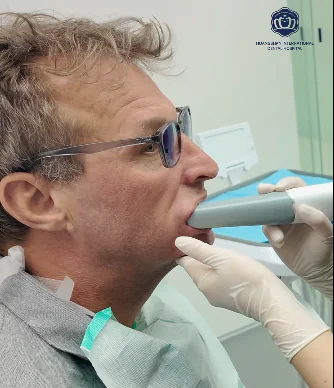
Patient Background
Dental tourism in China is becoming more attractive for international patients who need major dental work. Many patients contact us because treatment costs in their home countries are too high. Others also worry about long waiting times.
Jonathon came from New Zealand. He needed comprehensive dental restoration, including 9 zirconia crowns and 2 implant crowns. His case required careful planning because his stay in China was short.
Before treatment, our team focused on several needs:
- Restoring chewing function
- Improving the appearance
- Completing treatment efficiently
- Controlling total cost
- Checking existing implant areas
- Designing strong zirconia restorations
- Providing clear support for an international patient
Moreover, we needed to explain each step clearly. For dental tourists, trust starts before the flight. Therefore, we make the treatment plan, timeline, and cost as clear as possible before major work begins.
Dental Problems Analysis
From our clinical view, this was not only a cosmetic case. It was a restorative case involving multiple teeth and implant-supported restorations. Therefore, we needed to consider function, comfort, and long-term stability.
The patient needed crowns because several teeth required stronger protection. Zirconia crowns can help restore damaged or weakened teeth. They can also improve shape and color.
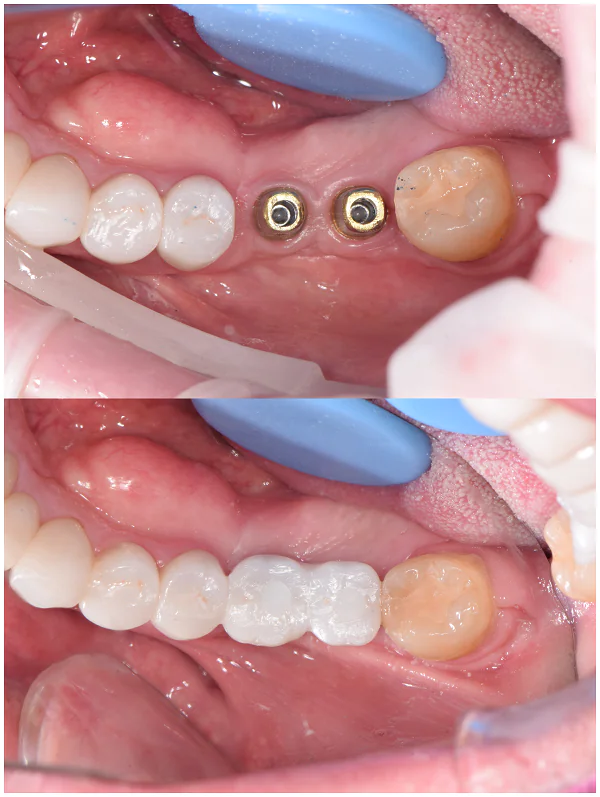
The 2 implant crowns required extra attention. Implant restorations must fit accurately and avoid excessive bite pressure. Unlike natural teeth, implants do not have the same cushioning ligament. So, bite control is very important.
Our analysis focused on:
- Tooth structure condition
- Bite relationship
- Crown margin fit
- Implant crown connection
- Gum health
- Chewing pressure
- Aesthetic expectations
- Travel timeline
Therefore, we planned the case step by step. Speed mattered, but precision mattered more.
Why We Recommended Zirconia Crowns
We used zirconia crowns because they fit the patient’s needs well. Zirconia is strong, durable, and suitable for many restorative cases. It can also create a clean and natural look when designed properly.
Zirconia crowns can help with:
- Weak teeth
- Worn teeth
- Broken tooth structure
- Large old restorations
- Bite rebuilding
- Smile improvement
- Posterior chewing support
Moreover, zirconia performs well under strong bite force. This makes it useful for patients who need both strength and aesthetics.
However, we do not recommend crowns without reason. Before using zirconia crowns, we check tooth structure, gum margins, bite force, and restoration space. This helps us avoid over-treatment.
For Jonathon, the treatment plan included 9 zirconia crowns. Therefore, our goal was to restore function and create a more confident smile while keeping the treatment efficient.
Why Implant Crowns Were Part of the Plan
The patient also needed 2 implant crowns. These crowns restore the visible part of teeth on dental implants. They are different from crowns on natural teeth.
For implant crowns, we check the fit carefully. We also check the bite and use imaging when needed. In this case, the clinical notes mention X-ray confirmation. This helps confirm that the implant components fit correctly.
Our implant crown checks included:
- Abutment fit
- Crown seating
- Contact with nearby teeth
- Bite pressure
- Gumline cleaning access
- Patient comfort
- X-ray confirmation
Moreover, implant crowns must allow good daily cleaning. Plaque around implants can irritate the gum tissue. Therefore, we also explain cleaning methods before the patient leaves.
For dental tourism patients, this step is important. Once they return home, they still need to maintain the result carefully.
Treatment Price
The total reference price for this case was ¥22,700 RMB. This included 9 zirconia crowns, 2 implant crowns, and 1 filling with local anesthesia.
The treatment items included:
- 9 zirconia crowns
- 2 implant crowns
- 1 filling
- Local anesthesia
- Crown try-in and bite adjustment
- Final restoration placement
This price is one reason many international patients consider dental care in China. In many Western countries, similar treatment may cost much more.
However, we always remind patients that price depends on diagnosis. Costs can change based on tooth condition, implant system, gum health, imaging needs, and material choice.
At Huangshan International Dental Hospital, we focus on highly competitive pricing. Many treatments cost far less than in the U.S., Europe, or New Zealand. Still, we do not treat price as the only value. We also focus on treatment planning, material quality, and follow-up support.
5-Day Dental Tourism Process
Jonathon’s case was planned around a short stay in China. The treatment journey took about 5 days. This was possible because the case was suitable and our clinic-lab workflow was efficient.
The process included:
- Initial examination
- Treatment confirmation
- Tooth preparation
- Local anesthesia
- Temporary restoration
- Zirconia crown design
- Implant crown try-in
- Bite adjustment
- X-ray confirmation
- Final placement
- Aftercare instruction
Moreover, our in-house lab model helped reduce waiting time. Dentists and technicians could communicate directly. This supported faster adjustments and better restoration control.
However, we never treat speed as the only goal. If a patient has gum disease, infection, severe bone loss, or unstable implants, we may recommend a longer or staged plan.
Therefore, 5-day treatment is possible for some patients, but not for every case.
Day 1: Examination and Tooth Preparation
On the first treatment day, we confirmed the patient’s oral condition and treatment goals. We reviewed the tooth areas that needed crowns and the implant-supported areas.
The first stage may include:
- Oral examination
- Bite check
- Imaging review
- Shade selection
- Discussion of zirconia crowns
- Local anesthesia
- Tooth preparation
- Temporary restoration
After preparing the teeth, we placed temporary restorations. These protected the prepared teeth and helped the patient maintain function during the short waiting period.
This step also gave us a chance to evaluate comfort. If the temporary bite felt wrong, we could adjust the plan before final crowns.
For an international patient, the first day must be organized. It sets the pace for the whole dental tourism journey.
Day 2 to Day 4: Try-In and Adjustment
During the middle stage, our team focused on crown fit and bite accuracy. A multi-crown case needs careful checking because every crown affects the bite.
We checked:
- Crown shape
- Crown shade
- Crown margin
- Contact points
- Implant crown fit
- Bite height
- Gum response
- Patient feedback
Moreover, we adjusted the restorations when needed. This helped reduce the chance of discomfort after final placement.
For the implant crowns, we also checked seating and bite force. If needed, imaging helped confirm the fit. This step matters because implant restorations should not receive excessive pressure.
The patient’s feedback was also important. We asked about comfort, bite feeling, and appearance. Therefore, the final result reflected both clinical accuracy and patient expectations.
Day 5: Final Placement and Review
On the final day, we completed placement and final checks. We cleaned the prepared teeth and secured the zirconia crowns and implant crowns.
The final visit included:
- Crown placement
- Implant crown confirmation
- Bite adjustment
- Polishing
- Final comfort check
- Cleaning guidance
- Aftercare instruction
- Follow-up advice
After final placement, we checked whether the patient could bite comfortably. We also explained what to expect after leaving the clinic.
New crowns can feel slightly different at first. However, they should not feel painful or too high. If discomfort appears, patients should contact us early.
For overseas patients, we also provide follow-up communication. This makes the treatment journey easier after they return home.
Before and After Result
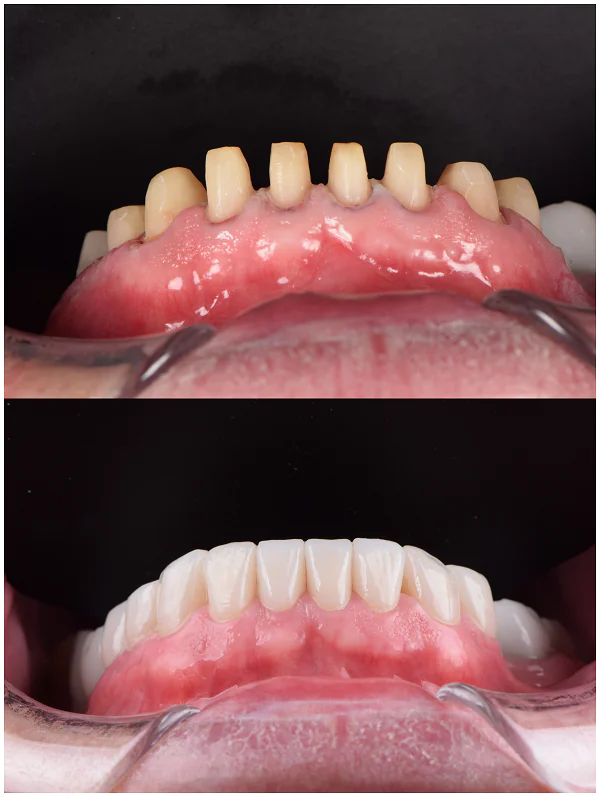
Before treatment, Jonathon needed multiple restorations. His teeth and implant-supported areas required a comprehensive plan. This may have affected chewing comfort, appearance, and confidence.
After treatment, the expected improvements included:
- Better chewing support
- More complete smile appearance
- Stronger tooth protection
- Improved tooth shape
- Better implant crown function
- More balanced bite
- Increased confidence
- Clearer long-term care plan
Moreover, the patient experience matters. Dental tourism can feel unfamiliar. So, our team aims to make each step clear and supportive.
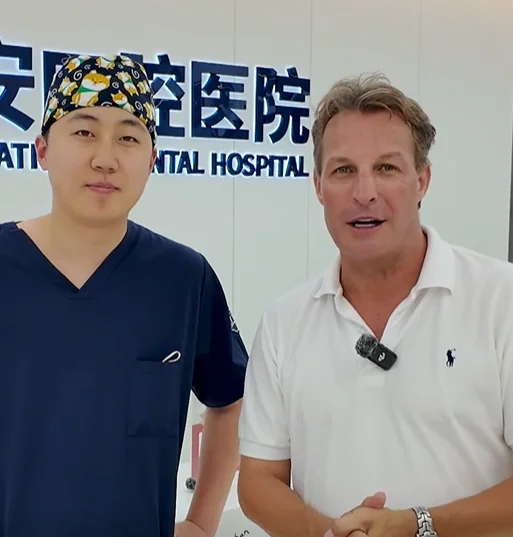
The images show a positive clinic moment. This reflects the emotional side of treatment. A successful case should not only restore teeth. It should also help the patient feel understood and cared for.
Why Choose Huangshan International Dental Hospital
For international patients, dental tourism requires more than clinical treatment. It also requires scheduling, translation, travel support, and clear communication.
Two advantages were especially important in this case.
First, we offer an integrated clinic and in-house lab model. Our dentists and technicians work closely together. Therefore, crown design, try-in, and adjustment can be completed more efficiently.
This supports:
- Faster crown production
- Better-fitting restorations
- Direct dentist-technician communication
- More accurate shade matching
- Shorter waiting time
Second, we offer all-inclusive dental tourism services. International patients may need help with transport, hotels, translation, and follow-up. Therefore, our support helps reduce stress during the trip.
Together, these advantages make complex treatment easier for overseas patients.
Aftercare Tips From Our Team
After 9 zirconia crowns and 2 implant crowns, aftercare becomes essential. Good maintenance helps protect the restorations and natural teeth.
We advised the patient to:
- Brush twice daily
- Floss every day
- Clean around implant crowns carefully
- Use interdental brushes if recommended
- Avoid chewing ice
- Avoid biting very hard objects
- Reduce sticky sweets
- Wear a night guard if grinding occurs
- Schedule routine dental checks
- Contact us if pain or looseness appears
Moreover, crowns do not decay, but natural tooth edges can still develop cavities. Therefore, oral hygiene remains important.
Implant crowns also need special care around the gumline. Plaque can cause inflammation if cleaning is poor.
So, aftercare is part of the treatment result.
Conclusion
This case shows how dental tourism in China can help international patients receive complex restorative care with efficient planning and clear pricing. At Huangshan International Dental Hospital, we helped Jonathon Peter Mark Small, a 48-year-old patient from New Zealand, complete 9 zirconia crowns, 2 implant crowns, and 1 filling during a short dental trip.
The total reference price was ¥22,700 RMB. The treatment journey included examination, preparation, temporary restorations, crown try-in, implant crown checks, bite adjustment, and final placement.
For suitable patients, this type of treatment can combine quality care, competitive pricing, and a smoother travel experience. With our in-house lab, organized support, and personalized planning, dental tourism in China can become a practical choice for patients seeking zirconia crowns, implant crowns, and affordable restorative dentistry abroad.