


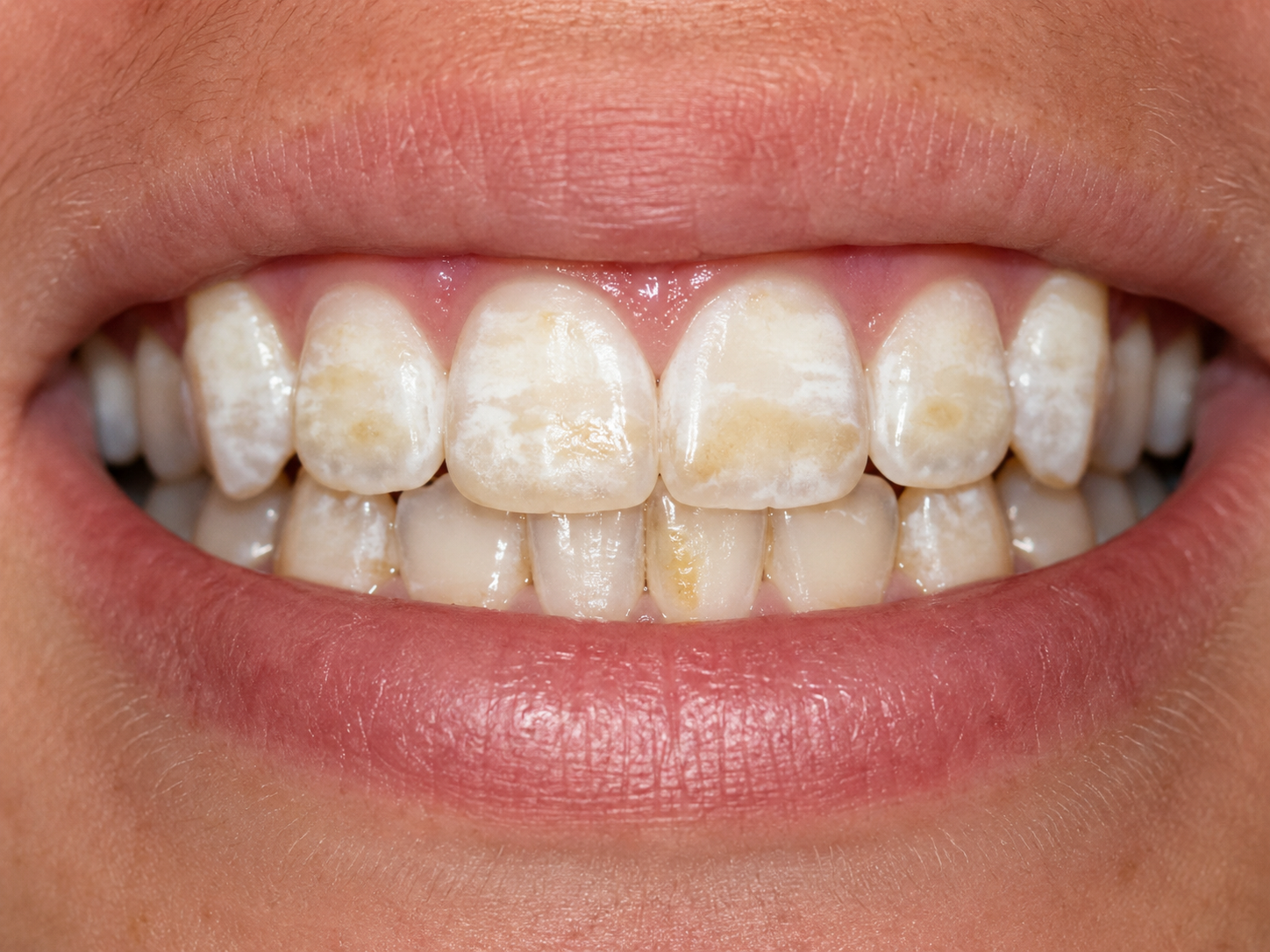
What Is Dental Fluorosis Treatment?
Dental fluorosis treatment focuses on improving the appearance and texture of teeth affected by excess fluoride during childhood. It does not remove fluoride from the body. Instead, it improves enamel color, surface smoothness, and smile confidence.
Dental fluorosis usually appears as white lines, cloudy patches, yellow stains, brown marks, or rough enamel. In mild cases, the teeth may only show faint white spots. However, in severe cases, the enamel may look pitted, stained, or uneven.
This condition forms while teeth develop under the gums. Therefore, adults do not develop new dental fluorosis after the enamel has fully formed. However, adults may notice the stains more clearly over time.
Fortunately, several cosmetic dental treatments can help. The best option depends on stain depth, enamel damage, tooth sensitivity, and smile goals. Therefore, a dentist should examine the teeth before choosing treatment.
In many cases, conservative care works well. However, deeper stains or enamel defects may need bonding, veneers, or crowns.
Why Does Dental Fluorosis Happen?
Dental fluorosis happens when a child takes in too much fluoride while the permanent teeth are forming. Fluoride can come from water, toothpaste, supplements, food, or other sources. However, the risk depends on total intake and exposure time.
Fluoride itself is not “bad.” In fact, the right amount helps protect teeth from decay. However, too much fluoride during enamel development can disturb normal enamel formation.
As a result, the enamel may become more porous. Then, the tooth surface can look chalky, cloudy, yellow, or brown. In some cases, the surface may also become rough or pitted.
Several factors can affect the risk:
- High fluoride levels in drinking water
- Swallowing toothpaste during childhood
- Unsupervised fluoride supplement use
- Long-term exposure during tooth development
- Nutrition and mineral balance
- Individual enamel sensitivity
Therefore, prevention starts early. Parents should supervise brushing and use age-appropriate toothpaste amounts for children.
How Dentists Classify Fluorosis Severity
Dentists usually choose treatment based on severity. Therefore, not every patient needs the same plan. A small white spot does not need the same treatment as brown stains with enamel pits.
Mild fluorosis may show:
- Thin white lines
- Small cloudy areas
- Slight color unevenness
- Smooth enamel surface
Moderate fluorosis may show:
- Larger white patches
- Yellow or light brown stains
- More visible color changes
- Slight surface roughness
Severe fluorosis may show:
- Dark brown stains
- Pitted enamel
- Rough or weakened surfaces
- Uneven tooth shape
- Higher cosmetic concern
Because the surface can look different from person to person, diagnosis matters. Also, other conditions may look similar. For example, early decay, enamel hypoplasia, trauma, or plaque-related white spots can mimic fluorosis.
Therefore, a dentist should confirm the cause before treatment. This prevents the wrong treatment plan.
Can Fluorosis Teeth Become Normal Again?
Fluorosis teeth usually cannot return to completely natural enamel by themselves. However, treatment can make them look much better. In mild cases, the improvement can be very noticeable.
The enamel change starts during tooth development. Therefore, brushing harder or using whitening toothpaste will not “erase” deep fluorosis. Also, home remedies can damage enamel and make stains worse.
However, modern dentistry offers several solutions. For example, whitening can reduce the general yellow color. Microabrasion can remove shallow surface stains. Resin infiltration can blend white spots. Composite bonding can repair defects. Veneers can cover deeper discoloration.
The key is choosing the least invasive option that still works. Therefore, dentists often start with conservative treatments. Then, they move to stronger cosmetic options only when needed.
Patients should also manage expectations. Some teeth improve in one visit. However, deeper stains may need a staged plan.
So, while fluorosis may not “heal” naturally, it can often improve beautifully with proper care.
Treatment Option 1: Professional Teeth Whitening
Professional whitening can help some patients with dental fluorosis. It works best when the main concern is yellow or uneven tooth color. However, it may not fully remove deep brown stains or pitted enamel.
Dentists often use hydrogen peroxide or carbamide peroxide for whitening. These agents pass into tooth structure and lighten internal stains. Therefore, the overall color may look brighter.
However, whitening can sometimes make white spots look more obvious at first. This happens because the surrounding enamel becomes lighter. Later, the color may blend better.
Professional whitening may include:
- In-office whitening
- Dentist-supervised home whitening trays
- A combined whitening plan
This option is conservative. It does not require drilling. Therefore, it often suits mild fluorosis.
However, whitening does not repair enamel pits. Also, it cannot change tooth shape. So, patients with surface defects may need another treatment after whitening.
A dentist should check cavities, cracks, gum health, and sensitivity before whitening.
Treatment Option 2: Enamel Microabrasion
Enamel microabrasion is a common treatment for shallow fluorosis stains. It removes a very thin surface layer of enamel. At the same time, it polishes the tooth surface.
Dentists usually use a special acidic and abrasive paste. Then, they gently polish the affected enamel. This can reduce white, yellow, or light brown surface stains.
Microabrasion works best when stains sit near the surface. It may not help much if the discoloration goes deeper into the enamel.
The benefits include:
- Conservative enamel removal
- Smooth tooth surface
- Fast cosmetic improvement
- Good results for mild cases
- Possible combination with whitening
However, dentists must use it carefully. Removing too much enamel can cause sensitivity and weaken the tooth surface. Therefore, this procedure should not happen repeatedly without a clear plan.
Microabrasion often works well with whitening. First, the dentist improves the surface stain. Then, whitening improves the overall shade.
Treatment Option 3: Resin Infiltration
Resin infiltration is a minimally invasive option for white spots and porous enamel areas. It can help blend chalky fluorosis marks with surrounding enamel.
During this procedure, the dentist prepares the tooth surface. Then, a low-viscosity resin flows into the porous enamel. After that, a curing light hardens the resin.
This treatment changes how light passes through the enamel. As a result, white spots may look less obvious. The tooth can appear smoother and more even.
Resin infiltration has several advantages:
- Little or no drilling
- Good option for white spots
- Natural-looking improvement
- Often completed quickly
- Can combine with whitening
However, it does not work for every stain. Deep brown stains may still show. Also, large enamel defects may need bonding or veneers.
Dentists often choose resin infiltration for mild to moderate fluorosis. It can also work after microabrasion or whitening. Therefore, it fits well in a conservative smile plan.
Treatment Option 4: Composite Resin Bonding
Composite resin bonding can help when fluorosis causes visible stains, small pits, or surface defects. The dentist adds tooth-colored resin to the affected area. Then, they shape and polish it to match the tooth.
This treatment can improve color and shape in one visit. Therefore, many patients like it for the front teeth. It also costs less than porcelain veneers in many clinics.
Bonding may help with:
- Brown stains
- Uneven enamel
- Small pits
- Minor chips
- Mild shape problems
However, bonding needs good technique. If the resin looks too thick, the tooth may look bulky. Also, resin can stain over time. Therefore, patients may need polishing or repair later.
Bonding also needs healthy enamel around the defect. If the enamel is weak, the dentist may need to prepare the surface first.
This option works well for moderate fluorosis. It can also work as a temporary or budget-friendly cosmetic repair.
Treatment Option 5: Porcelain Veneers
Porcelain veneers can cover the front surface of teeth. They can improve color, shape, size, and symmetry. Therefore, they are useful for moderate to severe fluorosis.
Veneers may suit patients with:
- Deep stains
- Multiple visible front teeth affected
- Pitted enamel
- Uneven tooth shape
- High cosmetic expectations
Porcelain usually resists staining better than composite resin. It can also look very natural when planned well. However, veneers require more commitment than whitening or microabrasion.
In many cases, the dentist removes a small amount of enamel. Then, a dental lab makes custom veneers. After that, the dentist bonds them to the teeth.
Veneers are not the first choice for every patient. If fluorosis is mild, conservative options may be better. However, veneers can create a major smile improvement when stains and defects are too deep for simpler treatments.
Good planning matters. The dentist should consider bite, gum line, tooth color, and facial features.
Treatment Option 6: Dental Crowns for Severe Cases
Dental crowns cover the whole visible part of the tooth. Dentists usually reserve crowns for severe cases. They may help when fluorosis has caused major enamel breakdown, heavy pitting, or weak tooth structure.
Crowns can improve both strength and appearance. However, they require more tooth reduction than veneers. Therefore, dentists should not use crowns only for mild stains.
Crowns may suit teeth with:
- Severe enamel defects
- Large restorations
- Cracks or fractures
- Heavy wear
- Poor tooth shape
- Deep discoloration plus structural damage
The crown material may include porcelain, zirconia, or porcelain-fused options. The best choice depends on the tooth position, bite force, and cosmetic needs.
Although crowns can look beautiful, they are more invasive. Therefore, patients should ask whether simpler options can work first.
In short, crowns are a strong solution. However, they should match the severity of the problem.
Why the Old “Grind and Acid-Etch” Method Needs Care
Some older articles describe grinding the stained enamel, acid-etching the tooth, and applying a coating or bonding agent. This approach can improve shallow stains in selected cases. However, modern dentistry uses more precise terms and safer planning.
Today, dentists may call this enamel microabrasion, resin infiltration, or adhesive restoration. Each method has different goals. Therefore, the dentist should not simply grind the tooth surface without diagnosis.
Excessive enamel removal can cause problems. For example, it may lead to sensitivity, roughness, or weak enamel. Also, deeper grinding does not always improve color. Sometimes, it exposes even more porous enamel.
Therefore, the treatment should follow a conservative principle:
- Confirm the diagnosis
- Assess stain depth
- Protect healthy enamel
- Start with minimal intervention
- Add restoration only when needed
This approach gives better long-term results. It also protects the natural tooth structure.
How to Choose the Right Treatment
The right treatment depends on fluorosis severity and patient goals. Therefore, a dentist should not recommend the same solution for everyone.
For mild white spots, whitening, microabrasion, or resin infiltration may help. For moderate stains, the dentist may combine whitening with microabrasion or bonding. For severe discoloration, veneers or crowns may create a better result.
A simple guide may look like this:
- Mild white spots: whitening or resin infiltration
- Surface yellow stains: microabrasion and whitening
- Brown stains: bonding, veneers, or combined treatment
- Pitted enamel: bonding, veneers, or crowns
- Severe structural damage: crowns
However, this guide cannot replace a dental exam. The dentist must check enamel thickness, tooth vitality, bite, gum health, and decay risk.
Patients should also discuss budget and maintenance. Some treatments need touch-ups. Others require long-term replacement.
Therefore, the best plan balances beauty, health, cost, and tooth preservation.
What to Expect During a Dental Visit
During the first visit, the dentist will examine the teeth and gums. They may also take photos or X-rays. This helps confirm whether the stains come from fluorosis or another enamel problem.
Next, the dentist will classify the severity. Then, they will explain treatment choices. In many cases, they may suggest a staged plan.
A staged plan may include:
- Cleaning first
- Whitening if needed
- Microabrasion for surface stains
- Resin infiltration for white spots
- Bonding for small defects
- Veneers for deeper cosmetic problems
This step-by-step method helps avoid overtreatment. It also helps the dentist see how much improvement each stage can bring.
Patients should ask about sensitivity, lifespan, cost, and maintenance. They should also ask how much enamel the treatment removes.
A good treatment plan should protect natural teeth. At the same time, it should improve the smile in a realistic way.
How to Care for Teeth After Fluorosis Treatment
After treatment, daily care matters. Even the best cosmetic result can fail if plaque, staining, or poor habits continue.
Patients should brush twice a day with a soft toothbrush. They should also floss daily or use interdental brushes. In addition, regular dental cleanings can keep the surface smooth and bright.
To reduce staining, patients can limit dark drinks. Coffee, tea, red wine, and cola can stain resin bonding more easily. Therefore, rinsing with water after drinking can help.
Patients with bonding should avoid biting hard objects. Ice, pens, and nutshells can chip resin. Veneers and crowns also need care, although they are stronger.
Mouthguards may help patients who grind their teeth. Grinding can damage bonding, veneers, and natural enamel.
Finally, follow-up visits are important. The dentist can polish restorations, check margins, and monitor gum health.
Good maintenance keeps the smile looking cleaner for longer.
Can Dental Fluorosis Be Prevented?
Dental fluorosis prevention focuses on children. Once adult teeth finish forming, new dental fluorosis does not develop. Therefore, early fluoride control matters most.
Parents can help by supervising brushing. Young children often swallow toothpaste. So, they should use only the recommended amount. Also, fluoride supplements should only be used with professional guidance.
Prevention tips include:
- Check local water fluoride levels if needed
- Use a small amount of toothpaste for children
- Teach children to spit, not swallow
- Avoid unnecessary fluoride supplements
- Visit a dentist early
- Balance cavity prevention and fluoride exposure
However, parents should not avoid fluoride completely unless a dentist advises it. Fluoride helps prevent cavities. The goal is safe and balanced use.
In areas with high natural fluoride in water, families may need extra guidance. A dentist or public health office can help assess the risk.
Summarize
Dental fluorosis treatment can improve white spots, yellow stains, brown discoloration, and enamel defects. However, the best method depends on the depth and severity of the enamel change.
Mild cases may improve with whitening, microabrasion, or resin infiltration. Moderate cases may need bonding or combined treatment. Severe cases may need porcelain veneers or crowns.
Therefore, patients should avoid one-size-fits-all treatment. They should also avoid harsh home remedies or aggressive enamel grinding.
A careful dentist will protect healthy enamel first. Then, they will choose the most conservative treatment that can meet the patient’s goals.
In the end, dental fluorosis treatment is not only about making teeth whiter. It is also about improving confidence, function, and long-term oral health.
With the right diagnosis and a personalized plan, many fluorosis smiles can look brighter, smoother, and more natural.