


Dental Calculus Removal Case Overview
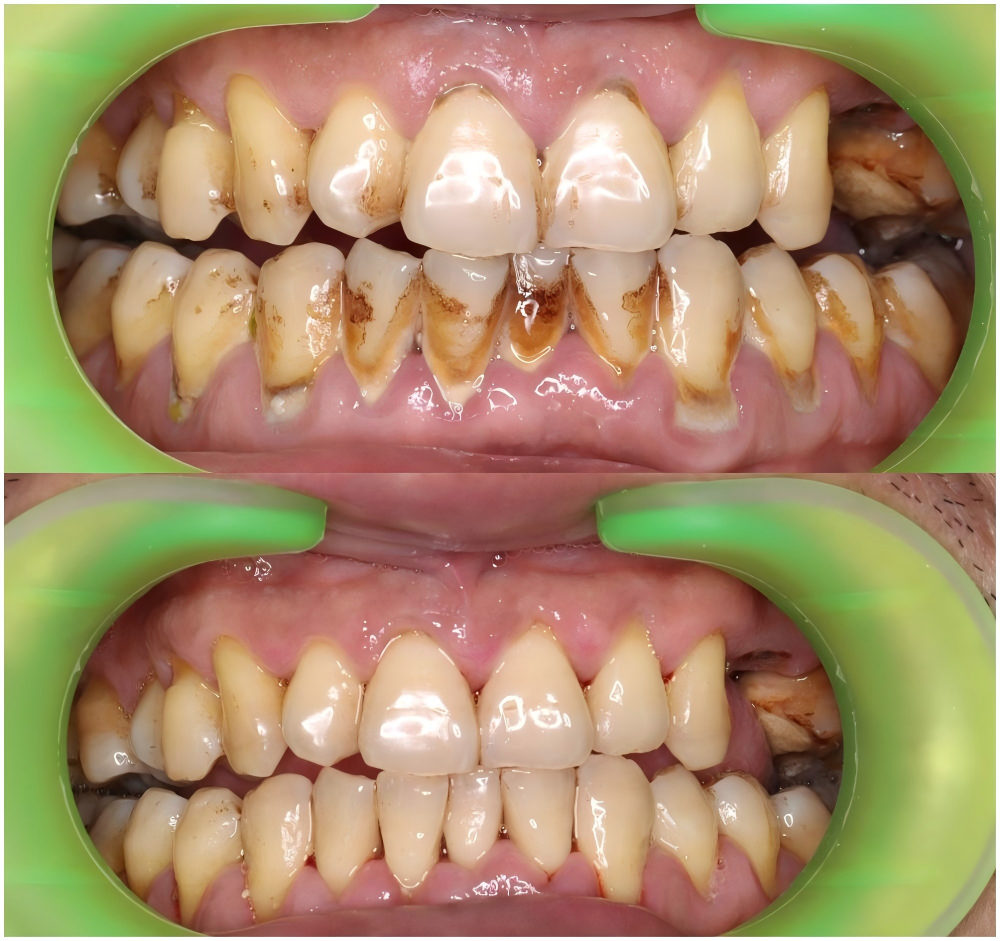
Dental calculus removal can make a clear difference when tartar, stains, and gum inflammation build up over time. This case involves a 50-year-old male patient at Huangshan International Dental Hospital. He noticed darker tooth staining for about six months. Meanwhile, the stains became heavier and harder to clean at home.
During the oral examination, the dentist found:
- Heavy dental calculus: index +++
- Heavy smoking stains: index +++
- Gingivitis
- Dark surface pigmentation
- Rough deposits around the gumline
Therefore, the dental team planned a full-mouth cleaning. The treatment included ultrasonic scaling, air polishing, and final polishing. In addition, the patient received clear aftercare advice. He needed to avoid acidic foods, cold or hot irritation, coffee, tea, cola, and smoking for one week. He also needed better oral hygiene, mouthwash use, and regular follow-up visits.
Corrected Clinical Notes
The original case information is generally correct. However, a few points need clearer wording for patient education. First, tooth discoloration from smoking and pigment drinks often sits on rough tartar. So, cleaning may improve color, but it does not change the natural tooth shade like whitening.
Second, “avoid acidic foods” should mean avoiding strong irritation after cleaning. For example, citrus, vinegar, spicy foods, and very cold drinks may cause sensitivity. Therefore, patients should choose mild foods for several days.
Third, mouthwash should support healing, not replace brushing. In some cases, dentists may suggest an antibacterial rinse. However, patients should follow the dentist’s directions. Long-term use of some mouthwashes may stain teeth.
Finally, gingivitis needs follow-up care. Cleaning removes the main irritants. Yet daily plaque control keeps gums healthy. As a result, home care matters as much as the clinic visit.
Why Tartar Became So Heavy
Tartar begins as plaque. Plaque forms every day after meals. If a patient misses plaque near the gums, minerals in saliva can harden it. Then the surface becomes rough. As a result, more plaque and pigment attach to it.
In this case, several factors may explain the heavy buildup:
- Six months of progressive staining
- Smoking-related pigment
- Possible missed cleaning areas
- Mineral-rich saliva
- Gumline plaque retention
- Delayed professional cleaning
Moreover, smoking can make stains more visible. It can also affect gum health. Therefore, smokers often need more careful dental maintenance.
Heavy tartar does not always mean poor brushing. Some people form calculus faster than others. However, regular cleaning can control the problem. In most cases, dentists recommend cleaning every six months. Yet patients with heavy tartar may need shorter intervals.
What “Before and After” Really Means
A dental before-and-after result should focus on health first. Many patients expect whiter teeth after cleaning. However, professional cleaning mainly removes external stains, plaque, and tartar. It does not bleach the inner tooth color.
Before treatment, this patient had:
- Dark smoking stains
- Visible tartar deposits
- Gum redness
- Gum irritation
- Rough tooth surfaces
- Possible bleeding during brushing
After treatment, the expected changes include:
- Cleaner tooth surfaces
- Less visible stain
- Smoother enamel feel
- Reduced gum irritation
- Fresher breath
- Better comfort during brushing
However, gums need time to recover. Bleeding may reduce within days. In addition, swelling may improve after plaque control. Still, if gum pockets exist, the dentist may suggest periodontal follow-up.
How Ultrasonic Scaling Works
Ultrasonic scaling removes hardened tartar with gentle vibration. The device uses a fine tip and water spray. The vibration breaks calculus away from tooth surfaces. Meanwhile, water cools the area and washes away debris.
This method works well for heavy deposits because it is efficient. It can reach areas around the gumline. Also, it helps remove deposits that normal brushing cannot touch.
During the visit, the dentist may:
- Check gum condition
- Identify heavy calculus areas
- Use ultrasonic scaling
- Rinse and inspect the teeth
- Clean remaining deposits by hand
- Polish the tooth surfaces
Some patients feel mild sensitivity. However, this usually improves quickly. If the gums feel tender, the patient should use gentle brushing and avoid strong irritation.
Gingivitis and Gum Recovery
Gingivitis means gum inflammation. It often comes from plaque and tartar near the gumline. In this case, heavy tartar likely irritated the gums for months. Therefore, the gums became red, swollen, or prone to bleeding.
The good news is that gingivitis can often improve. First, the dentist removes tartar. Then the patient improves with home care. As a result, the gums can calm down.
Helpful steps include:
- Brush twice daily
- Clean along the gumline
- Use floss or interdental brushes
- Rinse as directed
- Avoid smoking
- Return for follow-up checks
However, patients should not ignore bleeding. Bleeding often signals inflammation. If it continues after cleaning, the dentist should check for deeper gum disease. Early care can prevent more serious periodontal problems.
Aftercare for the First Week
The first week after cleaning matters. Teeth and gums may feel sensitive because tartar no longer covers the surfaces. This does not mean the cleaning damaged the teeth. Instead, the mouth needs time to adjust.
For one week, the patient should avoid:
- Acidic foods
- Very cold drinks
- Very hot drinks
- Coffee
- Tea
- Cola
- Dark sauces
- Smoking
- Alcohol mouth irritation
Instead, choose mild foods and warm water. Also, brush gently with a soft toothbrush. If the dentist recommends mouthwash, use it as directed.
In addition, the patient should avoid aggressive brushing. Hard brushing can hurt healing gums. Therefore, gentle and careful cleaning works better. If pain, swelling, or bleeding becomes worse, the patient should contact the clinic.
Long-Term Prevention Plan
After dental cleaning, prevention becomes the main goal. Tartar can return if plaque stays on teeth. Therefore, the patient needs a simple daily routine.
A good plan includes:
- Brush every morning
- Brush before sleep
- Use fluoride toothpaste
- Clean between teeth once daily
- Rinse after smoking or pigment drinks
- Drink more water
- Reduce coffee and tea frequency
- Avoid tobacco when possible
Moreover, the patient should schedule regular dental visits. For heavy tartar cases, the dentist may recommend cleaning every three to six months. This depends on gum health and buildup speed.
Also, the patient should watch for warning signs. These include bleeding gums, bad breath, rough deposits, and gum swelling. Early cleaning is easier than treating advanced gum disease.
Why Choose Huangshan International Dental Hospital
Huangshan International Dental Hospital offers care that fits cases like this one. First, the hospital uses a multidisciplinary dental team. This matters because tartar, stains, and gingivitis may involve both hygiene care and periodontal evaluation. When needed, different specialists can work together.
Second, the hospital provides free consultation and personalized treatment plans. This helps patients understand their oral condition before treatment. It also lowers decision stress. For example, a patient with heavy smoking stains may need cleaning first, then whitening later if suitable.
These advantages support better patient care:
- Personalized oral examination
- Clear treatment planning
- Professional cleaning advice
- Gum health evaluation
- Follow-up recommendations
In addition, the hospital can help patients build a long-term prevention plan. This is important because calculus control does not end after one cleaning.
Patient Education: Smoking and Stains
Smoking plays a major role in tooth staining. Tobacco pigment can stick to plaque and tartar. As a result, stains may become darker over time. Also, smoking can affect gum healing.
For this patient, quitting smoking would give the best result. However, even reducing smoking can help. The dentist may suggest practical steps instead of sudden pressure.
Helpful advice includes:
- Avoid smoking for at least one week after cleaning
- Rinse with water after smoking
- Brush carefully every day
- Schedule regular cleanings
- Ask about stain-control options
- Watch for gum bleeding
In addition, smoking can hide gum disease signs. Some smokers bleed less because tobacco affects gum blood flow. Therefore, dental checks become even more important.
When to Return for Follow-Up
Follow-up visits help confirm healing. After heavy tartar removal, gums may improve over one to two weeks. However, the dentist should check if inflammation remains.
The patient should return sooner if he notices:
- Severe pain
- Increasing swelling
- Persistent bleeding
- Loose teeth
- Bad taste
- Pus near gums
- Fever
- Sensitivity that does not improve
Otherwise, a planned review can help track progress. The dentist may check gum bleeding, plaque control, and tartar buildup. Then the patient can receive a better home-care plan.
Regular follow-up also supports motivation. When patients see cleaner teeth and healthier gums, they often maintain better habits.
Summarize
Dental calculus removal helped this 50-year-old male patient address heavy tartar, smoking stains, and gingivitis at Huangshan International Dental Hospital. The treatment included full-mouth ultrasonic scaling, air polishing, and polishing. As a result, the teeth could feel smoother, look cleaner, and support better gum recovery.
However, the final result depends on aftercare. The patient should avoid acidic foods, hot and cold irritants, coffee, tea, cola, and smoking for one week. He should also keep good oral hygiene, use mouthwash as directed, and attend regular follow-up visits.
In conclusion, dental calculus removal is not only a cosmetic cleaning. It is a key step for gum health, fresher breath, and long-term oral protection.