


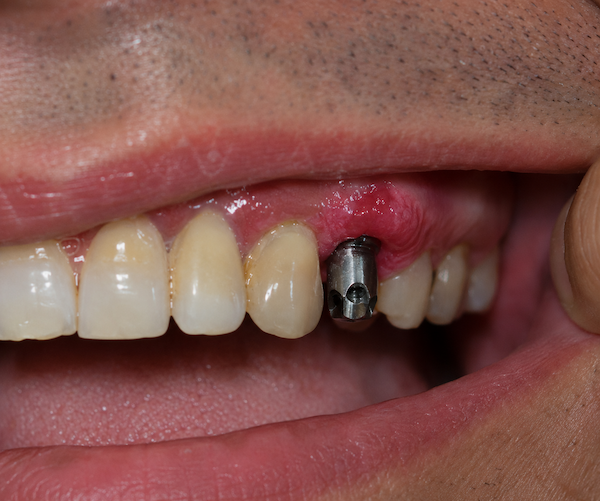
Understanding Swollen Gums After Dental Implants
Many patients experience unexpected discomfort months after a successful tooth replacement procedure. For instance, you might notice bleeding or painfully swollen gums after dental implants during your normal brushing routine. Do not ignore these warning signs.
This frequent irritation often happens because your mouth lacks a specific type of protective tissue called keratinized gingiva. Without this tough barrier, dangerous bacteria can easily gather around the metal post. Consequently, your soft tissues become highly susceptible to chronic inflammation and painful swelling.
What is Keratinized Gingiva Deficiency?
Your mouth contains two primary types of soft oral tissues. First, regular mucosal tissue is soft, highly flexible, and very delicate. Second, keratinized tissue is thick, firm, and securely surrounds the base of natural teeth.
Unfortunately, many patients lose this tough protective layer after losing a natural tooth. When a surgeon places a new implant into a thin area, issues emerge quickly. The delicate mucosal tissue cannot withstand daily chewing forces or standard toothbrush friction. Therefore, the lack of a proper barrier leads to tissue recession and chronic inflammation.
The Dangerous Cycle of Poor Oral Hygiene
When cleaning your mouth hurts, your natural reaction is to avoid the painful area completely. However, skipping that spot creates a highly dangerous loop for your oral health. Food debris and sticky plaque accumulate rapidly around the metal collar.
As a result, the localized inflammation worsens significantly over time. This neglect transforms mild tissue irritation into severe peri-implantitis, which destroys the underlying jawbone. Eventually, the supporting bone melts away, and your expensive dental implant can become loose or fall out entirely.
Advanced Solutions and Anti-Inflammatory Therapy
Fortunately, experienced periodontists can treat this tissue structural problem effectively using a two-step medical approach. First, the clinical team must eliminate the active bacterial infection through professional deep cleaning and local medication. This essential step reduces active swelling and creates a sterile surgical field.
Second, the doctor performs a minor soft tissue augmentation procedure to rebuild the protective barrier. The specialist grafts a tiny piece of healthy tissue onto the weak area. This successful procedure permanently increases the thickness and width of your protective gums.
The Advantage of Elite Multi-Specialty Care
Resolving complex soft tissue complications requires great clinical skill and advanced diagnostic tools. At Huangshan International Dental Hospital, our multidisciplinary dental team includes renowned specialists in orthodontics, implantology, and periodontics. We easily manage complex cases to ensure higher long-term treatment success rates.
Furthermore, our modern facility utilizes advanced AI dental technology for incredibly accurate imaging and treatment planning. This high-tech system improves both diagnostic precision and procedural efficiency. Therefore, our global patients receive excellent, predictable care for every unique soft tissue issue.
Long-Term Maintenance for Your Perfect Smile
Maintaining a healthy smile requires excellent daily habits and regular professional evaluations. You should follow the standard rules of brushing twice daily and using specialized dental floss. Furthermore, regular checkups allow your doctor to monitor your delicate tissue levels closely.
Remember, soft tissue grafts can happen before, during, or after your initial implant surgery. If you notice chronic irritation or swollen gums after dental implants, seek professional advice immediately. Early clinical intervention protects your financial investment and keeps your beautiful smile comfortable for life.
Google-Sourced Dental FAQs
Why are my gums swollen around my dental implant?
Gums swell because harmful bacteria build up and cause a localized infection called peri-implant mucositis. Additionally, a severe lack of tough, protective keratinized tissue makes the area highly sensitive to normal brushing friction.
How do you treat an inflamed gum around an implant?
First, a dental professional must thoroughly clean the area using specialized instruments to remove hardened plaque. After eliminating the active infection, a periodontist may perform a soft tissue graft to rebuild the protective tissue barrier.
What does an infected dental implant look like?
An infected area typically shows persistent redness, noticeable swelling, and frequent bleeding during regular brushing. In advanced stages, you might notice pus discharging from the tissue line, bad breath, or a loose implant.
Can gum tissue grow back around an implant?
No, lost gum tissue cannot grow back naturally on its own around a metal implant. However, a skilled oral surgeon can successfully restore the missing protective border through a minor soft tissue graft procedure.
Summarize
This educational article explains why patients experience swollen gums after dental implants due to a hidden lack of tough keratinized tissue. It describes how missing tissue leads to bacterial buildup, pain, and potential implant failure if left untreated. Finally, it outlines the two-step treatment process and highlights the advanced AI technology and multi-specialty expertise available at Huangshan International Dental Hospital.