


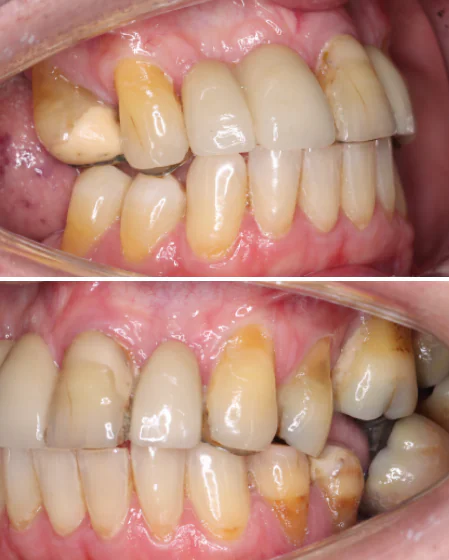
Several Simple Tips to Stay Away From Periodontal Disease
Periodontal disease prevention starts with understanding one important fact: gum disease does not usually disappear on its own.
Unlike a common cold, periodontitis is a progressive oral disease. If the inflammation and local irritation in the mouth are not controlled, gingivitis may slowly develop into periodontitis.
At the early stage, gum inflammation mainly affects the soft tissue. However, once it becomes periodontitis, the problem can spread deeper. It may affect the periodontal ligament, alveolar bone, and other tissues that support the teeth.
As bone support slowly decreases, teeth may begin to loosen. Later, they may shift, become painful when chewing, or even fall out.
Therefore, gum disease should not be ignored. Early prevention and timely treatment can help protect your natural teeth for many years.
Why Periodontal Disease Often Appears After Age 35
Periodontal disease is more common after the age of 35. However, it can also happen earlier, especially when plaque and tartar stay on the teeth for a long time.
If gingivitis does not receive timely care, inflammation can spread from the gums to deeper periodontal tissues. These include the periodontal ligament, alveolar bone, and cementum around the tooth root.
The difficult part is that early gum disease often has no obvious pain. Many people do not feel anything serious at first. Because of this, they may delay dental visits.
However, when symptoms become clear, the disease may already be advanced. At that point, some teeth may have severe bone loss. In some cases, they may no longer be easy to save.
So, regular dental checkups are important. They help find gum problems before they become serious.
How to Check Whether You May Have Gum Disease
You can notice some warning signs during daily oral care. These signs do not always mean severe periodontitis. However, they do show that your gums need attention.
You can do a simple self-check:
- If you see blood on your toothbrush while brushing or blood on food while biting, you may have gum inflammation.
- If your gums look red, swollen, soft, or bleed easily when touched, this may also suggest gingivitis.
- If your teeth feel loose, your tooth roots look exposed, or your gums are swollen with pus, the condition may have progressed to periodontitis.
- If you have persistent bad breath, gum disease may be one possible cause.
However, self-checking cannot replace a dental examination. Bleeding gums, loose teeth, pus, and long-term bad breath all need professional evaluation.
Therefore, if these signs appear often, you should visit a dentist as soon as possible.
Prevention Tip 1: Brush Your Teeth Correctly
Many people develop gum problems not because they never brush, but because they brush in the wrong way.
If food debris and plaque remain between teeth and near the gumline, they can slowly turn into tartar. Over time, this increases the risk of gingivitis and periodontitis.
So, correct brushing is the first step in periodontal disease prevention.
When brushing, avoid strong horizontal scrubbing. This “sawing” motion may damage the gums and tooth surface. It may also increase the risk of gum recession and root exposure.
Instead, use a soft-bristled toothbrush. Hold it at about a 45-degree angle toward the gumline. Then use gentle circular or short vibrating motions.
You should brush:
- The outer surfaces of the teeth
- The inner surfaces of the teeth
- The chewing surfaces
- The gumline area
- The tongue surface
Brush twice a day for about two minutes each time. Also, replace your toothbrush every three to four months, or sooner if the bristles spread out.
Prevention Tip 2: Take Care of Your Gums Gently
Healthy gums are like a good “bed” for your teeth. They support the teeth and help protect the deeper periodontal tissues.
Healthy gums usually look pink and firm. They fit closely around the teeth. However, if the gums become red, swollen, soft, or easy to bleed, they may already have inflammation.
After careful brushing, some people like to massage the gums gently. If done correctly, this may improve comfort and awareness of gum health. However, gum massage should never replace brushing, flossing, dental cleaning, or periodontal treatment.
If you want to try a gentle gum massage, follow these points:
- Wash your hands first
- Use light pressure only
- Massage gently along the gumline
- Stop if pain or bleeding occurs
- Do not massage swollen or infected gums
If the gums have pus, severe swelling, acute pain, or heavy bleeding, do not massage them. In that case, visit a dentist first.
Also, if there is a lot of tartar, gum massage will not solve the problem. The tartar should be removed by professional cleaning.
Prevention Tip 3: Build Better Daily Oral Habits
Some traditional methods, such as tapping the teeth together, are sometimes mentioned in oral health discussions. However, tooth tapping should not be treated as a main method for preventing periodontitis.
The real foundation of gum health is daily plaque control. That means brushing correctly, cleaning between teeth, eating sensibly, and seeing a dentist regularly.
Instead of relying on tooth tapping, focus on habits that have clearer dental value:
- Brush twice a day
- Clean between teeth once a day
- Rinse with water after meals if brushing is not possible
- Limit sugary snacks and drinks
- Avoid using teeth to open packages
- Do not bite hard objects
- Treat teeth grinding if it happens often
If you clench or grind your teeth, tell your dentist. Heavy bite pressure can make loose teeth worse when periodontal support is already weak.
Therefore, healthy daily habits should protect both the gums and the bite.
Prevention Tip 4: Schedule Scientific Dental Cleaning
Professional teeth cleaning is one of the most effective ways to control plaque and tartar.
Even if you brush every day, some areas are still difficult to clean well. Plaque can harden into tartar, especially near the gumline and between teeth. Once tartar forms, a toothbrush cannot remove it.
That is why regular dental cleaning is necessary.
For many people, one or two dental cleanings per year may be suitable. However, patients with periodontitis may need more frequent maintenance. Some may need cleaning every three to six months, depending on their gum condition.
Professional cleaning can help:
- Remove plaque and tartar
- Reduce gum inflammation
- Check gum pocket depth
- Detect early periodontal problems
- Lower the risk of disease recurrence
- Keep the mouth cleaner and fresher
Just like a car needs regular maintenance, your gums also need follow-up care after periodontal treatment.
So, even after symptoms improve, do not stop regular dental visits.
Prevention Tip 5: Reduce Smoking
People who smoke have a higher risk of periodontal disease. Therefore, smokers need to pay extra attention to oral hygiene.
Tobacco tar can attach to the tooth surface. It may make the surface rougher and easier for plaque and tartar to build up. Smoking can also affect gum blood flow and slow healing after dental treatment.
In addition, smokers may not notice gum disease early. Sometimes their gums bleed less, even when inflammation is present. This can hide the real condition.
Smoking may increase the risk of:
- Gum inflammation
- Tartar buildup
- Deep periodontal pockets
- Gum recession
- Loose teeth
- Poor healing after dental treatment
- Tooth loss
Therefore, reducing or quitting smoking is good for gum health. If quitting is difficult, start by reducing the number of cigarettes and improving your cleaning routine.
Also, smokers should visit the dentist regularly for periodontal checks.
Five Small Daily Mistakes That Harm Your Teeth and Gums
Many gum problems are related to small daily mistakes. These mistakes may not seem serious at first. However, they can damage teeth and gums over time.
The following five mistakes are very common.
Mistake 1: Ignoring Brushing Details
Brushing is not just about moving a toothbrush around the mouth. Technique matters.
Do not brush left and right with strong force. Instead, use gentle circular motions or short strokes near the gumline.
Keep the toothbrush at about a 45-degree angle to the teeth and gums. This helps the bristles clean the area where plaque often collects.
Also, do not use a hard toothbrush. A hard brush may hurt the gums and cause tooth wear.
Pay attention to these details:
- Use a soft-bristled toothbrush
- Brush for about two minutes
- Clean the back teeth carefully
- Do not forget the inner side of the lower front teeth
- Brush the tongue gently
- Replace old toothbrushes on time
In addition, do not brush too hard after acidic foods or drinks. If you have just had soda, citrus fruit, or vinegar-based food, wait about 30 minutes before brushing.
Mistake 2: Not Giving Your Teeth a Healthy Gum “Bed”
Your gums support and protect your teeth. So, gum health is just as important as tooth health.
Healthy gums are usually pink, firm, and close to the tooth surface. If the gum edge becomes red, swollen, thick, or soft, there may be inflammation.
The most obvious warning sign is bleeding. Bleeding while brushing is common, but it is not normal.
Many things can hurt the gums, including:
- Brushing too hard
- Using a hard toothbrush
- Leaving plaque near the gumline
- Ignoring tartar buildup
- Using toothpicks roughly
- Skipping dental cleanings
To protect your gums, brush gently with a soft toothbrush. Also, clean between teeth every day. If your gums bleed often, do not simply change toothpaste and ignore the problem.
Instead, schedule a dental examination. The dentist can check whether the bleeding comes from gingivitis, tartar, deep pockets, or other causes.
Mistake 3: Letting Bad Habits Quietly Damage Teeth
Some habits do not seem directly related to oral health. However, they can still affect the mouth.
For example, frequent snacking gives bacteria more chances to produce acid. Sugary drinks can increase the risk of cavities. Poor sleep and high stress may also make people neglect oral care.
Some people brush less carefully when they feel tired or anxious. Others may grind their teeth at night because of stress. Over time, these habits can harm both teeth and gums.
Common harmful habits include:
- Drinking sweet beverages often
- Eating snacks many times a day
- Skipping breakfast and then overeating snacks
- Not drinking enough water
- Staying up late often
- Ignoring stress-related teeth grinding
- Brushing immediately after acidic foods
- Forgetting nighttime brushing
Therefore, oral health is not only about the toothbrush. A balanced lifestyle also helps protect your mouth.
Try to drink more water, reduce sugar, sleep well, and keep a steady cleaning routine.
Mistake 4: Not Replacing Missing Teeth
Missing teeth should not be ignored. No matter why a tooth is lost, you should ask a dentist about repair options.
If a missing tooth is left untreated for a long time, nearby teeth may tilt toward the empty space. The opposite tooth may also move down or up. As a result, the bite may become uneven.
Long-term tooth loss can cause:
- Food trapping
- Tooth shifting
- Bite problems
- Chewing difficulty
- Higher risk of decay
- Higher risk of periodontal problems
- Jawbone changes
- Facial support changes
In many cases, patients should consider repair within a reasonable period. However, the best timing depends on gum health, bone condition, general health, and the treatment plan.
Common replacement options include dental implants, dental bridges, removable dentures, and full dentures.
Also, people with full dentures still need oral cleaning. Even without natural teeth, the gums, tongue, palate, and dentures should be cleaned every day.
Mistake 5: Thinking Cleaning and Flossing Make Gaps Wider
Many people worry that dental cleaning or flossing will make the gaps between teeth wider. This is a common misunderstanding.
Regular dental cleaning does not make healthy teeth separate. Instead, it removes tartar, plaque, and stains.
Sometimes, after cleaning, patients feel that the gaps look bigger. However, this often happens because tartar had been filling the spaces before. Once the tartar is removed, the original gum recession or bone loss becomes more visible.
So, cleaning does not create the gap. It reveals the existing condition.
Flossing also does not make teeth loose or create gaps when used correctly. However, rough flossing can injure the gums. So, slide the floss gently along the side of each tooth.
If food often gets stuck between your teeth, use dental floss or an interdental brush instead of sharp toothpicks. Toothpicks may damage the gums if used with force.
If gaps suddenly become larger, visit a dentist. You may need a periodontal check.
Summary
Periodontal disease prevention depends on daily care and regular dental maintenance.
Gum disease often starts quietly. At first, you may only notice bleeding while brushing, mild swelling, or bad breath. However, if plaque and tartar stay near the gumline, gingivitis can progress into periodontitis.
Once periodontitis damages the bone around the teeth, the teeth may lose support. They may become loose, shift, or eventually fall out.
To protect your gums, remember these key habits:
- Brush gently and correctly
- Clean between teeth every day
- Use a soft-bristled toothbrush
- Avoid aggressive horizontal brushing
- Visit the dentist for regular cleanings
- Treat bleeding gums early
- Reduce or quit smoking
- Replace missing teeth when needed
- Do not believe that cleaning or flossing creates gaps
In the end, periodontal disease prevention is not difficult, but it must be consistent. Good home care removes daily plaque. Professional cleaning removes tartar. Regular checkups find problems early.
Therefore, do not wait until your teeth feel loose. Start protecting your gums today, and you will have a much better chance of keeping your natural teeth for many years.