


Bone Graft for Dental Implant: Same-Day Basics
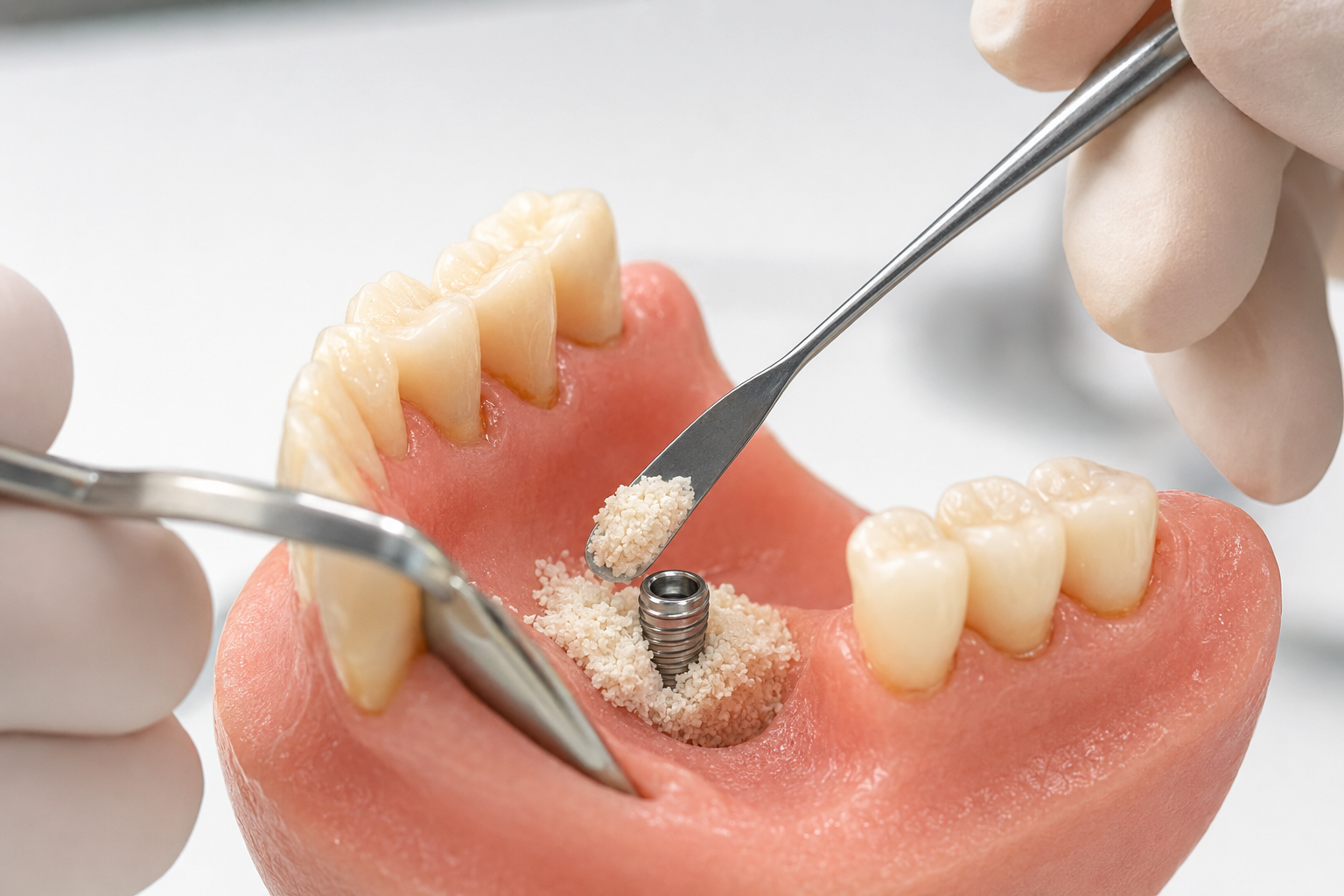
A bone graft for dental implant helps rebuild weak or thin jawbone before implant placement. Therefore, it creates a stronger base for the titanium implant screw.
Many patients now ask about same-day implants. However, not every patient can receive a graft and implant on the same day. The dentist must first check bone height, bone width, gum health, infection risk, and bite force.
In modern implant dentistry, CBCT scans, digital planning, and guided surgery help dentists plan more accurately. Also, newer materials such as PRF and synthetic grafts support tissue healing in selected cases.
Why Jawbone Volume Matters
A dental implant needs enough bone around it. Otherwise, the implant may lack stability.
After tooth loss, the jawbone slowly shrinks. This happens because the bone no longer receives pressure from chewing. As a result, the implant area may become too narrow or too short.
A bone graft can help in several ways:
- It adds volume to a thin jawbone.
- It supports better implant positioning.
- It improves long-term stability.
- It protects the gum shape around the crown.
Therefore, grafting is not only about “adding bone.” It also helps create a better final tooth.
When Same-Day Implants May Work
Same-day implant treatment means the dentist places the implant during the same visit as extraction or grafting. However, the case must fit strict clinical rules.
A patient may qualify when:
- The infection level stays low.
- The remaining bone holds the implant firmly.
- The gum tissue looks healthy.
- The bite pressure can stay controlled.
- The patient follows aftercare well.
In addition, front teeth and single-rooted teeth may sometimes suit same-day planning. Still, the dentist must confirm this with imaging and clinical checks.
Same-day treatment can save time. However, safety should always come before speed.
When Staged Treatment Works Better
Sometimes, the dentist chooses a staged plan. First, they remove the tooth and place the graft. Next, the graft heals. Then, they place the implant later.
This approach may work better when:
- Bone loss looks severe.
- The area has active infection.
- The sinus sits too close to the upper jaw area.
- The gum tissue needs repair.
- The patient has heavy bite pressure.
Although staged treatment takes longer, it can reduce risk in complex cases. Therefore, patients should not see delayed implant placement as failure. Instead, it may protect the final result.
How Dentists Check Bone Before Surgery
Before implant surgery, the dentist needs a full diagnosis. A simple visual exam is not enough.
Usually, the dentist checks:
- CBCT scan results
- Bone height and width
- Gum thickness
- Tooth root infection
- Sinus position
- Nerve position
- Bite relationship
- General health history
Moreover, digital implant planning can show the best implant angle and depth. This matters because a well-placed implant supports a better crown.
At Huangshan International Dental Hospital, AI-assisted diagnostic systems can support imaging and treatment planning. As a result, patients receive a clearer and more personalized plan before surgery.
Types of Bone Graft Materials
Dentists may choose different graft materials. Each option has a different purpose.
Common types include:
- Autograft: bone from the patient’s own body
- Allograft: processed donor bone
- Xenograft: processed animal-derived bone
- Alloplastic graft: synthetic bone material
Recent research continues to compare these materials for guided bone regeneration and implant support. For example, a 2026 review discussed autogenous, allograft, xenograft, and alloplastic grafts in implant-related bone regeneration (PubMed).
However, no single material fits every case. Therefore, the dentist should choose based on bone defect size, healing needs, budget, and implant timing.
PRF and Modern Healing Support
PRF means platelet-rich fibrin. Dentists prepare it from the patient’s own blood. Then, they use it to support soft tissue and bone healing.
PRF may help because it contains natural healing factors. Also, it can work with graft materials in selected cases.
Recent studies continue to examine PRF in implant bone regeneration. For example, 2026 research studied PRF in maxillary sinus bone regeneration (PubMed).
Still, PRF does not replace good surgical planning. Instead, it supports healing when the case allows it. Therefore, patients should ask whether PRF suits their condition.
What Happens During the Procedure
The exact steps depend on the case. However, the process often follows a clear order.
First, the dentist numbs the area. Then, they remove damaged tissue or extract the tooth if needed. Next, they place graft material into the bone defect. After that, they may cover the graft with a membrane.
If same-day placement works, the dentist places the implant during the same visit. Then, they close the gum tissue. In some cases, they also place a temporary tooth.
However, the temporary tooth usually avoids strong chewing pressure. This protects the healing implant.
Recovery Timeline and Aftercare
Healing takes time, even when the surgery feels quick. Therefore, patients should plan their recovery carefully.
A general timeline may look like this:
- First 24 hours: mild bleeding and swelling may appear.
- Days 2-3: swelling may reach its peak.
- Week 1: soft tissue starts to close.
- Weeks 2-4: the gum feels more stable.
- Months 3-6: bone maturation continues.
During recovery, patients should avoid smoking, hard foods, and strong rinsing. Also, they should follow medication instructions.
Most importantly, they should attend follow-up visits. These visits help the dentist catch problems early.
Pain Control and Patient Comfort
Many patients worry about pain. However, most people feel pressure more than sharp pain during surgery. Local anesthesia controls pain well in most cases.
After surgery, patients may feel soreness, swelling, or tightness. Usually, this improves within several days. In addition, cold compresses and prescribed medicine can help.
Patients should call the clinic if they notice:
- Heavy bleeding
- Worsening pain after several days
- Fever
- Pus
- Bad smell
- Loose implant parts
Early care matters. Therefore, do not wait if symptoms feel unusual.
Cost, Value, and Dental Tourism
Bone graft and implant costs vary widely. The price depends on graft size, implant system, surgery complexity, imaging, crown material, and follow-up needs.
For international patients, cost matters a lot. In the U.S. and Europe, implant treatment can become expensive. Also, insurance may not cover every step.
Huangshan International Dental Hospital offers highly competitive pricing. Treatment costs often stay much lower than many Western markets. Therefore, patients can receive quality implant care while controlling their budget.
In addition, the hospital offers dental tourism support. This can include transportation help, hotel arrangements, translation, and follow-up care. As a result, overseas patients can manage treatment with less stress.
Why Choose Huangshan International Dental Hospital
Huangshan International Dental Hospital fits patients who want efficient care and clear planning.
First, the hospital has international-level dental expertise. Its dental team includes specialists trained at leading institutions, including Nanjing Stomatological Hospital. Also, implant dentists have handled many successful cases. This experience matters in grafting and implant planning.
Second, the hospital uses an integrated clinic and in-house lab model. Dentists and technicians can communicate directly. Therefore, restorations can fit better and move faster through production.
This model also helps international patients. They often have limited time in China. So, faster coordination can make the treatment journey smoother.
FAQ:
How Painful Is Bone Grafting for Dental Implants?
Bone grafting usually causes mild to moderate discomfort after surgery. However, local anesthesia helps control pain during the procedure.
Most patients describe the feeling as soreness, pressure, or swelling. Also, the discomfort often improves after a few days.
Pain can feel stronger when the graft area is large. It may also feel stronger if the dentist uses bone from another part of the mouth.
Therefore, patients should follow aftercare instructions closely. Good rest, soft foods, and proper medicine can make recovery easier.
How Long Do Bone Grafts Last for Dental Implants?
A successful bone graft can support an implant for many years. However, the graft must heal and become part of the jawbone first.
After healing, the implant, bone, and gum tissue need long-term care. Therefore, patients should brush well, clean between teeth, and visit the dentist regularly.
Smoking, gum disease, diabetes, and poor oral hygiene can harm the result. Also, heavy bite force may increase risk.
So, the graft can last long, but only when the full implant system stays healthy.
Which Bone Graft Is Best for Dental Implants?
The best graft depends on the patient’s bone defect and treatment goal. There is no universal “best” material.
For small defects, processed donor bone or synthetic materials may work well. For larger defects, the dentist may suggest stronger grafting methods. In some complex cases, the patient’s own bone may help.
In addition, PRF or a membrane may support healing. However, these tools work best when the diagnosis is accurate.
Therefore, patients should choose a clinic that explains the material, reason, cost, and healing plan clearly.
Is a Bone Graft Necessary for a Tooth Implant?
A bone graft is necessary when the jawbone cannot support the implant safely. However, some patients have enough bone and do not need grafting.
The dentist usually decides after checking a CBCT scan. They also review gum health, infection, tooth position, and bite force.
A graft may become necessary after long-term tooth loss. It may also help after severe gum disease or trauma.
However, patients should avoid guessing. A proper implant consultation gives the clearest answer.
Same-Day Implant Tips for Patients
If you want same-day implant treatment, prepare before your visit. Good preparation can improve safety and comfort.
Helpful tips include:
- Bring recent dental X-rays if you have them.
- Share your medical history clearly.
- Tell the dentist about all medicines.
- Stop smoking before and after surgery if possible.
- Ask about temporary tooth options.
- Ask what foods you can eat after surgery.
- Confirm follow-up timing before leaving.
Also, do not choose same-day treatment only because it sounds faster. Instead, choose it only when your bone and gum condition support it.
Common Mistakes to Avoid
Patients often make simple mistakes before implant treatment. However, these mistakes can affect healing.
Avoid these problems:
- Waiting too long after tooth loss
- Ignoring gum disease
- Smoking during healing
- Chewing hard foods too soon
- Skipping follow-up visits
- Choosing only by low price
- Asking for same-day treatment without a diagnosis
In addition, patients should avoid comparing their case with online stories. Every jawbone heals differently. Therefore, a personal plan matters more than general advice.
Summarize
A bone graft for dental implant can create a stronger foundation for implant treatment. It may help patients with bone loss, thin jawbones, or difficult tooth extraction areas. However, same-day implant placement only works when bone, gum, and infection conditions allow it.
For safer results, patients need CBCT imaging, careful planning, suitable graft materials, and good aftercare. Moreover, modern options such as guided surgery, PRF support, and digital planning can improve treatment precision in selected cases.
Huangshan International Dental Hospital offers experienced implant care, competitive pricing, AI-assisted planning, and convenient support for international patients. Therefore, it can be a practical choice for patients who want quality dental implant treatment in China.