


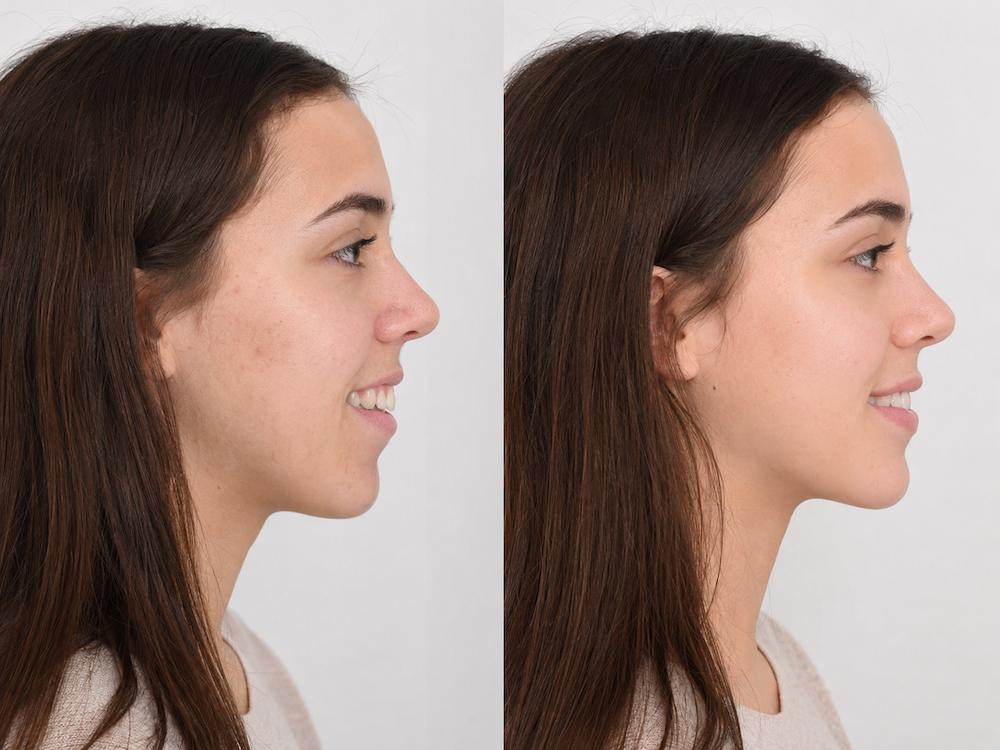
Can Braces Change Your Face Shape?
Can braces change your face shape? Many people ask this before starting orthodontic treatment. You may have heard sayings like “braces are like a face makeover” or “orthodontics changed my whole face.” Also, some celebrities often explain their facial changes by saying, “I only fixed my teeth.”
So, can a pair of braces really change the way your face looks? The answer is not a simple yes or no.
Sometimes, braces can bring visible facial changes. However, sometimes they cannot. The key depends on where your facial concern comes from. If the problem comes from tooth position, bite imbalance, or dental protrusion, orthodontics may help. However, if the problem comes from bones, muscles, or facial fat, braces have clear limits.
Therefore, before expecting a “new face,” you need to understand what orthodontics can and cannot do.
What Orthodontics Actually Does
Orthodontics works through gentle and continuous force. This force guides the teeth and alveolar bone into better positions. As a result, the teeth become straighter. Also, the bite relationship becomes more stable.
In simple words, orthodontics adjusts the teeth and bite. It does not directly reshape the whole face.
However, teeth support the lips and cheeks. So, when the teeth move, the soft tissues around the mouth may also change. Because of this, some patients notice changes in their side profile, lip position, chin appearance, or smile balance.
Orthodontics may improve:
- Crowded teeth
- Spaced teeth
- Protruding teeth
- Deep bite
- Underbite
- Crossbite
- Dental midline deviation
- Bite-related facial imbalance
Therefore, orthodontics can act like a “fine tuner” for the lower face. Still, it is not facial plastic surgery.
Why Braces May Look Like a Face Makeover
Braces may look like a face makeover when the original problem comes from the teeth. For example, protruding teeth can push the lips forward. A deep bite can make the lower face look shorter. An underbite can make the chin look too prominent.
After orthodontic treatment, the teeth move into better positions. Then, the lips may close more naturally. Also, the side profile may look softer. In some cases, the chin may look more balanced.
This is why some people feel that orthodontics “changed the face.” In reality, braces mainly changed the tooth position and bite. Then, the facial soft tissue followed.
So, the facial change is often indirect. It comes from better dental support, not from changing the whole bone structure.
Because of this, patients with clear dental problems may see more visible changes. Patients with mainly skeletal or soft tissue concerns may see less change.
Protruding Teeth: When Braces May Improve Mouth Protrusion
Protruding teeth are one of the most common reasons why braces may change facial appearance. In this condition, the front teeth or the alveolar bone push forward. As a result, the lips may look protrusive.
Some patients may also find it hard to close their lips naturally. From the side, the mouth may look too forward. This can affect facial harmony.
Common signs include:
- Upper front teeth stick out
- Lips look strained when closed
- Side profile looks convex
- The mouth area looks forward
- Front teeth show too much
- Lip closure feels difficult
In selected cases, orthodontists may use extraction treatment. This creates space to move the front teeth backward. As the teeth move back, the lips may also become less protrusive.
Therefore, the side profile may look softer and more balanced. However, not every protruding mouth needs extraction. The orthodontist must check the teeth, lips, bones, and bite first.
Deep Bite: When the Chin May Look Short or Retruded
A deep bite means the upper front teeth cover too much of the lower front teeth. In some patients, this can make the lower face look short. Also, it may make the chin look less obvious or slightly retruded.
After orthodontic correction, the bite may open. The lower face may look more stretched and relaxed. Therefore, the chin may look more balanced from the front and side.
Deep bite may cause:
- Upper teeth cover lower teeth too much
- Lower front teeth wear down
- Chin looks short
- Lower face looks compressed
- Smile looks tight
- Bite feels deep or locked
However, braces do not move the chin bone forward like surgery. Instead, they improve the bite. Then, the lower face may look more harmonious.
So, if the short-chin appearance comes mainly from bite problems, orthodontics may help. However, if the chin itself is severely underdeveloped, braces alone cannot fully solve it.
Underbite: When the Chin Looks Too Prominent
An underbite means the lower teeth bite in front of the upper teeth. Many people describe this as “lower teeth covering upper teeth.” This condition may make the chin look too prominent.
It may also make the middle face look flatter. In addition, chewing may feel uncomfortable. Some patients may also have speech problems or uneven tooth wear.
Common signs include:
- Lower front teeth sit in front of upper teeth
- Chin looks forward
- Face looks concave from the side
- Chewing feels difficult
- Front teeth do not meet normally
- Jaw may feel tense
If the underbite is mainly dental, orthodontic treatment may help. Braces can guide the teeth into a better bite. As a result, the chin line may look more harmonious.
However, if the underbite comes from jawbone mismatch, braces alone may not be enough. A severe skeletal underbite may need orthodontics combined with jaw surgery.
Therefore, professional diagnosis is very important.
Facial Asymmetry Caused by Teeth and Bite
Some people feel that their face looks slightly crooked. In some cases, the cause comes from the teeth and bite. For example, the upper and lower dental midlines may not match. Or, one side of the bite may contact earlier than the other.
When the bite is unbalanced, the lower jaw may shift to one side when closing. Over time, this can make the face look asymmetric.
Orthodontics may help when asymmetry comes from:
- Dental midline mismatch
- One-sided bite interference
- Crossbite
- Uneven chewing habit
- Tilted teeth
- Functional jaw shift
After orthodontic correction, the bite becomes more balanced. Then, the jaw may close in a better position. Therefore, the face may look more symmetrical.
However, if facial asymmetry comes from jawbone growth, muscle size, or natural bone structure, braces cannot fully correct it. In these cases, other treatments may need evaluation.
These Expectations Are Beyond Orthodontics
Orthodontics has limits. It mainly works on teeth, dental arches, and bite relationships. It cannot directly change your bone frame, muscle volume, or fat distribution.
So, if your facial concern comes from bone structure, facial muscle, or facial fat, braces may not solve it.
Braces cannot directly change:
- Wide jawbone
- Cheekbone height
- Nose shape
- Eye shape
- Facial fat volume
- Masseter muscle size
- Natural skull structure
- Adult jawbone width
Many people hope that extraction and braces will make the face smaller or sharper. However, facial width mainly depends on the lower jawbone and masseter muscles. Tooth extraction does not make the jawbone narrower.
Therefore, braces should not be treated as a face-slimming method. They are for tooth alignment and bite correction.
Why Some People Look Thinner During Braces
Some patients feel their cheeks become sunken during orthodontic treatment. They may think braces made their face slimmer. However, this is often not a direct orthodontic effect.
When people first wear braces, they may feel soreness. As a result, they eat less. Also, they may avoid hard foods. Over time, body weight or facial fat may decrease slightly.
This can make the cheeks look thinner. However, this change may be temporary. Once the patient adapts to braces and returns to normal eating, the face may become fuller again.
Possible reasons include:
- Less eating during early treatment
- Soft food diet
- Weight loss
- Temporary chewing discomfort
- Reduced facial fat
- Natural growth or aging changes
Therefore, patients should not expect braces to create permanent cheek slimming. If the change comes from diet or weight loss, it may return later.
The Real Goal of Orthodontic Treatment
No matter how braces affect appearance, one thing must stay clear. The first goal of orthodontics is oral health and stable function. A beautiful smile is important. However, a healthy bite is even more important.
Orthodontics aims to:
- Align crowded teeth
- Improve bite relationship
- Make cleaning easier
- Improve chewing efficiency
- Reduce abnormal tooth wear
- Support gum health
- Lower future dental risks
- Improve long-term stability
When teeth align well, brushing becomes easier. Also, food traps less often. This can reduce the risk of cavities and gum problems.
A stable bite can also reduce uneven pressure on teeth. Therefore, orthodontics may help protect teeth for the long term.
In many cases, better facial appearance comes as a natural bonus. It is the “extra gift” after healthy correction.
Why Professional Diagnosis Matters
If you are considering braces, do not judge your case only by photos or online examples. Every face is different. Also, every bite problem has a different cause.
An orthodontist needs to check whether the problem is dental or skeletal. This requires a full examination.
A complete orthodontic evaluation may include:
- Facial photos
- Intraoral photos
- Dental scans
- Bite analysis
- Panoramic X-ray
- Cephalometric X-ray
- Jaw relationship evaluation
- Gum and tooth health check
These records help the orthodontist understand the real problem. For example, two patients may both have a protruding mouth. However, one may have protruding teeth. Another may have a retruded chin. Their treatment plans will be different.
Therefore, scientific diagnosis creates realistic expectations. It also helps avoid overtreatment or wrong treatment.
Do Not Expect Braces to Work Like Plastic Surgery
Braces can improve the lower-face appearance in selected cases. However, they are not plastic surgery. They cannot change the entire facial structure.
This difference matters. If a patient expects braces to create a sharp jawline, smaller face, or higher nose, disappointment may follow. Braces do not work that way.
Instead, orthodontics may improve:
- Smile line
- Tooth alignment
- Lip support
- Side profile
- Bite balance
- Lower-face harmony
But orthodontics cannot directly improve:
- Nose bridge height
- Cheekbone shape
- Face width
- Eye shape
- Skin tightness
- Facial fat distribution
Therefore, patients should treat online “braces changed my face” stories with caution. Some photos involve growth, makeup, weight change, camera angle, or even other cosmetic treatments.
A real orthodontic plan should stay honest and health-based.
FAQ
Can braces really change your face?
Yes, braces can change facial appearance in some cases. This often happens when the facial concern comes from teeth or bite problems. However, braces cannot directly reshape adult facial bones.
Can braces fix a protruding mouth?
Yes, braces may improve a protruding mouth if the cause comes from protruding teeth. In some cases, extraction helps create space. Then, the front teeth can move backward.
Can braces make the chin look better?
Sometimes, yes. If a deep bite makes the chin look short or retruded, orthodontic correction may improve the lower-face balance. However, braces cannot grow an adult chin.
Can braces fix an underbite?
Braces can help mild dental underbite cases. However, a severe skeletal underbite may need jaw surgery with orthodontics. A full exam can show the real cause.
Can braces make your face smaller?
Usually, no. Braces do not narrow jawbones or remove facial fat. Some people look thinner during treatment because they eat less at first.
Can braces correct facial asymmetry?
Sometimes, yes. If the asymmetry comes from bite imbalance or dental midline issues, braces may help. However, bone-related facial asymmetry may need other evaluation.
Do extraction braces change the face?
Extraction braces may change the profile in selected cases. For example, they may reduce lip protrusion. However, extraction should follow careful facial and bite analysis.
Should I get braces just to change my face?
No, braces should not be only for changing the face. The main goal should be a healthy bite, straighter teeth, easier cleaning, and long-term oral stability.
Summarize
Can braces change your face shape? Sometimes, they can. However, the change depends on the cause of your facial concern. If the issue comes from protruding teeth, deep bite, underbite, or bite-related asymmetry, orthodontics may improve your facial appearance.
However, braces cannot change your basic bone frame. They cannot make a wide jaw narrow. They cannot remove facial fat. Also, they cannot reshape the nose, eyes, or cheekbones.
Therefore, orthodontics is not magic. It is a scientific treatment that moves teeth, improves bite function, and supports oral health. A better-looking smile and profile may come naturally after treatment.
If you are unsure whether your problem is dental or skeletal, consult a professional orthodontist. With full examination and imaging analysis, you can understand what braces can realistically do.
In short, can braces change your face shape? Yes, in the right cases. But the real value of orthodontics is not “changing your face.” It is building a healthier, more stable, and more confident smile.