


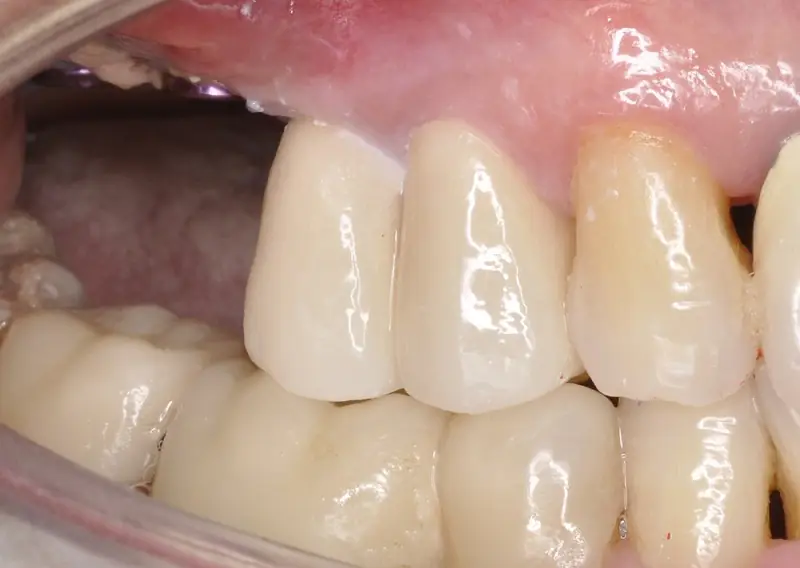
Choosing a Solution for Multiple Missing Teeth
When you have multiple missing teeth, choosing the right replacement method can feel confusing.
You may want a fixed solution. However, you may also worry about surgery, cost, cleaning, and treatment time.
Today, two common implant-based options are available:
- An implant-supported bridge
- Separate single dental implants
The two options may look similar after treatment. However, their design is very different.
With separate implants, the dentist places one implant for each missing tooth. Each implant then supports its own crown.
In contrast, an implant bridge uses fewer implants. These implants support several connected replacement teeth.
Therefore, one approach focuses on independence. The other focuses on shared support and efficiency.
Neither option suits every patient. Instead, the best choice depends on:
- Bone condition
- Number of missing teeth
- Position of the gaps
- Oral hygiene habits
- Budget
- Bite pressure
- Long-term expectations
This guide compares both options in a practical way. It also explains how your dentist may select the right plan.
What Is an Implant-Supported Bridge?
An implant-supported bridge works like a bridge across a river.
The implants act like bridge supports. Meanwhile, the connected crowns form the bridge above them.
For example, three missing teeth may not always need three implants.
Instead, the dentist may place:
- One implant at the front of the gap
- One implant at the back of the gap
- Three connected replacement teeth above them
The middle tooth does not have its own implant. Instead, it receives support from the implants on both sides.
Therefore, an implant bridge can replace several teeth with fewer implants.
This design may help patients who:
- Have several neighboring missing teeth
- Want fewer implant fixtures
- Have limited bone in the middle of the gap
- Want to reduce initial treatment cost
- Prefer fewer surgical sites
However, the connected design also changes cleaning and maintenance.
Because the crowns form one unit, patients cannot floss between them in the usual way.
Therefore, special cleaning tools become important.
An implant bridge can work well. However, it needs careful planning and strong daily maintenance.
What Are Separate Single Dental Implants?
Separate single dental implants aim to copy the structure of natural teeth.
Each missing tooth receives:
- Its own implant
- Its own abutment
- Its own dental crown
As a result, every restored tooth functions as an independent unit.
This design offers several advantages.
For example:
- Each implant carries its own chewing force.
- Each crown can be cleaned separately.
- One damaged crown may not affect the others.
- The restoration feels closer to natural teeth.
- Each missing root area receives implant support.
However, separate implants usually require more fixtures.
Therefore, the treatment may involve:
- More implant sites
- Higher initial cost
- More surgical work
- Greater bone requirements
- More components
Still, many patients choose this option for long-term independence.
The design may be especially suitable when the bone is healthy at every missing tooth location.
However, a dentist must confirm that each site has enough height, width, and density.
If one area lacks bone, grafting may become necessary.
Core Design: Connected Support vs Independent Support
The main difference lies in the treatment concept.
An implant bridge uses a shared structure.
Meanwhile, separate implants use independent structures.
Implant bridge
- Fewer implants support several crowns.
- The crowns connect into one unit.
- Forces travel across the bridge.
- One support problem may affect the full bridge.
- Cleaning requires special techniques.
Separate implants
- Each missing tooth receives its own implant.
- Each crown remains independent.
- Forces stay more localized.
- One problem usually stays limited to one tooth.
- Cleaning feels more like natural tooth care.
Therefore, the decision goes beyond appearance.
Both options can look attractive. However, they behave differently under chewing pressure.
They also respond differently when a crown loosens or an implant develops a problem.
In addition, their maintenance needs are not the same.
So, the dentist should consider the full system. A beautiful result still needs to remain clean, stable, and repairable.
Comparison Table
| Comparison area | Implant bridge | Separate single implants |
|---|---|---|
| Core design | Fewer implants support connected crowns | Each missing tooth gets its own implant and crown |
| Number of implants | Usually fewer than the number of missing teeth | Often one implant for each missing tooth |
| Initial surgery | Usually fewer implant sites | Usually more implant sites |
| Initial cost | Often lower | Usually higher |
| Daily cleaning | More difficult under the bridge | Easier to clean between crowns |
| Long-term independence | One problem may affect the entire bridge | One problem usually stays isolated |
| Bone stimulation | No implant under the suspended tooth | Each implant helps support its own site |
| Repair | The bridge may need full removal | One crown or implant may be treated separately |
| Best suited for | Limited budget or uneven bone conditions | Strong bone and patients seeking independence |
This table provides a general comparison.
However, your dentist may recommend a different design based on your bite and bone structure.
Main Advantages of an Implant Bridge
An implant bridge can offer a practical balance between function and cost.
Its main advantages include:
Fewer implants
The dentist may replace several missing teeth with fewer implant fixtures.
Therefore, the patient may need fewer surgical sites.
Lower initial cost
Because the plan uses fewer implants and abutments, the first-stage cost may be lower.
This can help patients with limited budgets.
Flexible implant placement
Sometimes, the middle part of a missing-tooth area has poor bone.
However, the front and back areas may have stronger bone.
In that case, the dentist may place implants in stronger positions and bridge over the weaker area.
Reduced surgical complexity
Fewer implants may mean less surgical work.
Therefore, some patients may experience:
- Shorter surgery
- Fewer implant wounds
- Simpler healing
- Fewer surgical appointments
For the right patient, these benefits can make the treatment more manageable.
However, lower initial complexity does not remove the need for careful maintenance.
Cleaning Challenges With Implant Bridges
Cleaning is one of the most important concerns with implant bridges.
Because the crowns connect together, regular floss cannot pass between them in the usual way.
Food and plaque may collect:
- Under the bridge
- Near the implant crowns
- Around the gumline
- Between the bridge and soft tissue
Therefore, patients may need special tools.
These may include:
- Interdental brushes
- Floss threaders
- Super floss
- Water flossers
- Implant cleaning brushes
Daily cleaning must remain consistent.
Otherwise, plaque may irritate the gum tissue.
Over time, poor cleaning may contribute to:
- Bleeding
- Swelling
- Bad breath
- Gum inflammation
- Bone loss around implants
Therefore, patients who choose an implant bridge must accept a more detailed cleaning routine.
The bridge can work well for many years. However, long-term success depends heavily on home care.
The dentist or dental hygienist should teach the patient how to clean underneath it.
The “Shared Risk” of a Connected Bridge
An implant bridge works as one connected structure.
That design brings efficiency. However, it also creates shared risk.
For example, if one implant develops a problem, the dentist may need to remove the entire bridge.
Possible problems include:
- A loose bridge screw
- A cracked crown
- Cement failure
- Implant inflammation
- Implant movement
- Fracture of the bridge framework
Because the crowns connect together, repair may become more complex.
In some cases, the dentist can remove and repair the bridge.
However, in other cases, the full restoration may need replacement.
Therefore, patients should understand the “one unit” concept.
The bridge can distribute chewing forces. Yet a problem in one area may affect the full design.
This does not mean implant bridges are unsafe.
Instead, it means the patient needs:
- Regular reviews
- Careful bite checks
- Good cleaning
- Early treatment of small problems
The sooner a problem receives attention, the easier the repair may become.
Bone Changes Under the Middle Bridge Tooth
A natural tooth root transfers pressure to the jawbone.
Likewise, an implant provides mechanical stimulation to the bone around it.
However, the suspended middle tooth in an implant bridge has no implant root underneath.
Therefore, the bone in that exact area may receive less stimulation.
Over time, the bone may:
- Become thinner
- Lose volume
- Change shape
- Create a larger gap under the bridge
This process does not happen in the same way for every patient.
However, the dentist should consider long-term bone changes during planning.
A changing ridge shape can also affect cleaning.
For example, a larger space may collect food.
On the other hand, a bridge that sits too close to the gum may become difficult to clean.
Therefore, the dental technician must design the bridge carefully.
The shape should balance:
- Appearance
- Speech
- Comfort
- Cleaning access
- Gum health
A good bridge is not only attractive. It also allows proper maintenance underneath.
Main Advantages of Separate Implants
Separate implants offer the highest level of independence.
Each missing tooth receives its own foundation.
Therefore, the design feels more like natural dentition.
Key advantages include:
Independent function
Each implant supports its own crown.
Therefore, chewing pressure does not need to travel through a connected bridge.
Easier cleaning
Patients can clean between separate crowns.
Depending on the spacing, they may use:
- Dental floss
- Interdental brushes
- Water flossers
This often feels more natural than cleaning under a bridge.
Localized repair
If one crown chips or loosens, the dentist may treat only that crown.
The nearby implant crowns can remain in place.
Better risk distribution
One implant problem usually does not affect every restoration.
Therefore, the treatment system remains more flexible.
More complete bone support
Each missing tooth site receives an implant.
This may help maintain the bone around every restored location.
For patients focused on long-term independence, these benefits can be very attractive.
Higher Bone Requirements for Separate Implants
Separate implants need enough bone at every planned site.
Therefore, the dentist must examine each position carefully.
The assessment may include CBCT imaging.
This scan helps evaluate:
- Bone height
- Bone width
- Bone density
- Nerve position
- Sinus location
- Root position of nearby teeth
If one site lacks bone, the patient may need a graft.
Possible procedures include:
- Minor bone grafting
- Ridge expansion
- Guided bone regeneration
- Sinus lift
- Ridge preservation
These procedures can improve implant support.
However, they may also increase:
- Treatment time
- Cost
- Surgical complexity
- Healing period
- Number of visits
Therefore, separate implants may not suit patients who want to avoid additional grafting.
In some cases, an implant bridge can avoid a weak middle area.
Still, the dentist should not choose a bridge only to save money.
The design must also provide stable support and safe force distribution.
Initial Cost Differences
Cost often plays a major role in treatment decisions.
An implant bridge usually uses fewer implants.
Therefore, the initial fee may be lower.
For example, three missing teeth may need:
- Two implants with a three-unit bridge
- Or three separate implants with three crowns
The second option uses more implants, abutments, and crowns.
Therefore, it usually costs more at the beginning.
However, patients should compare more than the first price.
They should also consider:
- Maintenance cost
- Cleaning tools
- Repair difficulty
- Crown replacement
- Bone grafting
- Long-term review
- Possible full bridge replacement
A lower initial cost does not always mean a lower lifetime cost.
Likewise, a higher initial fee does not always guarantee a better outcome.
Therefore, patients should ask for a full written plan.
The quotation should explain:
- Implant number
- Crown number
- Grafting fees
- Temporary teeth
- Imaging fees
- Follow-up care
Clear pricing makes comparison easier.
Long-Term Maintenance Costs
Long-term maintenance matters because implant restorations do not care for themselves.
Both options need:
- Daily brushing
- Professional cleaning
- Bite checks
- Gum monitoring
- Crown evaluation
- Implant review
However, the repair pattern differs.
With an implant bridge, one problem may require removal of the full bridge.
Therefore, a major repair may cost more.
With separate implants, the dentist may treat one crown alone.
This can make maintenance more flexible.
Still, separate implants involve more components.
Therefore, each implant has its own:
- Screw
- Abutment
- Crown
- Gum margin
That means more individual areas need monitoring.
So, neither option is completely maintenance-free.
Patients should think in terms of total care over many years.
The best financial choice is the one that fits:
- Oral condition
- Cleaning ability
- Risk level
- Budget
- Long-term goals
A responsible dentist should explain both the initial and future costs.
Which Option Feels More Like Natural Teeth?
Separate implants usually feel closer to natural teeth.
Each tooth stands alone.
Therefore, patients may find it easier to:
- Chew normally
- Clean each side
- Use floss
- Identify one problem area
- Adjust to the restoration
However, a well-designed implant bridge can also feel stable and comfortable.
The difference often becomes clearer during cleaning.
Separate crowns allow more natural access between teeth.
Meanwhile, a bridge requires cleaning underneath the connected section.
The shape of the gums also matters.
If tissue loss has occurred, a bridge may sometimes replace missing gum volume more easily.
Therefore, the bridge may offer an aesthetic advantage in selected cases.
In contrast, separate implants may look more natural when the gum and bone remain well preserved.
So, appearance depends on more than implant number.
It also depends on:
- Gum level
- Bone volume
- Smile line
- Crown shape
- Implant position
- Laboratory design
The dentist and technician must plan these details together.
Which Option Is Easier to Clean?
Separate implants are usually easier to clean.
Patients can often treat them like individual teeth.
They may use floss or small interdental brushes between each crown.
In contrast, implant bridges require under-bridge cleaning.
Therefore, patients must learn a special method.
An implant bridge may suit a patient who:
- Uses a water flosser well
- Can handle interdental brushes
- Follows cleaning instructions
- Attends regular professional cleanings
However, it may not suit someone with limited hand control.
For example, patients with arthritis may struggle with floss threaders.
In that case, the dentist should consider whether the patient can clean the restoration independently.
Long-term success depends on realistic habits.
A perfect-looking bridge can still fail if plaque stays underneath it.
Therefore, cleaning ability should influence treatment design.
The easiest option to place is not always the easiest option to maintain.
Which Option Handles Problems Better?
Separate implants usually isolate problems more effectively.
For example, if one crown chips, the dentist may replace only that crown.
If one screw loosens, the dentist may access only that implant.
Therefore, the nearby restorations can remain untouched.
In contrast, an implant bridge connects several crowns.
So, one problem may affect the full unit.
However, the exact repair depends on the bridge design.
A screw-retained bridge may be easier to remove than a cemented bridge.
Therefore, restoration design matters.
The dentist should consider future access during planning.
Patients should ask:
- Is the bridge screw-retained?
- Can the crowns be removed?
- What happens if one implant fails?
- Can one section be repaired?
- Will the full bridge need replacement?
These questions help patients understand long-term repair options.
A good treatment plan should prepare for future maintenance, not only initial placement.
When an Implant Bridge May Be More Suitable
An implant bridge may offer a practical solution when:
- Several neighboring teeth are missing
- Bone is strong only at selected sites
- The patient wants fewer implants
- The patient wants fewer surgical areas
- The budget is limited
- The patient accepts special cleaning
- Grafting is not desired
- The bite allows safe bridge support
For example, the middle of a three-tooth gap may have poor bone.
However, the bone at both ends may remain strong.
In that case, two implants may support a three-unit bridge.
This plan can avoid grafting at the middle site.
Therefore, the patient may reduce surgery and treatment time.
However, the dentist must confirm that the implants can handle the chewing forces.
The span should not become too long.
In addition, the patient must maintain excellent hygiene under the bridge.
So, an implant bridge can be a mature and reliable choice.
However, it requires the right design and the right patient.
When Separate Implants May Be More Suitable
Separate implants may be a stronger option when:
- Bone is healthy at every missing tooth site
- The patient wants independent restorations
- Cleaning simplicity matters
- The patient values long-term flexibility
- The budget allows more implants
- The patient has strong oral hygiene
- The bite can support individual crowns
- Grafting is acceptable if needed
This option often appeals to patients who want the closest match to natural teeth.
Each tooth can function, clean, and receive repair independently.
Therefore, separate implants may provide better long-term control.
However, more implants do not automatically mean better treatment.
The dentist must still consider implant spacing.
If implants sit too close together, the bone and gum may suffer.
Therefore, precise planning remains essential.
The dentist should place each implant in a position that supports:
- Stable bone
- Healthy gums
- Natural crown shape
- Easy cleaning
- Balanced force
Good spacing matters as much as implant number.
How Bone Condition Affects the Decision
Bone condition forms the foundation of the treatment plan.
The dentist will usually assess the area with imaging.
CBCT scanning can show the three-dimensional bone structure.
The dentist will examine:
- Height
- Width
- Density
- Shape
- Nerve location
- Sinus position
- Remaining tooth roots
If the bone is strong throughout the missing area, separate implants may work well.
However, if one section lacks bone, the plan may change.
Possible options include:
- Bone grafting
- Shorter implants
- Narrower implants
- Angled implants
- Implant bridge design
- Alternative prosthetic treatment
Therefore, patients should not decide based only on a photograph or online price.
Two people with the same number of missing teeth may need very different plans.
The visible gap may look similar.
However, the bone underneath may be completely different.
That is why imaging plays such an important role.
How Your Bite Influences the Plan
Chewing force can affect implant design.
Some patients have stronger bite pressure than others.
Risk factors include:
- Teeth grinding
- Jaw clenching
- Deep bite
- Uneven bite
- Missing teeth on the opposite side
- Heavy chewing habits
A bridge distributes force across connected implants.
This can help in some situations.
However, excessive force may also stress the full bridge.
Separate implants localize force.
However, each implant must carry its own load.
Therefore, the dentist must study how the teeth meet.
The final crown design may need:
- Reduced height
- Wider support
- Adjusted contact points
- A night guard
- Stronger materials
- More implants
Patients who grind their teeth may need protective treatment after implant placement.
A night guard can reduce pressure on crowns and implants.
Therefore, bite analysis should happen before the final restoration.
The dentist should not focus only on filling the gap.
The restoration must also function safely during chewing.
How Personal Cleaning Habits Matter
Your daily habits can strongly influence the best option.
Ask yourself honestly:
- Do I floss every day?
- Can I use an interdental brush?
- Will I use a water flosser?
- Do I attend regular cleanings?
- Do I often forget dental care?
If you prefer simple cleaning, separate implants may offer an advantage.
However, they still need careful gum care.
If you choose an implant bridge, you must clean underneath it every day.
Therefore, the bridge suits patients who can follow a detailed routine.
Poor hygiene can lead to inflammation around either option.
Possible warning signs include:
- Gum bleeding
- Swelling
- Bad breath
- Food trapping
- Gum tenderness
- Pus
- Implant movement
Therefore, the best restoration is one you can maintain consistently.
A technically perfect design may still fail without proper cleaning.
Long-term success depends on both the dentist and the patient.
How Budget Should Influence the Choice
Budget is a real concern.
Patients should not feel embarrassed about discussing it.
An implant bridge may reduce the number of implants.
Therefore, it may lower the initial fee.
Separate implants usually cost more because they use more components.
However, patients should avoid choosing by price alone.
Instead, they should compare:
- Initial cost
- Grafting needs
- Repair options
- Cleaning demands
- Long-term replacement risk
- Number of future appointments
A lower-cost bridge may suit one patient very well.
However, another patient may benefit from spending more on separate implants.
The right choice should balance:
- Health
- Function
- Cost
- Maintenance
- Personal priorities
A dentist should explain realistic options at different price levels.
Patients also need to know what each quotation includes.
This avoids surprises during treatment.
Questions to Ask Your Implant Dentist
Before choosing a plan, ask clear questions.
Useful questions include:
- How many implants do I need?
- Why do you recommend this number?
- Is my bone strong enough?
- Do I need a bone graft?
- Can I avoid grafting with a bridge?
- How will I clean the restoration?
- What happens if one implant fails?
- Can one crown be repaired separately?
- How long will treatment take?
- Will I receive temporary teeth?
- What does the total price include?
- How often will I need maintenance?
You should also ask the dentist to show you the scan.
The dentist can explain:
- Bone condition
- Implant positions
- Bridge span
- Nerve location
- Sinus position
- Crown design
A good consultation should make the plan easier to understand.
The dentist should also explain the disadvantages.
No treatment option is perfect.
Therefore, honest comparison helps patients make better decisions.
Treatment Planning and the Role of CBCT
CBCT imaging provides a three-dimensional view of the jaw.
This information helps the dentist plan implant placement accurately.
The scan can show:
- Bone thickness
- Bone height
- Bone defects
- Hidden infection
- Nerve position
- Sinus anatomy
- Nearby tooth roots
For an implant bridge, the dentist uses the scan to select strong support areas.
For separate implants, the dentist evaluates every missing tooth location.
Digital planning may also help determine:
- Implant angle
- Implant depth
- Crown position
- Distance between implants
- Need for grafting
Therefore, the dentist can plan backward from the final teeth.
This approach improves function and appearance.
The goal is not simply to place an implant wherever bone exists.
Instead, the implant should support a well-shaped and cleanable crown.
That is why careful planning matters before surgery.
The Importance of the Final Crown Design
The implant fixture sits under the gum.
However, the patient uses the crown every day.
Therefore, crown design strongly affects comfort and hygiene.
A good restoration should provide:
- Natural shape
- Balanced bite
- Easy cleaning
- Healthy gum contact
- Stable food contact
- Comfortable speech
With an implant bridge, the underside needs special attention.
It should allow cleaning without creating a large visible gap.
With separate crowns, the contact points should prevent food trapping.
However, they should still allow floss or interdental cleaning.
Therefore, the dentist and technician must work closely.
A poorly designed crown can create problems even when the implant itself remains stable.
Possible issues include:
- Food trapping
- Gum inflammation
- Speech changes
- Bite discomfort
- Unnatural appearance
- Difficult cleaning
So, successful implant treatment depends on both surgery and restoration design.
Summary
For patients with multiple missing teeth, both implant bridges and separate dental implants can provide fixed and stable tooth replacement.
An implant bridge uses fewer implants to support connected crowns.
Therefore, it may offer:
- Lower initial cost
- Fewer surgical sites
- Flexible placement
- Less need for implants in weak bone areas
However, it also brings:
- More complex cleaning
- Shared risk
- Harder repairs
- Possible bone changes under suspended teeth
Separate implants provide one implant for each missing tooth.
Therefore, they offer:
- Independent support
- Easier cleaning
- Localized repair
- More natural tooth-like function
- Better risk separation
However, they usually require:
- More implants
- More bone
- Higher initial investment
- Possible grafting
Ultimately, there is no single best answer for everyone.
Your dentist should evaluate your bone, gums, bite, hygiene habits, budget, and long-term goals.
Then, you can compare both options clearly.
The most important step is a complete examination and an honest discussion.
A carefully planned restoration should not only fill the gap. It should also remain comfortable, cleanable, repairable, and stable for many years.